Origin Bancorp (OBK) — The FHLB funding link investors should monitor
Origin Bancorp operates and monetizes like a classic regional bank: Origin Bank generates net interest income from commercial loans and mortgages, collects fees from wealth and deposit services, and uses short-duration wholesale funding to manage liquidity and balance-sheet matching. The company’s operating leverage is driven by loan growth, deposit stability and tactical use of wholesale advances—an arrangement that makes its relationship with the Federal Home Loan Bank (FHLB) a visible funding lever for investors and operators. For an organized view of counterparty intelligence and supplier relationships, visit https://nullexposure.com/ for detailed signals and monitoring.
How Origin uses FHLB advances in its liquidity toolkit
Origin uses FHLB advances as short-term liquidity lines to manage timing differences between loans and deposits and to smooth interest-rate driven funding mismatches. Origin’s FY2026 earnings release explicitly documents both proceeds from short-term FHLB advances and near-term repayments, indicating active, transactional use of these facilities for working capital and funding management rather than long-term structural financing. According to Origin’s earnings release filed January 28, 2026 on GlobeNewswire, the company recorded proceeds of $1,685,000 and repayments of $1,755,000 tied to short-term FHLB advances in the period.
What that means in plain terms
- The FHLB relationship functions as a tactical liquidity source: short-lived advances that can be drawn and repaid as deposit flows and loan originations evolve. This is consistent with the numbers disclosed in the FY2026 release.
- The scale shown in the disclosure is modest relative to the company’s balance sheet, but the pattern—enter/exit short-term advances—reflects an operational posture that prioritizes funding flexibility over long-duration wholesale commitments.
Relationship inventory: every supplier link in the record
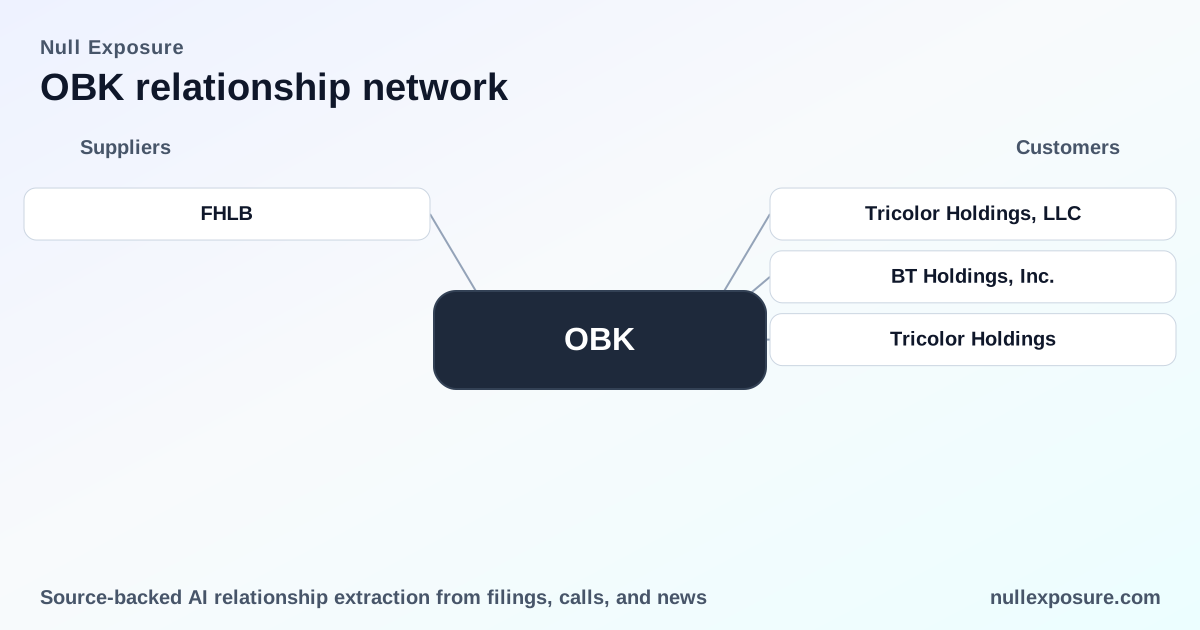
- FHLB — The Federal Home Loan Bank system provides short-term advances to Origin that the company draws and repays within reporting periods, supporting liquidity management and interest-rate coping strategies. This use is cited in Origin’s FY2026 earnings release on GlobeNewswire (January 28, 2026), which records the specific proceeds and repayments tied to short-term FHLB advances.
Constraints and what they reveal about OBK’s operating model
A constraint signal in Origin’s filings classifies the relevant contract type as short_term, with high confidence, based on the explicit line items: “Proceeds from short-term FHLB advances 1,685,000 and Repayments of short-term FHLB advances (1,755,000).” Because the excerpt names the FHLB advances directly, this constraint is attributable to the FHLB relationship and not a generic funding observation.
From an operating-model perspective, that constraint conveys several traits:
- Contracting posture — tactical and transient. Origin contracts with providers on short timelines to preserve flexibility and avoid long-term mismatch risk.
- Concentration — limited but strategic. The disclosed advance amounts are not enormous in absolute size, suggesting FHLB is a complementary liquidity partner rather than a dominant single-source provider.
- Criticality — moderate and conditional. Short-term advances are critical as a contingency liquidity tool during deposit variability or seasonal origination cycles, but they are not the sole source of funding for the bank.
- Maturity — short and rolling. The nature of the advances implies recurring draws and repayments rather than multi-year structural borrowings, which reduces interest-rate duration risk but increases refinancing frequency and operational oversight needs.
Financial context that frames supplier risk
Origin’s balance-sheet and profitability profile informs how consequential any supplier stress could be. Latest-period metrics show a market capitalization around $1.27 billion and a return on equity near 6.3%, with a price-to-book close to 1.02 and a dividend yield of roughly 1.5%. Those numbers imply a bank with modest profitability and limited valuation premium, where funding flexibility and deposit retention are material value drivers. Investors should therefore treat short-term wholesale lines such as FHLB advances as operational backstops that can influence earnings volatility during tight deposit cycles.
If you want a consolidated view of supplier exposures and counterparty signals for Origin and peers, visit https://nullexposure.com/ to explore supplier-level intelligence and constraint flags.
Practical implications for investors and operators
- Monitor advance cadence, not just outstanding balances. The pattern of draws and repayments provides early indication of deposit stress, funding cost pressures, or seasonal funding needs. The FY2026 disclosure shows active short-duration usage rather than a one-time placement.
- Stress-test liquidity scenarios with short-term roll rates. Because advances are rolling and short, model scenarios where the bank either cannot roll the advance at roughly the same cost—or has to replace it with higher-cost funding—and quantify EPS and NIM sensitivity.
- Watch the vendor/creditor concentration. Even if FHLB is a secondary partner by size, regulatory access and membership terms make it a reliable tool; however, concentrated reliance on any single funding source elevates operational risk under systemic stress.
- Operational control and covenant monitoring matter. Short-term arrangements require robust execution—draw mechanics, collateral eligibility, and trigger monitoring all influence how effective these lines are under duress.
Bottom line and next steps for due diligence
Origin Bank uses the FHLB as a short-term, tactical liquidity provider, evidenced by explicit proceeds and repayments disclosed in its FY2026 earnings release. For investors, that is a sign of disciplined, flexible funding but also a point of exposure that requires ongoing surveillance because short-term funding introduces rollover and repricing risk. Incorporate cadence analysis of FHLB activity into your monitoring framework and stress-test funding alternatives under deposit-run and higher-rate scenarios.
For a systematic view of Origin’s supplier relationships, constraint flags, and how those signals feed into credit and operational risk models, explore the platform at https://nullexposure.com/. If you need tailored tracking or a deeper counterparty report on OBK’s funding counterparties, the platform provides actionable supplier intelligence and alerts geared to institutional investors.