Old Dominion Freight Line: supplier posture, recent deals, and what it means for investors
Old Dominion Freight Line (ODFL) operates as a high-density, less‑than‑truckload (LTL) carrier that monetizes through network-driven freight rates, premium logistics services, and controlled asset investment. The company collects revenue from regional, inter‑regional and national LTL shipments plus higher-margin logistics and expedited services, and it sustains profitability through route density, equipment utilization and disciplined pricing. Investors should view ODFL as an asset-backed service business where supplier relationships and equipment procurement materially shape margins and operational resilience. For a deeper supplier-risk view and supplier relationship mapping, visit https://nullexposure.com/.
How Old Dominion structures supplier commitments and why it matters to returns
Old Dominion’s disclosures show a deliberate procurement posture: the company develops specifications for tractors and trailers and then negotiates production and purchase with several manufacturers, indicating centralized design control and multi‑vendor sourcing for core equipment. That practice preserves fleet standardization—supporting maintenance efficiency and consistent operating metrics—while spreading supplier concentration risk across multiple OEMs.
At the same time, ODFL uses external providers to supplement capacity or cover temporary shortfalls. The company states that it will “periodically utilize third‑party transportation providers in our linehaul network to supplement our equipment,” and maintains extensive insurance placements with third‑party carriers to protect against property, casualty, cyber and employee benefits exposures. Those operational levers deliver flexibility: the balance of owned equipment plus third‑party supplementation reduces downtime risk but leaves ODFL exposed to external spot costs during capacity tightness.
Key company-level signals:
- Contracting posture: centralized equipment specifications and negotiated manufacturing relationships indicate strong buyer leverage and a long-term equipment planning horizon.
- Concentration and maturity: multiple manufacturer relationships reduce single‑vendor concentration; the equipment cycle is mature and predictable, supporting capital planning.
- Criticality of suppliers: manufacturers and insurance carriers are critical to operations—equipment procurement directly affects capacity, and insurance protects earnings volatility.
- Outsourcing approach: selective use of third-party linehaul providers signals tactical outsourcing rather than a strategic shift to asset-light operations.
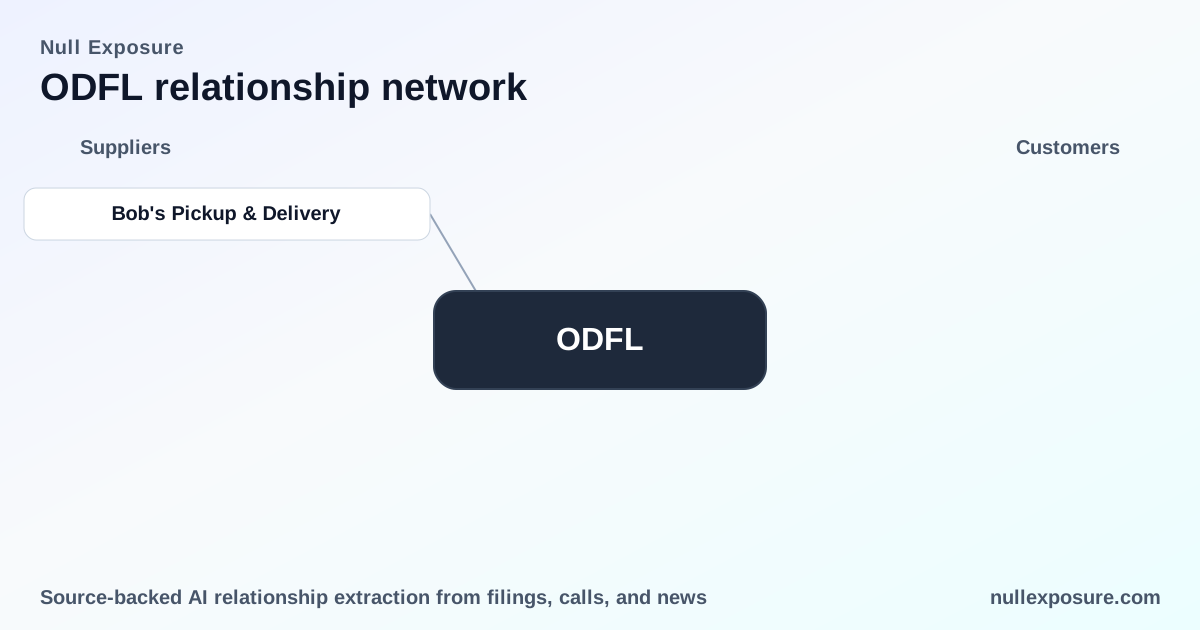
The one recorded supplier relationship: Bob’s Pickup & Delivery
Old Dominion signed an agreement to acquire selected assets of Bob’s Pickup & Delivery, a Montana-based pickup and delivery operator headquartered in Sidney. The transaction purchases targeted assets to extend ODFL’s local pickup and delivery presence in that region and is presented as a strategic bolt-on to the carrier’s regional network. A TruckingInfo report dated March 10, 2026, covered the agreement and quoted ODFL’s executive chairman regarding the purchase.
What this acquisition tells investors about ODFL’s supplier and growth strategy
The Bob’s Pickup & Delivery deal is consistent with ODFL’s historical approach: bolt-on asset purchases that extend last‑mile reach and enhance density rather than transformational M&A. Acquiring selected assets from local P&D operators supports incremental volume capture and routing efficiency without massive organizational integration risk. This tactic preserves pricing power through denser lanes and can improve yield on incremental shipments.
A focused acquisition approach also underscores the company’s continued reliance on strategically controlled owned assets (tractors, trailers, local terminals) rather than large‑scale outsourcing, aligning with the procurement signals cited above.
For an organized view of supplier exposures and relationship implications across your portfolio, see https://nullexposure.com/.
Operational constraints and how they translate into financial risk/reward
The textual constraints drawn from ODFL filings reflect how the company runs its supply chain and risk program. The statements—“We develop certain specifications for tractors and trailers and then negotiate the production and purchase of this equipment with several manufacturers,” and that ODFL “may periodically utilize third‑party transportation providers…,” plus the disclosure about carrying significant third‑party insurance—translate into concrete business characteristics:
- Predictable capital cycle: specification-driven procurement enables planned capex and smoother depreciation profiles, supporting forward EBITDA visibility.
- Supplier management intensity: negotiating production with several manufacturers requires procurement sophistication but reduces vendor lock-in risk.
- Insurance as earnings stabilizer: substantial third‑party coverage lowers earnings volatility from casualty events but creates ongoing cost and counterparty considerations.
- Tactical third‑party use: temporary use of third‑party carriers mitigates short-term capacity gaps but exposes the company to market rate swings when supplemental supply is relied upon.
Those operational constraints are company-level signals about maturity and resilience rather than relationship-specific attributes.
Valuation and risk context for investors
ODFL’s recent financial profile reinforces the operational story. The company reported trailing revenue of approximately $5.5 billion and operating margin of 23.3%, producing strong cash generation relative to peers. Market capitalization stands near $38.1 billion with a trailing P/E around 37.8, reflecting premium valuation for stable freight economics and superior margins. Key investment considerations:
- Upside drivers: continued lane density, measured bolt‑on acquisitions (like Bob’s), and logistics expansion can sustain above‑average margins and justify a premium multiple.
- Downside risks: capex cycles for fleet replacement, exposure to equipment supply constraints or OEM pricing, and reliance on third‑party temporary capacity during tight markets could compress margins.
- Insurance and counterparty risk: while large insurance placements stabilize outcomes, extreme loss events or rising insurance costs present earnings pressure.
Overall, ODFL’s supplier posture supports durable operating margins but leaves the company exposed to macro traffic volumes, equipment cost cycles and episodic third‑party market stress.
Final investor takeaways and next steps
Old Dominion’s supplier relationships and procurement approach are deliberate: specification-driven equipment purchasing, multiple OEM relationships, tactical use of third‑party carrier capacity, and a comprehensive insurance program. These elements create a predictable capital cadence and operational resilience while preserving flexibility to target regional density gains through selective asset purchases, exemplified by the Bob’s Pickup & Delivery acquisition.
For institutional investors and operators evaluating supplier risk and strategic fit, ODFL’s profile is that of a mature, asset-centric carrier with disciplined procurement and measured external supplementation. Review capital‑expenditure plans and regional density initiatives to assess whether current valuation embeds expected margin expansion.
Explore a structured supplier-risk lens and comparable relationship maps at https://nullexposure.com/.
For more supplier-specific intelligence and to see how this relationship fits into a broader supplier universe, visit https://nullexposure.com/ and request the analysis package.