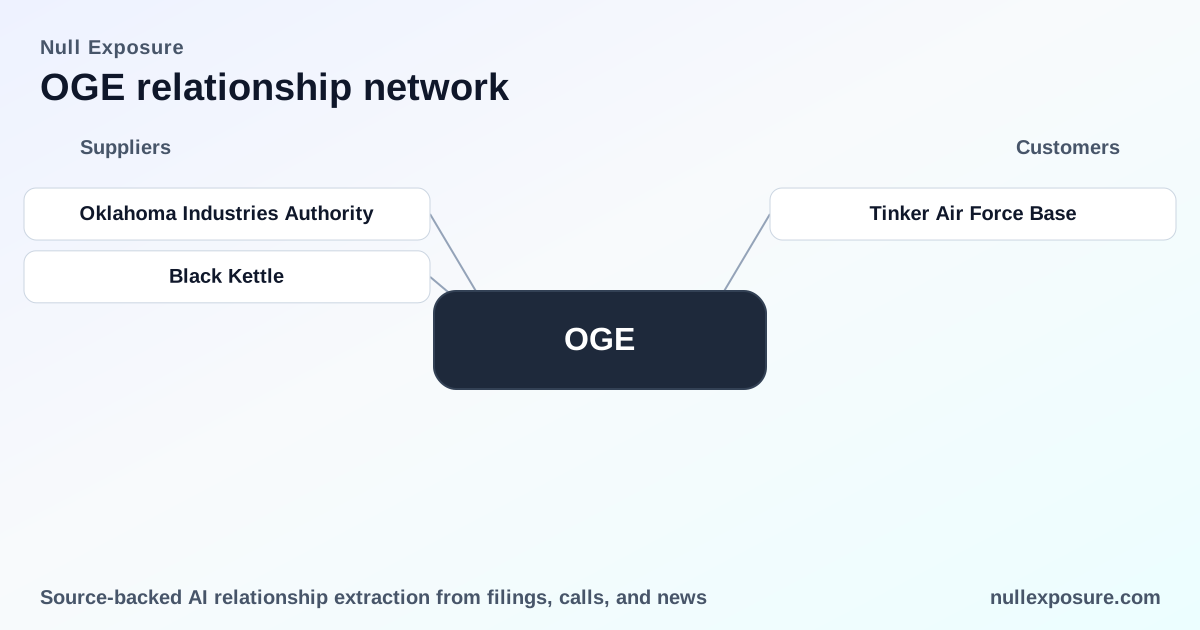
OGE Energy (OGE) — supplier relationships, contract posture, and investor implications
OGE Energy is a regulated electric utility that monetizes through rate-regulated electricity delivery, owned generation assets, and contracted energy purchases and sales. The company operates generation (including peaking capacity) and manages a mix of fuel and capacity contracts to meet load in the Southwest Power Pool; returns come through regulated rates and asset investments that are recovered over time. For investors evaluating supplier counterparty risk and operational continuity, OGE’s supplier profile is defined by long-term coal commitments, short-term gas procurement in the SPP market, and isolated procurement disputes around storage capacity. Explore further on the NullExposure platform: https://nullexposure.com/
The concise operating picture investors need
OGE runs a mixed procurement model that blends stable, long-duration supply agreements for coal with flexible short-term and spot purchases for gas and opportunistic fuel sourcing. Company disclosures show a deliberate tilt toward contract stability for thermal baseload units while relying on market purchases for gas-fired dispatch.
- Long-term contracting for coal: Filings state OG&E has coal supply agreements through December 31, 2027 and that for 2025–2027 OG&E has contracts covering 100% of expected coal requirements for its Sooner, Muskogee and River Valley facilities, signaling high supply certainty for those plants.
- Short-term and spot activity for gas and coal: OGE participates in the SPP Integrated Marketplace and purchases natural gas through short-term agreements; filings also note OGE will supplement coal needs with spot purchases as required.
- Service-provider relationships: Filings describe counterparties responsible for delivering natural gas to generating facilities, characterizing certain suppliers as operationally critical service providers rather than passive commodity sellers.
- Scale of contractual commitments: Disclosures report total purchase obligations and commitments of $1,105.4, and wind purchases of $54.3, indicating material procurement exposure at the company level.
These are company-level signals drawn from OGE’s filings and public disclosures; they define contracting posture (stable for coal, flexible for gas), concentration (certain plants fully contracted for coal through 2027), and criticality (gas delivery service providers are operationally important).
Suppliers and partner relationships on the record
Below are the supplier relationships reflected in available reporting, with plain-English summaries and source notes.
Oklahoma Industries Authority — land transfer and peaking plant arrangement
OG&E constructed and now operates a new peaking plant on land that Tinker Air Force Base acquired from the Oklahoma Industries Authority; the base leases the land to OG&E, enabling the company to site peaking capacity adjacent to the AFB. This arrangement supports OGE’s short-duration, dispatchable capacity footprint in the region. (Source: Oklahoma Energy Today report, February 2026 — https://www.okenergytoday.com/2026/02/oge-and-tinker-air-force-base-to-host-ribbon-cutting-for-new-power-generation-project/)
Black Kettle — terminated energy storage capacity purchase agreement
During the Q4 2025 earnings call, management addressed a disclosure in the IRP/10-K concerning a Black Kettle energy storage capacity purchase agreement that was terminated due to an event of default, indicating a failed storage procurement and an operational procurement dispute with counterparty consequences. That termination is now part of the public fiscal discussion and could affect near-term storage capacity plans. (Source: OGE Q4 2025 earnings call transcript published March 2026 on InsiderMonkey — https://www.insidermonkey.com/blog/oge-energy-corp-nyseoge-q4-2025-earnings-call-transcript-1699075/)
What these relationships and constraints imply for investors and operators
The combined signals (contract excerpts and the two explicit relationships) describe a utility executing a hybrid procurement strategy: lock in coal for baseload stability, use the SPP market for gas flexibility, and pursue storage but with execution risk on third-party projects.
Key implications:
- Operational resilience where contracted: Coal-fired plants tied to long-term contracts through 2027 reduce fuel delivery volatility for baseload generation and protect recoverable rate base.
- Exposure in merchant and emergent technologies: The Black Kettle termination is a concrete example of counterparty execution risk in storage procurement and highlights the need for fallback plans or in-house options for capacity replacement.
- Asset siting and contracted use: The Oklahoma Industries Authority / Tinker AFB arrangement demonstrates OGE’s ability to secure strategic sites for peaking capacity, which improves dispatch flexibility and grid services near load centers.
- Meaningful procurement scale: Reported total purchase obligations of $1,105.4 and wind purchases of $54.3 show material spend that justifies active supplier risk management and concentrated contract oversight.
Practical takeaways for portfolio managers and operators:
- Maintain scrutiny of counterparties for storage and non-fuel projects; contractual termination events can translate into missed capacity and capital redeployments.
- Hedge operational exposure where short-term gas sourcing is material; OGE’s short-term gas posture requires active market monitoring.
- Monitor filing disclosures for updates to the coal contract run-out dates and any renegotiations that would shift fuel-cost pass-through to regulated rates.
For deeper supplier-level analysis and continuous monitoring, visit the home page: https://nullexposure.com/
Risks, concentration, and maturity — a quick checklist
- Contracting posture: Mature for coal (multi-year agreements), dynamic for gas (short-term/spot market participation).
- Concentration: Coal supply is concentrated around a few plants that are fully contracted through 2027, increasing the importance of those suppliers.
- Criticality: Natural gas delivery providers are operationally critical—delivery failures would affect dispatchable generation.
- Maturity and execution risk: Energy storage procurement is still immature in OGE’s portfolio as shown by the Black Kettle termination; storage relationships carry elevated execution risk relative to thermal fuel contracts.
Bottom line and recommended next steps
OGE’s supplier landscape reflects a balanced, regulated utility strategy: secure baseload supply through long-term coal contracts, rely on market purchases for gas flexibility, and selectively pursue storage and peaking assets—even when third-party projects carry execution risk. Investor focus should be on counterparty performance for storage projects and on monitoring filing disclosures for any shifts in coal contract terms or gas procurement strategy.
If you want a consolidated view of OGE’s supplier commitments and tailored counterparty risk analysis, start here: https://nullexposure.com/ — and contact our team through the site for a detailed briefing on supplier concentration and contractual obligations.