ONEOK (OKE) — supplier relationships and operational constraints that matter to investors
ONEOK operates as a midstream energy operator that monetizes transportation, processing and storage of natural gas and natural gas liquids through fee-based contracts and commodity-related margins. The company’s commercial model centers on capacity contracts and throughput receipts across an integrated network of pipelines and processing plants; cash flow stability depends on the mix of firm contracted capacity versus volumetric exposure and the legal rights to site and operate infrastructure. For investors and supplier managers, the focus is on contract tenor, counterparty composition, and the land/use rights that enable physical operations. Learn how we track supplier and infrastructure links at https://nullexposure.com/.
Operational snapshot and the supplier vantage point
- ONEOK is a Fortune 500 midstream operator with a market capitalization around $53.7 billion and trailing EBITDA of roughly $7.3 billion; its business combines long-dated fee revenue and throughput-sensitive earnings. These financial characteristics support a capital-intensive, contract-driven operating posture that rewards scale and network connectivity.
- Key commercial levers are contract length, minimum throughput commitments, and the legal rights that allow construction and operation on third‑party and government-owned land. Those levers determine how supplier exposures translate into revenue certainty or execution risk.
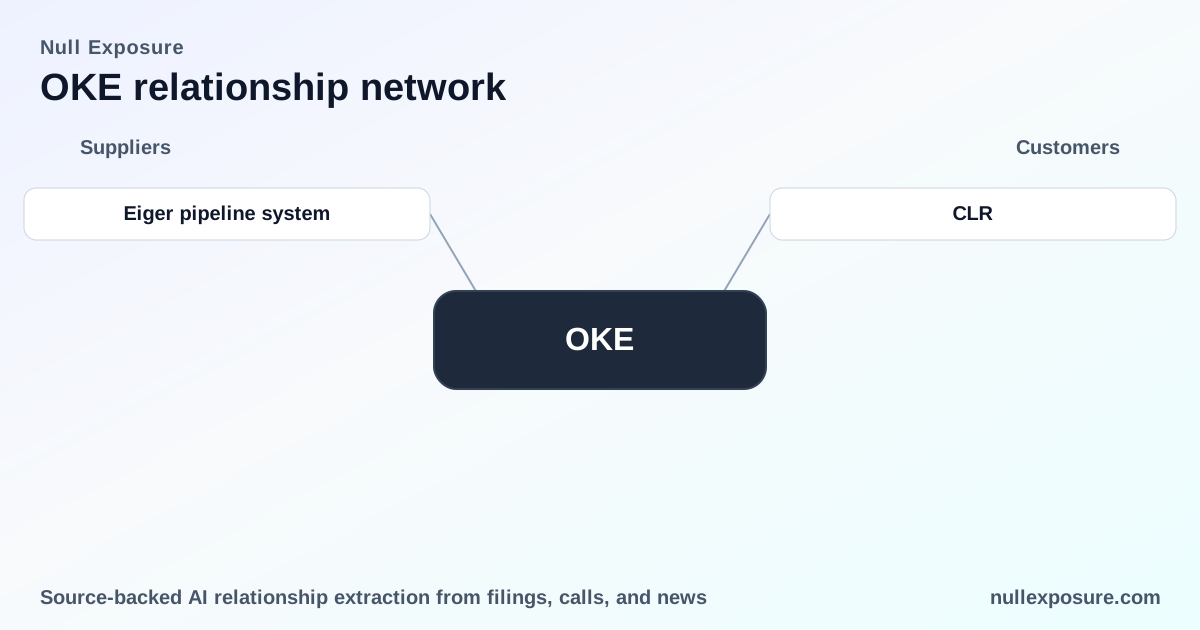
Notable supplier relationship: Eiger pipeline system ONEOK has contracted capacity on the Eiger pipeline system that exceeds current internal needs for gas flows from its plants, creating a counterparty dynamic between contracted transportation and actual throughput. According to an earnings call transcript published on InsiderMonkey in March 2026, company management stated they “do have capacity that we have contracted on the Eiger pipeline system that is above what we need right now for our gas coming off of our plants to bring that back to producers.” (InsiderMonkey, Q4 2025 earnings call transcript, March 2026).
What that relationship implies in plain English
- ONEOK carries firm capacity commitments on an outside pipeline (Eiger) that currently outstrip the volumes it routes from its own plants, creating an operating asymmetry between contracted capacity and internal supply. (Source: InsiderMonkey earnings call transcript, March 2026).
- The practical consequence is twofold: if the company fills that contracted capacity via third‑party receipts it can maintain fee income, but if volumes remain light the firm is exposed to the fixed-cost profile of capacity purchases versus actual throughput revenue. (Source: InsiderMonkey earnings call transcript, March 2026).
Company-level constraints and the legal landscape ONEOK’s disclosures make clear that the firm obtains rights to construct and operate pipelines and related facilities on land owned by third parties and governmental agencies for defined terms. This is a company-level signal about land-use and counterparty exposure: rights to operate are contractually limited and tied to non‑company landowners and governmental counterparties. According to company filings, “We obtain the rights to construct and operate certain of our pipelines and related facilities on land owned by third parties and governmental agencies for a specific period of time.” (Company disclosure).
How that constraint shapes operating and supplier risk
- Contracting posture: Long-term easements and permits are central to ONEOK’s ability to monetize assets; legal tenure on land and governmental approvals are not interchangeable with ownership and require active management of renewals and conditions.
- Concentration: reliance on third‑party land and government agencies introduces concentration of non-commercial counterparties that can influence costs, timing, and operational continuity through permitting, eminent domain processes, or lease renewal negotiations.
- Criticality: land and permit rights are critical infrastructure enablers; loss or onerous renegotiation of these rights would directly impair throughput and fee generation.
- Maturity: these are structural, long-dated arrangements that carry legal certainty but require ongoing regulatory and stakeholder engagement.
How these elements affect investment and supplier decisions ONEOK’s revenue stability and supplier strategies flow from the balance between contracted capacity and physical volumes. The Eiger example demonstrates the commercial reality that ONEOK contracts capacity for strategic reasons—either to secure access to markets or to support third‑party flows—but that the maturity and structure of those contracts determine the risk-return profile.
Financial and market context that anchors supplier risk
- ONEOK’s dividend yield (about 4.9%), forward P/E near 15.3, and EBITDA scale support an income-oriented equity case, yet the midstream cash flow profile depends on long-dated contracts and volume realization (company overview figures for FY2025–FY2026).
- Analyst coverage tilts positive with a cluster of Buy and Hold recommendations pulling the consensus target to the upper end of the trading range; that sentiment reflects confidence in regulated or contractually protected cash flows but does not eliminate execution risk tied to land rights and capacity utilization.
Practical takeaways for operators, purchasers, and investors
- Monitor contracted versus realized volumes: when a supplier or pipeline operator holds capacity it cannot fill internally, the economics depend on the ability to source third‑party receipts or resell capacity. The Eiger relationship is a live example of that dynamic. (Source: InsiderMonkey, Q4 2025 transcript).
- Track land and permit tenure: counterparty exposure to governmental landowners and agencies is a company-level constraint that translates into regulatory and renewal risk; capital planning and supplier contracting should incorporate that timeline. (Source: company disclosures).
- Prioritize counterparties that facilitate volume matching: for suppliers, working with operators who can source replacement volumes or have flexible resale frameworks reduces the downside of underutilized contracted capacity.
Where to go next For investors vetting ONEOK’s commercial position and for supplier managers negotiating capacity, the interaction of long-term rights, contracted capacity, and realized volumes defines the risk envelope. A focused review of contract tenors, resale rights, and permitting status is required to convert capacity into durable cash flow. Explore deeper supplier-to-operator mappings and monitor relationship-level signals at https://nullexposure.com/.
Closing recommendation ONEOK’s midstream platform delivers scale and fee-based cash flow, but the economics are sensitive to the mix of firm contracts versus throughput and to legal tenure on third‑party and government land. For investors and commercial partners, diligence should center on contract flexibility, renewal timelines, and the operator’s ability to monetize excess contracted capacity—topics we track continuously at https://nullexposure.com/.