OKLS: What the launch of a 2x short fund tells investors about supplier exposure
OKLS operates as a leveraged inverse exchange-traded fund product: the fund is designed to deliver –2x the daily return of Oklo Inc. equity, and it monetizes through issuer management fees, advisory fees and distribution/servicing arrangements with third parties. The economics are typical for short-levered ETFs — issuer captures gross margin through fund expense ratios while advisers and distributors collect recurring fee income tied to assets under management and trading volumes. For a deeper look at counterparties and commercial posture, see https://nullexposure.com/.
Why this launch matters to investors and operators
The introduction of a targeted leveraged short product is a strategic signal about market demand and counterparty specialization. Leveraged inverse ETFs require intensive operational plumbing — daily rebalancing, securities lending and precise custody/distribution arrangements — which concentrates operational risk on a small set of suppliers. That concentration amplifies vendor criticality: if any of the operating partners underperform or change terms, fund economics and distribution can be affected quickly.
This fund is newly launched in FY2025, which makes the product operationally immature even as structure and partners are established. New offerings typically generate initial fee income disproportionately from early adopters and trading flows, not stable long-term AUM. Keep that in mind when evaluating near-term revenue contributions and counterparty exposure. Learn more on the platform: https://nullexposure.com/.
Who the supplier relationships are and what they do
-
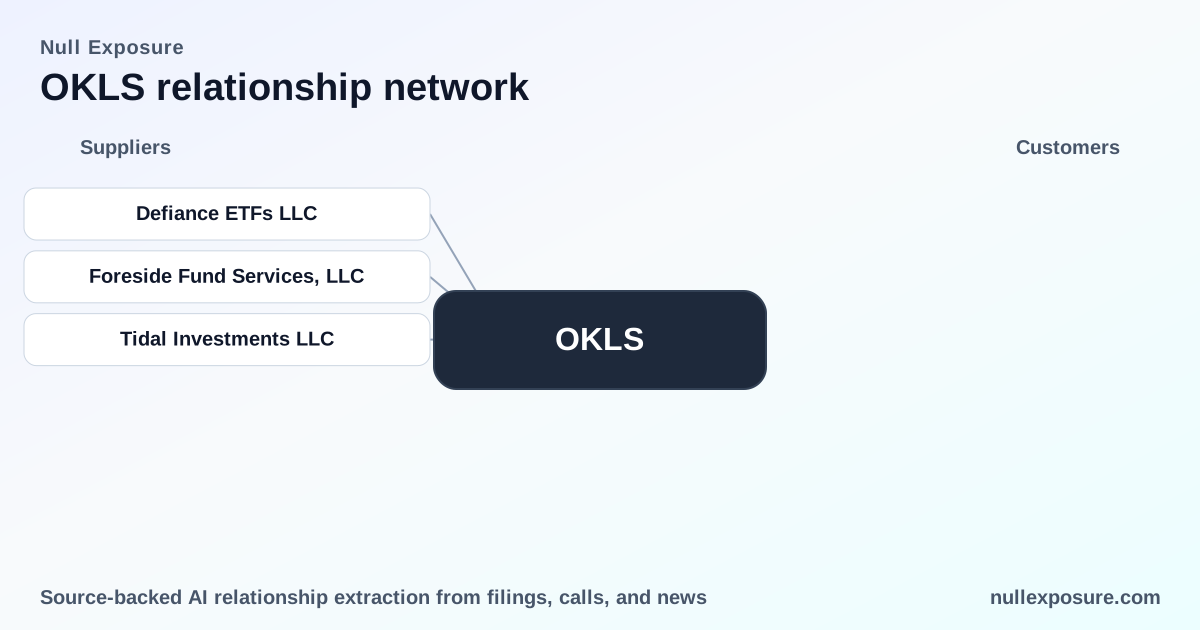
Defiance ETFs LLC — Defiance is the sponsor and issuer that launched the Defiance Daily Target 2X Short OKLO ETF (Ticker: OKLS), positioning itself to monetize through the fund’s expense structure and sponsor fees. According to a Globenewswire press release dated November 26, 2025, Defiance announced the product launch in FY2025.
-
Foreside Fund Services, LLC — Foreside is listed as the distributor for the new fund and will handle placement and certain operational distribution responsibilities that support market access. The same Globenewswire announcement on November 26, 2025 identifies Foreside Fund Services as the distributor for the offering.
-
Tidal Investments LLC — Tidal Investments is named as the investment adviser to the fund, performing day-to-day portfolio management and execution for the leveraged short strategy. The Globenewswire press release dated November 26, 2025 cites Tidal as the fund’s adviser.
Each relationship is governed by the standard sponsor–adviser–distributor structure that underpins ETF economics; the November 26, 2025 press release provides the public confirmation of these arrangements.
Operating model signals and what they imply about risk and concentration
No explicit contractual constraints or special exceptions were provided in the public release; treat the following as company-level operating signals rather than contractual facts:
-
Contracting posture: outsourced execution. The issuer relies on third-party specialists for advisory and distribution functions, which is standard for ETF launches but creates dependency for execution and compliance continuity.
-
Concentration: small partner set. Three named counterparties cover the core commercial stack (issuer, adviser, distributor), implying a low number of single points of failure for operations and client access.
-
Criticality: high for distribution and advisory. Distribution and advisory roles are functionally critical to the fund’s revenue generation and day-to-day performance; any disruption to those parties would immediately affect fund availability and rebalancing.
-
Maturity: early-stage product. Launched in FY2025, the fund is in launch and scaling mode; initial liquidity and AUM dynamics will drive near-term economics rather than steady-state management fees.
Investment implications: what to watch next
-
Counterparty concentration elevates operational risk. Investors should monitor any announcements from Defiance, Tidal or Foreside about fee changes, service-level agreements, or regulatory issues that could affect fund operations.
-
Trading and rebalancing costs will affect realized returns. Leveraged inverse strategies generate daily turnover; advisers and securities lending arrangements determine the net cost to investors and thus the fund’s attractiveness.
-
Distribution effectiveness will determine AUM ramp. Foreside’s capacity to place and support the product in dealer networks influences how quickly fee revenue materializes.
Key monitoring checklist:
- Sponsor disclosures and fee schedules in the fund prospectus.
- Adviser execution reports and rebalancing methodology.
- Distribution notices or market-maker arrangements that influence spread and liquidity.
Strategic takeaways for operator and procurement teams
-
For operators assessing third-party risk, the evident reliance on a small set of specialized suppliers is acceptable if contracts include robust SLAs, indemnities and contingency plans. Absent public constraints, procurement should prioritize contractual redundancy where execution criticality is high.
-
For investors, this is a fee-generating product for the issuer and recurring income for the adviser and distributor, but the fund’s contribution to parent revenues will depend on AUM scale and trading intensity over the first 12–24 months post-launch.
Visit https://nullexposure.com/ for more supplier-mapping and relationship analytics tailored to ETF launches and counterparty risk.
Final assessment and action items
The OKLS launch is a classic example of a leveraged-ETF economics stack: issuer-led monetization with third-party advisory and distribution that together create concentrated operational dependencies. The product is new and functionally dependent on its named suppliers — Defiance ETFs LLC, Foreside Fund Services, and Tidal Investments LLC — as confirmed in the November 26, 2025 announcement.
Actionable next steps:
- Review the fund prospectus to confirm fee schedules and authorised participants.
- Confirm contractual safeguards with advisers and distributors where possible.
- Track initial liquidity, spreads and AUM trajectory through the first two fiscal quarters to gauge revenue run-rate.
For a concise supplier risk brief and ongoing tracking of counterparties tied to ETF launches, consult our analysis hub at https://nullexposure.com/.