Ollie's Bargain Outlet (OLLI): supplier relationships, strategic levers, and risks for investors
Ollie’s Bargain Outlet monetizes a deep-discount retail model by buying overproduced, overstocked and closeout merchandise and selling it through a footprint of leased stores and distribution centers. Revenue derives from rapid inventory turns on distressed or excess branded goods, supported by long-term real estate leases and a five‑year revolving credit facility that underwrites growth and working capital. For investors and operators evaluating supplier exposure, the important facts are concentration of sourcing relationships, a dual contracting posture (long real‑estate/credit obligations versus short supplier purchase terms), and recent opportunistic growth through acquiring former Big Lots locations. Learn more about supplier intelligence at Null Exposure.
How Ollie’s sources growth — bargains, leases, and conversions
Ollie’s core procurement engine is direct buying from manufacturers, distributors, brokers and other retailers for branded closeout product. The company’s merchant team converts acquired inventory into margin via in‑store markdown dynamics. This operating model is predicated on two structural elements: (1) flexible, short‑term purchase relationships with suppliers that enable sourcing at deep discounts, and (2) longer‑dated obligations (store leases and a five‑year credit facility) that create fixed-cost leverage on top of volatile merchandise supply. Fiscal scale is meaningful — revenue of roughly $2.65 billion and EBITDA around $353 million — giving the merchant team purchasing power but also amplifying the impact of procurement disruptions.
Every supplier relationship flagged in public reporting
Below are the supplier or transaction counterparties identified in public coverage for the supplier scope. Each entry includes a concise plain‑English summary and source attribution.
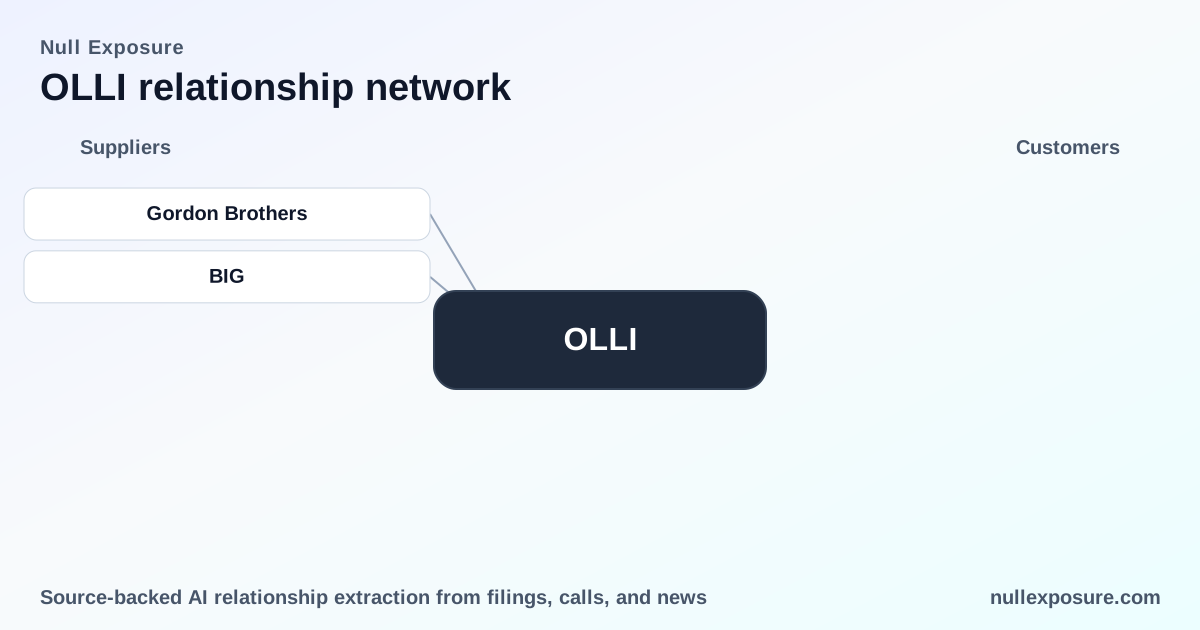
Big Lots — landlord and inventory source after bankruptcy
Ollie’s acquired 63 former Big Lots store leases, converting a set of Big Lots closures into Ollie’s formats as part of an opportunistic expansion following Big Lots’ bankruptcy; this conversion strategy has been characterized publicly as slow to start but increasingly accretive to square footage growth. According to a Finviz market note (March 2026) and regional reporting (Freep, May 2025; CJOnline, April 2025), those lease transfers and store purchases have materially added to Ollie’s pipeline and store count.
Sources: Finviz (March 2026), Detroit Free Press (May 2025), CJOnline (Apr 2025).
Gordon Brothers — liquidation firm handling Big Lots asset sales
Gordon Brothers acted as the liquidation agent handling sales of Big Lots locations; Ollie’s executed acquisitions of former Big Lots leases through transactions run by Gordon Brothers, acquiring a tranche of those leases as part of the retailer conversion program. Local reporting and company statements note the purchases were facilitated through Gordon Brothers’ disposition process.
Source: ChristianCountyNow (Mar 2026) and CJOnline (Apr 2025).
What the constraints tell investors about Ollie’s operating model
Public constraint excerpts and company disclosures paint a consistent picture of Ollie’s supplier posture and operational constraints — treat these as company‑level signals rather than relationship‑specific claims unless explicitly named.
-
Contracting posture is mixed. The company carries long‑term obligations for real estate and a five‑year revolving credit facility (maturing January 2029), while merchant-level supplier relationships are short term and non‑contractual, giving Ollie’s flexibility to buy opportunistically but no guaranteed access or pricing from vendors. This split increases operating leverage and requires active inventory management to cover fixed lease and debt costs.
-
Supplier concentration and maturity tilt toward established relationships. Ollie’s reports doing business with its top 15 suppliers for an average of over 15 years, a signal of longstanding sourcing relationships and merchant expertise in securing branded closeouts. That maturity reduces sourcing friction but does not eliminate the absence of formal long‑dated purchase contracts.
-
Sourcing role and channel structure are diversified. Public language identifies Ollie’s as a buyer and distributor that purchases from manufacturers, wholesalers, distributors and brokers; the company also functions as a private‑label/manufacturer counterparty at times. This hybrid role supports margin capture across the supply chain but requires robust vendor oversight.
-
Logistics and third‑party services are critical. The company relies on independent freight carriers and multiple distribution centers, and explicitly notes that disruption to shipping partners or distribution centers would materially impair merchandise flow — a critical single point of operational risk.
-
Spend signal and related‑party visibility are limited but present. Reported purchases from a Hillman Solutions subsidiary totaled modest amounts in recent years (examples: $0.6m in FY2024; $1.5m and $0.8m in prior years), placing some vendor spend in the $100k–$10m band, which is material enough to warrant governance scrutiny but not large enough to imply single‑supplier dependency at the corporate level.
Risk and opportunity implications for operators and investors
-
Opportunity: The Big Lots lease acquisitions demonstrate a disciplined roll‑up play — converting distressed retail real estate into measured expansion can compress unit economics and accelerate same‑store productivity if category assortments and local demand align. New stores from converted leases are an immediate growth lever.
-
Risk: The core sourcing model relies on short‑term vendor arrangements, which creates exposure to supplier pricing volatility and inventory availability; concurrent fixed lease and credit obligations magnify downside in a slowdown. Additionally, logistics disruption is a critical operational vulnerability.
-
Governance focus: Longstanding supplier tenure among top vendors is a stabilizing factor, but investors should monitor related‑party purchases and transparency around procurement terms for mid‑sized suppliers in the $100k–$10m range.
If you want a structured supplier risk scorecard for Ollie’s, see our methodologies and tailored intelligence at Null Exposure.
Practical due diligence checklist for OLLI counterparty risk
- Verify lease transfer economics and capex required to convert former Big Lots locations into profitable Ollie’s stores.
- Assess logistics redundancy: number and geographic spread of distribution centers and contracted carrier contingency plans.
- Review supplier concentration beyond top 15 and confirm the firmness of supply (letters of credit, payment terms, or other protections).
- Audit related‑party purchase governance for vendors in the $100k–$10m bands.
Explore tailored supplier analytics and relationship monitoring solutions at Null Exposure.
Bottom line for investors
Ollie’s operates a high‑flexibility buying engine built on short‑term supplier relationships, anchored by longer‑term real‑estate and credit commitments. That construct delivers scalable margin in periods of steady liquidation inventory flows and effective logistics, but it amplifies downside if vendor access tightens or distribution is disrupted. The Big Lots lease acquisitions and the Gordon Brothers disposition pathway are concrete examples of the company executing opportunistic growth through distressed retail channels. For investors, the key questions are execution risk on converted stores, logistics resilience, and the sustainability of sourcing channels — areas where focused supplier intelligence will materially inform valuation and downside protection.
For deeper supplier relationship analysis or a custom diligence package, start here: Null Exposure.