Omada Health (OMDA): Supplier relationships that influence an IPO and long-term margins
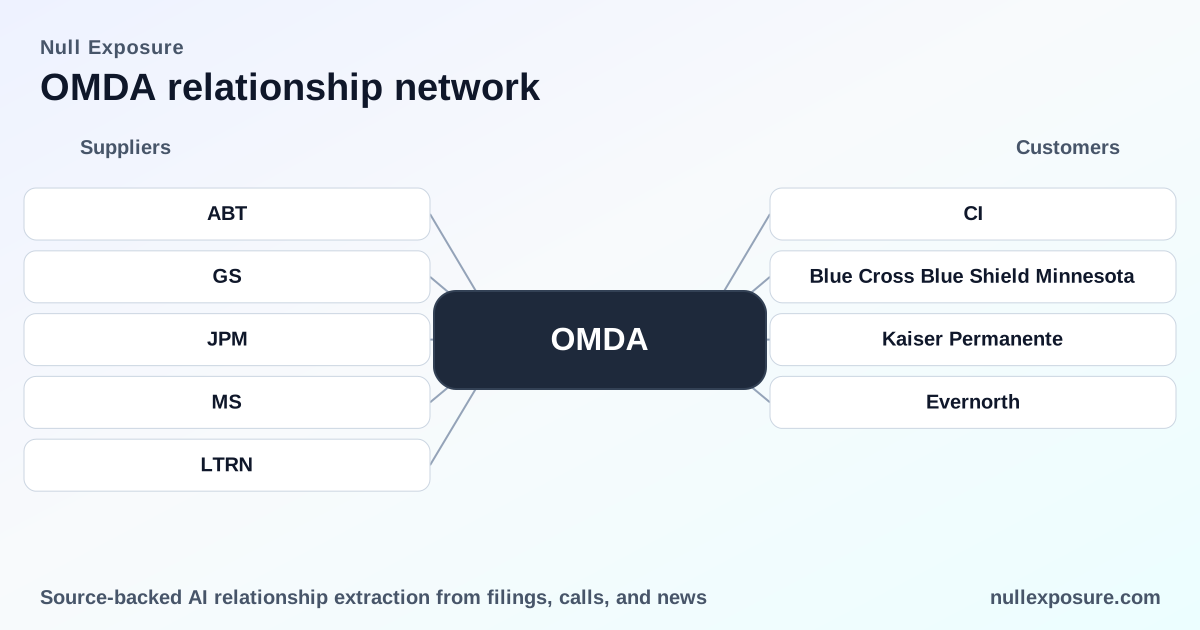
Omada Health operates virtual chronic-care programs sold primarily to employers and health plans, monetizing through subscription and outcomes-linked contracts for digital coaching, device integration, and clinical services. The company combines software, human coaching, and hardware partnerships to drive recurring revenue and scale gross margin; its FY2025 revenue of roughly $260 million and 86% institutional ownership position Omada as a commercially mature digital care provider preparing to go public. For investors evaluating supplier exposure or counterparty risk, the relationships below map the commercial, clinical and capital partners that will influence margin durability and go‑to‑market execution. Learn more about supplier mapping at https://nullexposure.com/.
How Omada contracts and what that implies for investors
Omada sells into large institutional buyers and structures pricing around per‑participant subscriptions, clinical outcomes, and device integrations. That commercial posture produces several company-level signals:
- Contracting posture: Omada negotiates enterprise agreements with employers and payers that create multi‑period revenue visibility but also require upfront onboarding and measurable clinical outcomes. This drives predictable revenue growth but creates exposure to renewal and utilization dynamics.
- Concentration and criticality: High institutional ownership (86% institutions) and the company’s reliance on large buyers imply concentration risk on the revenue side and vendor criticality when Omada is integrated into a plan’s chronic‑care pathway.
- Maturity and capital access: The FY2025 filing process and engagement of major investment banks indicate a transition from private growth to public accountability, where supplier terms, device partnerships, and clinical integrations will be scrutinized by public investors.
- Financial profile: Omada reported $260.2M revenue and $170.9M gross profit TTM, with negative EPS and modest operating losses—consistent with scaling margins while investing in product and partnerships.
These signals—contracted enterprise revenue, institutional ownership, and an IPO trajectory—define how supplier relationships convert into cash flow and risk for public investors. If you want deeper supplier intelligence for diligence, visit https://nullexposure.com/.
The supplier and partner map investors should track
Abbott — device partnership for diabetes care
Omada has a clinical integration with Abbott to combine Abbott’s FreeStyle Libre continuous glucose monitoring with Omada’s diabetes program, creating a coordinated digital coaching and device-enabled care pathway. According to an Abbott press release in October 2019, the companies announced a partnership to integrate FreeStyle Libre with Omada’s Type 2 diabetes offering (https://abbott.mediaroom.com/2019-10-14-Abbott-and-Omada-Health-Partner-to-Offer-Integrated-Digital-Health-and-Coaching-Experience-for-People-with-Type-2-Diabetes).
Why it matters: Device integrations raise both stickiness (clinical feedback loops) and cost complexity (device procurement and reimbursement).
Morgan Stanley — lead investment bank on IPO
Morgan Stanley is listed among the lead banks guiding Omada’s process to market, signaling a full‑service, high‑visibility underwriting posture for the IPO. HC Innovation Group reported in March 2026 that Morgan Stanley leads the cadre of banks bringing Omada to market (https://www.hcinnovationgroup.com/clinical-it/digital-health-innovation/article/55291398/virtual-care-company-omada-files-ipo-papers).
Why it matters: A top-tier lead bookrunner improves pricing and distribution, but also increases public scrutiny of supplier contracts and revenue recognition.
Goldman Sachs — underwriting and capital markets partner
Goldman Sachs is part of the underwriting syndicate helping Omada prepare for public listing, which positions capital markets expertise behind the company’s valuation and market messaging. HC Innovation Group’s coverage in March 2026 lists Goldman Sachs among the banks leading the IPO effort (https://www.hcinnovationgroup.com/clinical-it/digital-health-innovation/article/55291398/virtual-care-company-omada-files-ipo-papers).
Why it matters: Institutional placement and roadshow diligence will emphasize supplier revenue durability and partner concentration.
J.P. Morgan — syndicate participant and advisor
J.P. Morgan joins Morgan Stanley and Goldman Sachs on Omada’s IPO syndicate, adding distribution breadth and healthcare transaction capability to the deal team. HC Innovation Group reported J.P. Morgan’s role in March 2026 (https://www.hcinnovationgroup.com/clinical-it/digital-health-innovation/article/55291398/virtual-care-company-omada-files-ipo-papers).
Why it matters: Multiple elite banks indicate strong market appetite but require clear disclosure of supplier contracts and contingent liabilities in public filings.
Lantern — perpetual licensing agreement for mental health services
Omada struck a perpetual licensing arrangement with Lantern, a shuttered mental health startup, to integrate coaching and therapy capabilities into Omada’s behavioral health offering. MedCity News covered this technology and licensing move in 2020 as part of Omada’s broader capability expansion (https://medcitynews.com/2020/05/omada-health-acquires-remote-physical-therapy-company/).
Why it matters: Perpetual licenses can reduce recurring product development cost but embed legacy intellectual‑property risk and integration expense over time.
What these relationships imply for margins, risk and disclosure
- Margin upside from device and software integrations: Partnerships like Abbott’s drive clinical differentiation and can lift per‑participant revenue if Omada captures device-enabled premium pricing; the reported gross profit margin indicates strong unit economics when utilization scales.
- Disclosure and contingent risk on the cusp of IPO: With top banks underwriting the offering, investors will see fuller disclosure of supplier arrangements, revenue recognition practices, and any indemnities or perpetual license terms tied to Lantern.
- Concentration risk across buyer and supplier sides: Enterprise contracts and a small number of clinical/device partners create both negotiating leverage and single‑counterparty exposure. Investors should watch renewal rates, margin contribution by program, and the degree to which device costs are passed through or absorbed.
If you are assessing counterparties for underwriting or procurement, map contract terms and renewal cadence now — more granular supplier analysis is available at https://nullexposure.com/.
Bottom line: action points for investors and operators
- Monitor deal disclosures in the S‑1: Underwriting by Morgan Stanley, Goldman Sachs and J.P. Morgan ensures the IPO documents will reveal supplier obligations and revenue mix—these will materially affect valuation.
- Evaluate device economics with partners like Abbott: Understand whether Omada bears device cost or benefits from pass‑through arrangements; device integrations are a lever for both retention and cost volatility.
- Audit legacy licensing (Lantern) for integration risk: Perpetual licenses create long‑tail obligations that can compress margins if additional support or remediation is required.
Omada’s commercial model—enterprise contracts, device-enabled clinical programs, and an IPO process backed by major banks—creates clear opportunity for scale and defined near‑term scrutiny for supplier risk. For targeted supplier due diligence and a deeper look at how these relationships flow into public disclosures, visit https://nullexposure.com/.
Overall, Omada is positioned to convert clinical partnerships into recurring revenue, but investors must weight supplier concentration, device economics, and licensing obligations as key determinants of margin durability and post‑IPO performance.