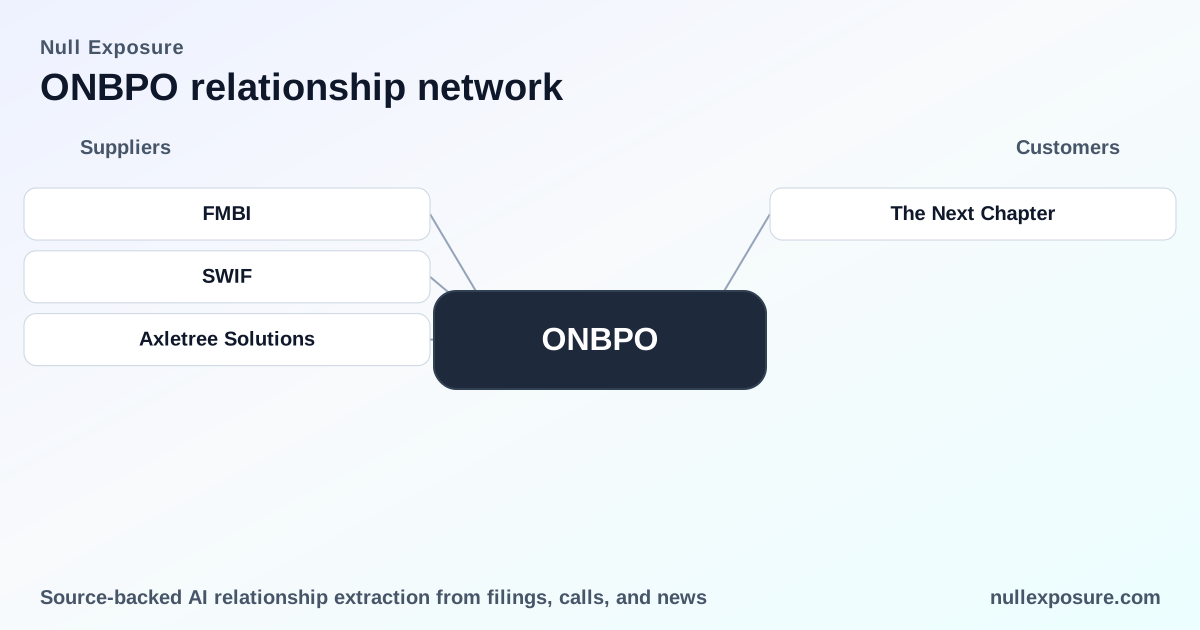
ONBPO supplier landscape: what investors and operators should price into preferred-share risk
Old National Bancorp’s depositary shares (ticker ONBPO) represent a fractional claim on Series C preferred equity of a regional bank that monetizes through traditional banking margins, fee income and disciplined capital returns. Investors buy ONBPO for stable dividend yield and second‑line exposure to Old National’s cash flows, while the banking franchise generates those cash flows through lending, deposits and payments processing across the Midwest. These depositary shares trade as income instruments tied to the parent’s capital policy and operational resilience.
For a deeper supplier-risk breakdown and supplier relationship tracking, visit https://nullexposure.com/.
Quick take: supplier exposure is business-critical and active
Old National discloses that third‑party vendors provide key components of its business infrastructure, including data processing and information services. That disclosure classifies supplier relationships as service providers and identifies them as active in the company’s operating model, signaling integrated vendor dependence rather than one‑off contracting. This structure creates a contracting posture where the bank outsources specialized infrastructure while retaining operational control at the business level.
- Contracting posture: Outsourced, enterprise-level service relationships for core information and payments infrastructure rather than episodic procurement.
- Concentration: The disclosure references “third party vendors” in plural; operational risk is distributed but not necessarily diversified—vendor consolidation in payments or messaging would increase concentration risk.
- Criticality: High. Vendors support payments rails, data processing and ATM interoperability—functions that directly affect balances, deposit flows and client experience.
- Maturity / stage: Active and operational; these are not exploratory pilots but production relationships supporting day‑to‑day bank operations.
Supplier relationships that matter (documented items)
Below I cover each relationship pulled from public reporting and media — one short, plain-English summary per relationship with the source cited.
First Midwest Bank (FMBI)
Old National and First Midwest agreed terms around ATM card acceptance, eliminating ATM fees for Old National cards at First Midwest machines as part of their integration and network cooperation. This reduces friction for customers and supports deposit and transaction stability across both franchises. Source: a WIKY news post referencing the agreement (2022) — https://wiky.com/2022/02/17/495579/.
SWIFT (payments messaging infrastructure)
Old National is integrating an upgraded SWIFT infrastructure as part of its payments modernization efforts, reflecting a direct investment in global messaging and ISO 20022 readiness that normalizes its payments operations with market standards. SimplyWallSt covered the bank’s integration of upgraded SWIFT systems in FY2026 commentary — https://simplywall.st/stocks/us/banks/nasdaq-onb/old-national-bancorp/news/is-board-downsizing-and-a-higher-dividend-altering-the-inves/amp.
Axletree Solutions
Old National finalized a partnership with Axletree Solutions to implement critical SWIFT architecture and achieve ISO 20022 compliance for 2026, indicating reliance on a specialist systems integrator to deliver standards migration and message‑format interoperability. Finviz reported on this partnership and the ISO 20022 milestone in its FY2026 coverage — https://finviz.com/news/327415/citi-highlights-normalized-yield-curve-supporting-old-national-bancorp-onb-profitability.
(Each of the above entries is drawn from media coverage and company commentary documented in public reports and news items.)
For additional analysis and supplier monitoring tools, see https://nullexposure.com/.
Why these relationships alter the investment case
The three relationships above cluster around payments and customer interface infrastructure, not peripheral services. That concentration of supplier support in payments and ATM acceptance has three practical implications for holders of ONBPO:
- Earnings and dividend stability: Payments uptime, interchange flows and customer deposit access have a direct line to fee income and deposit stability; outages or failed migrations would degrade near‑term cash available for dividends.
- Regulatory and compliance execution: Moving to ISO 20022 and upgrading SWIFT is not only an IT project; it is a compliance and resiliency program that, if executed well, reduces operational risk and supports cost efficiency. Axletree and SWIFT involvement signals an active modernization program.
- Customer retention and product distribution: The First Midwest ATM acceptance removes a friction point for depositors and enhances product stickiness across branch and ATM networks.
Key takeaway: these suppliers are not peripheral vendors — they are embedded in payment rails and customer access, making vendor reliability a financial risk factor for preferred‑share investors.
Operational risk profile and what to watch next
Investors should monitor three operational vectors:
- Program delivery against ISO 20022 timelines. Missed milestones or interoperability problems in 2026 could force contingency spending and increase operating costs.
- Third‑party concentration events. The company disclosure that “third party vendors provide key components of our business infrastructure” indicates outsourcing breadth; investors should watch vendor counts and any single‑vendor dominance in payments.
- Customer‑facing continuity indicators. ATM uptimes, interchange reporting, and any outage disclosures will be forward signals for deposit flux and fee income.
The constraints reported by the company — service provider role and active relationship stage — make operational continuity a material consideration for the preferred shares’ dividend reliability.
Mid‑analysis action: to map other suppliers and stress scenarios across the depositary share structure, review the supply‑risk tools at https://nullexposure.com/.
Practical steps for investors and operators
For investors: prioritize monitoring of Old National’s operational disclosures, ISO 20022 migration updates and any regulatory filings that discuss vendor risk or third‑party controls. For operators: validate SLAs, run contingency drills with SWIFT messaging paths, and ensure ATM network agreements (like the First Midwest acceptance) are contractually durable.
Final recommendation: treat supplier relationships supporting payments and ATM access as material to the preferred‑share risk profile; allocate monitoring resources accordingly and demand quarterly transparency on vendor milestones and outage metrics.
If you want a concise supplier risk brief or scenario modeling for ONBPO, start here: https://nullexposure.com/.