Onewater Marine (ONEW) — who supplies the boats that make the business tick
OneWater Marine is a nationwide recreational boat retailer that earns margin by buying new boat inventory from manufacturers and selling it through a multi-brand dealer network, supported by parts and aftermarket activity and financed working-capital facilities. Revenue comes from retailing manufacturers’ products across more than 50 brands; the company monetizes through gross margin on new-boat sales, used-boat turnover and parts/service sales, while inventory financing and dealer agreements determine working-capital intensity and execution risk. For a concise supplier-risk lens and to monitor counterparties, see more at https://nullexposure.com/.
Snapshot that matters to investors
OneWater reported $1.878 billion in trailing revenues and $433 million in gross profit for the trailing twelve months, with a negative diluted EPS driven by restructuring of margins and operating leverage, per the company overview for FY2025. The stock is small-cap ($143 million market cap) with concentrated brand exposure—sales from the top ten brands comprised roughly 40% of revenue—and a balance of short-term dealer contracts and long-term real-estate leases that shape risk and optionality (company FY2025 reporting).
Why supplier relationships are strategic, not administrative
The business model forces the company into two linked supplier dynamics: (1) commercial dependence on manufacturers for new-boat supply and pricing; (2) reliance on external finance partners to fund inventory between purchase and retail sale. OneWater negotiates annual dealer agreements with manufacturers that are renewable each year but operates long-term leases for retail locations, creating short-term commercial flexibility paired with longer-term physical commitments—a mixed contracting posture that amplifies seasonal working-capital volatility and makes financing counterparties strategically important (FY2025 10‑K).
Explore deeper counterparty profiles at https://nullexposure.com/ — the place to centralize supplier diligence.
Supplier map: the specific relationships you need on your radar
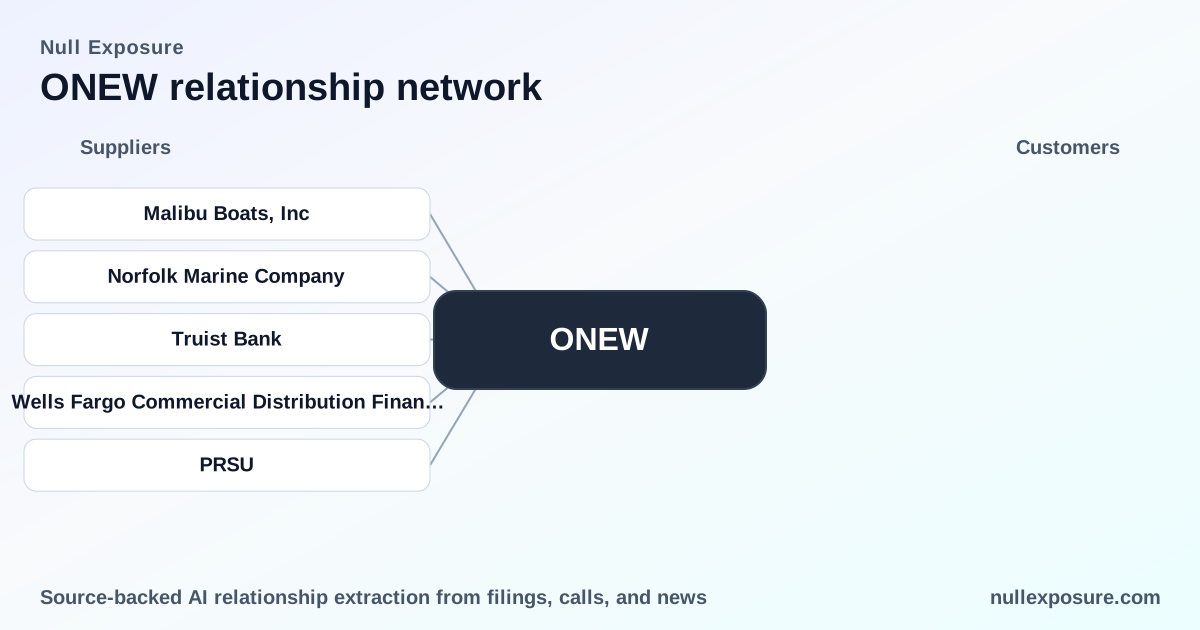
Below are the supplier and finance relationships disclosed in the company’s FY2025 filings and public commentary, each summarized in plain English with source context.
Malibu Boats, Inc.
Malibu and related brands accounted for 12.2% of OneWater’s total revenues in FY2025, making Malibu a material manufacturer customer for the retailer. According to the company’s FY2025 Form 10‑K, Malibu represented a high single-digit to low double-digit share of sales across recent years, underscoring concentration risk in the brand mix.
Source: OneWater FY2025 10‑K reporting brand revenue concentration for years ended September 30, 2025, 2024 and 2023.
Norfolk Marine Company
OneWater carries a note payable to Norfolk Marine Company that is unsecured and bears interest at 4.0% per annum, reflecting a direct financing obligation to a named counterparty. The obligation shows up in the company’s borrowing and related-party disclosures in the FY2025 filing.
Source: OneWater FY2025 10‑K note payable disclosure.
Truist Bank (A&R Credit Facility)
OneWater and several subsidiaries entered into an Amended and Restated Credit Agreement with Truist Bank (the A&R Credit Facility) effective August 9, 2022; this is the company’s primary cash‑flow and corporate credit backbone. The facility underpins corporate liquidity and limits the company’s ability to operate if covenant or availability is constrained.
Source: OneWater FY2025 10‑K description of the A&R Credit Facility with Truist Bank.
Wells Fargo Commercial Distribution Finance, LLC
Inventory working capital is supported by an Eighth Amended and Restated Inventory Financing Agreement administered by Wells Fargo Commercial Distribution Finance, LLC (effective November 14, 2023), which runs the company’s inventory financing program and interposes Wells Fargo as a critical operations counterparty. This program is central to funding seasonal boat purchases before retail sale.
Source: OneWater FY2025 10‑K inventory financing program disclosure.
Pursuit (brand / distribution partner)
Management publicly noted a strategic preference to increase purchasing and distribution breadth with Pursuit to enable more inventory mobility across locations during the selling season, reflecting operational decisions to favor certain manufacturers to optimize inventory turns. This commentary was reported in industry press coverage of OneWater’s Q3 results in early 2026.
Source: MarineIndustryNews coverage of OneWater CEO comments on Q3 results (March 2026 article).
Operating constraints and what they tell you about supplier risk
The company’s public constraints describe a mixed maturity and contractual posture that shapes counterparty risk:
-
Contracting posture: OneWater uses renewable annual dealer agreements with most manufacturers, which provides commercial flexibility but also short-term exposure to manufacturers’ distribution decisions. The same filings note long-term operating leases for retail properties (initial 15‑year terms with renewal options), creating fixed-location commitments that reduce real-option flexibility.
-
Concentration and materiality: Sales from the top ten brands are roughly 40% of total revenue, signaling material counterparty concentration—losing preferred access to a top brand would have immediate top-line consequences.
-
Role and maturity: The company purchases substantially all new-boat inventory directly from manufacturers and lists relationships with over 35 manufacturers covering more than 50 brands, indicating a mature, multi-brand supplier base that is nevertheless weighted toward a handful of material partners.
-
Spend and related-party purchases: OneWater disclosed $136.6 million of purchases under certain board-approved affiliated arrangements in FY2025, an order of magnitude that is relevant to procurement governance and related-party risk.
-
Financing criticality: The inventory financing program (Wells Fargo) and the Truist credit facility are operationally critical—they fund the time-lag between manufacturer purchase and retail sale, so lender availability and covenant flexibility are central to operational continuity.
All of the above are drawn from the FY2025 Form 10‑K and related public commentary.
Mid-analysis note: if you are actively underwriting counterparty risk or designing covenant tests for exposure limits, consolidate manufacturer concentration and the inventory financing program in scenario planning — more on that at https://nullexposure.com/.
Investment implications: what investors and operators should watch
- Upstream concentration is the principal single-supplier risk. Top brands represent ~40% of sales; contract renewals and allocation decisions will move near-term inventory and margin outcomes.
- Working-capital counterparties are de facto operational partners. Wells Fargo (inventory financing) and Truist (term/working capital facility) materially affect liquidity and seasonal execution.
- Related-party and affiliated purchases are large enough to warrant governance scrutiny. Four‑ to six‑quarter trends in affiliated purchases should be monitored alongside gross margin.
- Lease structure limits quick footprint downsizing. Long-term real-estate leases create fixed costs that increase leverage to top-line variability.
Final read and recommended actions
For anyone evaluating OneWater as a supplier counterparty or a portfolio position, focus diligence on three things: manufacturer allocation rights in dealer agreements, the appetite and terms of the Wells Fargo inventory facility, and trends in the top-ten brand revenue concentration. For centralized supplier intelligence and to monitor counterparties continuously, visit https://nullexposure.com/.
The balance between short-term commercial flexibility with manufacturers and long-term fixed commitments (leases and financing arrangements) defines OneWater’s operational risk profile; investors and operators should treat the inventory financing and top-brand relationships as first-order risks.