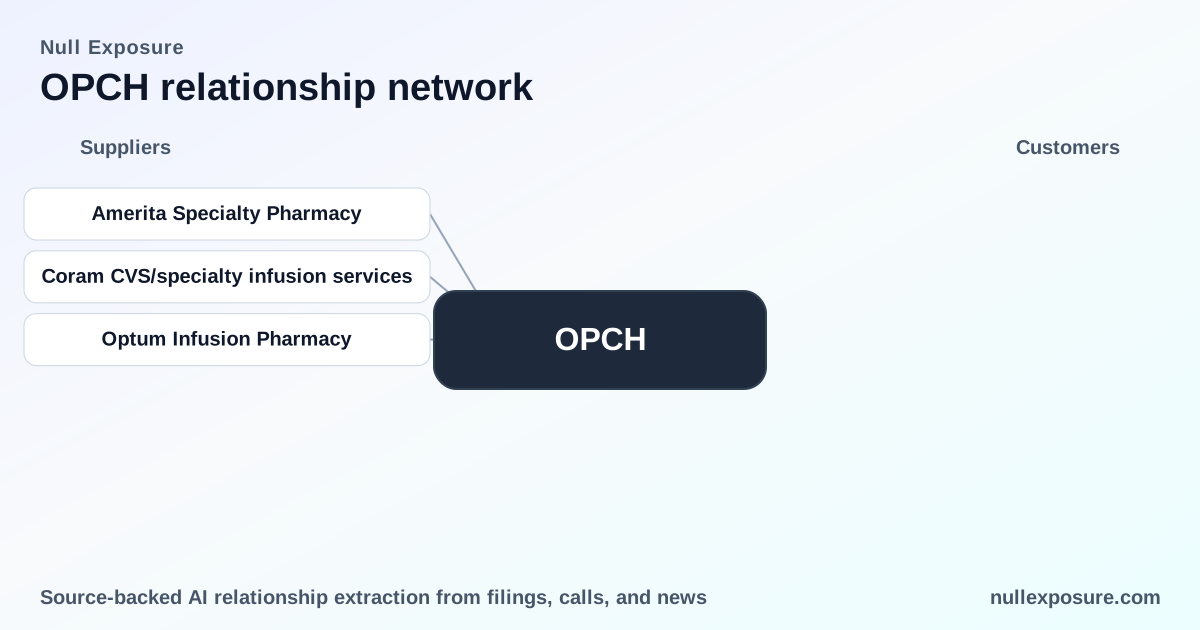
Option Care Health (OPCH): supplier relationships and what they mean for investors
Option Care Health operates and monetizes a national home-infusion platform that delivers pharmaceuticals and medical supplies to patients outside the hospital setting, generating revenue through service fees, third‑party reimbursements and margin on drugs and supplies. The company's model combines direct procurement, volume-based manufacturer rebates and networked fulfillment to capture both reimbursement spread and per‑service operating leverage. For investors, the critical valuation drivers are margin capture on pharmaceutical procurement, concentration of supplier sourcing, and the competitiveness of alternate infusion providers.
Discover structured supplier intelligence and comparative supplier footprints at https://nullexposure.com/.
Competitive rivals named in the filing — who the company lists side‑by‑side
Option Care Health identifies direct competitors within the home infusion market in its FY2024 10‑K; these named peers are operating relationships to monitor because they shape pricing pressure and contracting dynamics.
-
Amerita Specialty Pharmacy (a division of BrightSpring Health). Option Care Health lists Amerita as a home infusion competitor in its FY2024 10‑K, indicating overlapping service offerings and market competition for payor contracts and referral flows. According to the FY2024 10‑K, Amerita is specifically identified as a competitor in the home infusion market.
Source: Option Care Health FY2024 10‑K (competitive landscape), FY2024. -
Coram CVS / specialty infusion services (CVS Health). The FY2024 10‑K names Coram — CVS Health’s specialty infusion arm — as a competitor, which signals direct head-to-head pressure from a large vertically integrated pharmacy and retail operator with substantial distribution scale. According to the FY2024 10‑K, Coram CVS/specialty infusion services are competitors in the home infusion market.
Source: Option Care Health FY2024 10‑K (competitive landscape), FY2024. -
Optum Infusion Pharmacy (UnitedHealth/Optum). Option Care Health lists Optum Infusion Pharmacy, a unit of UnitedHealthcare, as a named competitor in the filing; this positions Option Care against payor‑owned infusion capabilities that can internalize both reimbursement and distribution economics. According to the FY2024 10‑K, Optum Infusion Pharmacy is a competitor within the home infusion market.
Source: Option Care Health FY2024 10‑K (competitive landscape), FY2024.
What the supplier disclosures reveal about operating constraints
Option Care Health’s filing contains explicit supplier‑related disclosures that frame the company’s procurement posture and risk profile.
-
Concentration is material. For the year ended December 31, 2024, approximately 58% of pharmaceutical and medical supply purchases were sourced from three vendors, a firm-level signal of supplier concentration that elevates operational risk if a primary supplier relationship is disrupted. The FY2024 10‑K states this concentration and the attendant revenue and gross profit risk if supplier changes cause delivery delays.
Source: Option Care Health FY2024 10‑K (purchasing concentration), FY2024. -
Direct procurement and distributor roles. Option Care purchases pharmaceuticals and supplies directly from manufacturers, authorized distributors and group purchasing organizations, indicating a mixed contracting posture where some procurement leverage is captured via GPO agreements while other lines require manufacturer or distributor negotiation. This is company-level procurement strategy disclosed in the FY2024 10‑K.
Source: Option Care Health FY2024 10‑K (procurement channels), FY2024. -
Manufacturer relationships and rebate mechanics. The company receives volume‑based rebates from manufacturers, recorded as reductions of inventory and accounted for as reductions of cost of goods sold when inventory is sold — a mature rebate accounting approach that links purchasing scale directly to gross‑margin performance. This rebate treatment is described in the FY2024 10‑K.
Source: Option Care Health FY2024 10‑K (rebates and accounting), FY2024.
Key operating model characteristics summarized:
- Contracting posture: Mixed — direct manufacturer buys, distributor and GPO channels.
- Concentration: Material — majority of purchases concentrated among a handful of vendors (58% from three vendors).
- Criticality: High — supplier disruption could cause delivery delays and revenue or gross profit loss.
- Maturity: Established rebate and inventory accounting practices tie procurement scale to reported margins.
Explore supplier concentration analysis and supplier‑level signals at https://nullexposure.com/.
Financial implications and valuation considerations
The supplier profile translates into discrete valuation risks and levers. Option Care’s scale — Revenue TTM of $5.65 billion, Gross Profit of $1.088 billion, and EBITDA of $408.6 million — provides negotiating power with manufacturers but concentration undermines that power for materially sourced product lines. Investors should weigh:
- Margin sensitivity to procurement shifts. With rebates recorded as reductions to inventory/COGS, any dilution of rebate terms or interruptions to low‑cost supply lines will compress gross margin rapidly and flow through to operating margins (Operating Margin TTM: 6.24%).
- Competitive pricing pressure. Named competitors (Amerita, Coram/CVS, Optum) create pricing and contract pressure; payors can steer referrals to vertically integrated rivals, compressing reimbursement spreads.
- Operational continuity risk. The filing explicitly links supplier changes to potential delays in service delivery and consequent revenue or gross profit loss — a tangible business‑continuity exposure that valuation models must stress‑test.
What operators and procurement executives should do differently
For operators and procurement teams assessing Option Care or similar home‑infusion platforms, actionable priorities flow directly from the filing signals:
- Prioritize diversification of supplier contracts for the top three vendor categories to reduce the 58% concentration risk.
- Lock in long‑dated GPO or manufacturer rebate frameworks that align rebate realization timing with inventory turnover to protect reported margins.
- Monitor contract renewals and referral agreements with payors that could shift volume to vertically integrated competitors (CVS/Optum).
Final takeaway and investor action
Option Care Health is a scale player in home infusion whose margins and operational continuity are tightly coupled to a concentrated supplier base and negotiated manufacturer rebates. The competitive set includes significant vertically integrated rivals that exert pricing and referral pressure, and the FY2024 filing identifies both the supplier concentration and the procurement mechanics that drive margin outcomes.
For comparative supplier intelligence and to track how supplier concentration trends evolve across peer groups, visit https://nullexposure.com/.
If you are modeling OPCH, stress test procurement scenarios around rebate shrinkage and a 10–20% supplier delay to quantify downside to gross profit and EBITDA.
Maintain a disciplined view: revenue scale provides negotiating leverage, but material supplier concentration is a concrete countervailing risk that must be reflected in valuation multiples and downside scenarios.