RiverNorth/DoubleLine Strategic (OPP-P-B): Supplier Relationships and What They Mean for Investors
RiverNorth/DoubleLine Strategic Opportunity Fund, Inc. (OPP-P-B) is a closed-end fund that combines fixed-income and selective equity exposure to deliver current income plus capital appreciation for institutional and yield-seeking investors. The fund monetizes through management and servicing fees tied to asset management and distribution, while using third-party distributors for investor communications and capital-raising support—notably in connection with rights offerings and other shareholder outreach. Investors should view supplier relationships through the lens of capital-raising effectiveness and shareholder distribution mechanics, not as core portfolio management inputs.
Explore a broader supplier-screening view at https://nullexposure.com/ to validate these signals in your diligence.
What the supplier evidence reveals about how OPP-P-B operates
The public supplier references for OPP-P-B are concentrated and functionally specific: marketing and distribution support. That procurement posture signals an outsourced, vendor-based model for investor-facing services—the fund relies on external distribution partners to execute rights offerings and to manage investor communications. Because the visible supplier activity centers on marketing and distribution, the operational criticality of the relationship is high for capital-raising execution but low for day-to-day portfolio management.
From a business-model perspective, key characteristics emerge as company-level signals:
- Contracting posture: Outsourced for marketing/distribution rather than vertically integrated; the fund contracts specialists for shareholder communications and offering logistics.
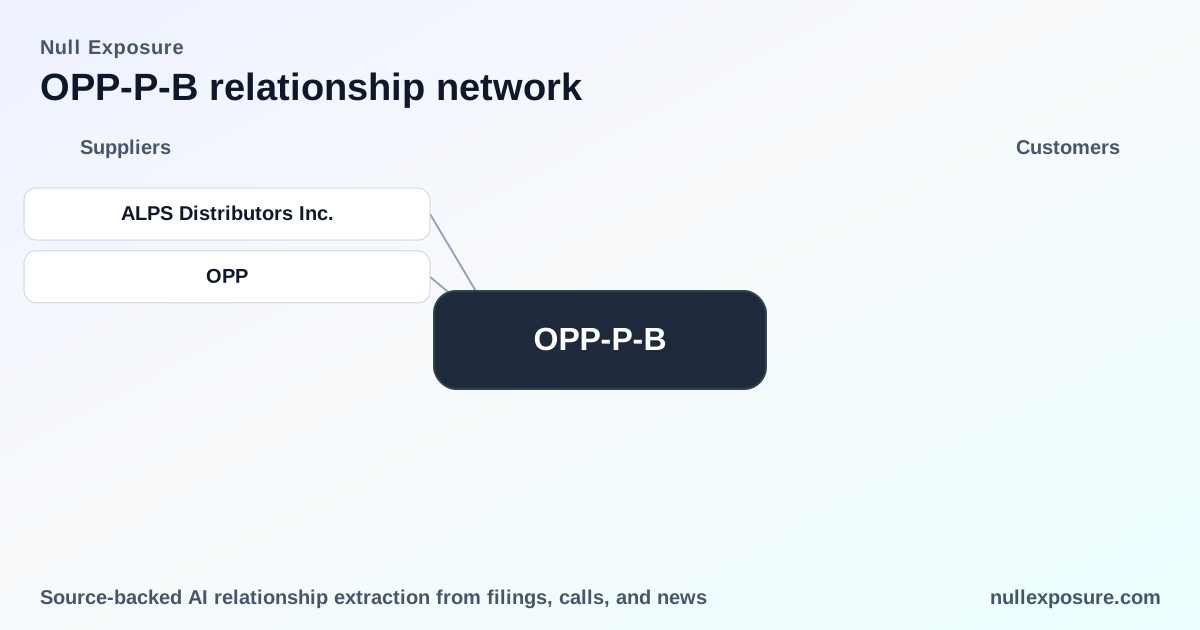
- Concentration: Public records show a single named distributor (ALPS Distributors Inc.) across multiple release filings, which is a concentration signal for distribution services.
- Criticality: Distribution is mission-critical when the fund conducts rights offerings or similar shareholder capital transactions; execution quality directly affects raise outcomes and market perception.
- Maturity and formality: Use of established fund-distribution firms indicates a mature, market-standard contracting approach with regulated intermediaries rather than ad hoc vendors.
These are company-level signals; the filings do not include additional constraints or specific contract terms, which limits visibility into pricing, exclusivity, or tenure.
Supplier-by-supplier findings (plain-English summaries)
- ALPS Distributors Inc. provided marketing services referenced in the fund’s announcements related to a rights offering; this work supported investor outreach in OPP-P-B’s capital raise process. According to the Barchart recap of the fund’s final rights offering results (March 10, 2026), ALPS is identified as the marketing services provider (Barchart, March 2026: https://www.barchart.com/story/news/36239771/rivernorth-doubleline-strategic-opportunity-fund-inc-announces-final-results-of-rights-offering).
- A separate press release covering preliminary rights offering results likewise names ALPS Distributors Inc. as the entity responsible for marketing services tied to the transaction, confirming a recurring distribution role for the same corporate action (The Globe and Mail press release on the preliminary results, March 10, 2026: https://www.theglobeandmail.com/investing/markets/stocks/OPP/pressreleases/36202549/rivernorthdoubleline-strategic-opportunity-fund-inc-announces-preliminary-results-of-rights-offering/).
- A final rights offering press release carried in The Globe and Mail repeats that ALPS Distributors Inc. provided marketing services, reinforcing that the same distributor handled both preliminary communications and the concluding outreach for the offering (The Globe and Mail final results release, March 10, 2026: https://www.theglobeandmail.com/investing/markets/stocks/OPP/pressreleases/36239790/rivernorthdoubleline-strategic-opportunity-fund-inc-announces-final-results-of-rights-offering/).
Each reference ties ALPS to the fund’s rights offering communication program; these items collectively document a consistent third-party distribution role across the capital raise.
For operators and analysts wanting a consolidated supplier view, run a targeted supplier screen at https://nullexposure.com/ to correlate distribution partners across holdings and offerings.
Why distribution partners matter for this fund’s operational risk profile
Distribution and marketing partners like ALPS influence three practical investor outcomes:
- Fundraising success and timing. When a closed-end fund runs a rights offering, the distributor’s execution affects take-up rates and the speed of capital inflows. The public disclosures show ALPS in that role for both preliminary and final notices, which places responsibility for outreach and subscription handling on the vendor (see The Globe and Mail and Barchart press releases, March 2026).
- Regulatory and disclosure consistency. Using an established fund distributor reduces operational friction in regulated communications; the repeat mentions across filings suggest formalized engagement rather than ad hoc support.
- Reputational exposure. Distribution missteps—poor communications, timing errors, or compliance lapses—translate quickly into market sentiment impacts for closed-end funds during capital events.
Given the available information, investors should treat marketing/distribution as a high-impact but discrete supplier category: critical to specific corporate actions, but not indicative of portfolio-management exposure.
Signals from what’s not disclosed
The supplier relationship records contain no constraints or contract excerpts. The absence of explicit constraints in public notes is itself a signal: the fund does not publish granular supplier contract terms or dependency limits in these releases, which reduces transparency on pricing, exclusivity, and termination rights. That informational gap is a company-level disclosure characteristic rather than a relationship-specific attribute.
Because no constraints are documented publicly, diligence should prioritize:
- Requesting the contract terms, service-level agreements, and tenure for distribution engagements.
- Verifying whether ALPS is an exclusive distributor for certain channels or only retained for specific issuance events.
Investment takeaway and recommended next steps
Bold, investor-oriented conclusions:
- Distribution concentration is visible and functionally material. ALPS Distributors Inc. is the named marketing services provider across OPP-P-B’s rights offering communications in March 2026, which elevates the vendor’s importance for future capital actions.
- Supplier risk is concentrated but contained. Distribution is critical during capital raises, but it does not substitute for portfolio management capabilities provided by DoubleLine and RiverNorth.
- Disclosure gaps increase due diligence responsibility. The absence of contract-level constraints requires direct inquiry from management to assess counterparty exposure, service continuity, and contingency plans.
Practical next steps for investors and operators:
- Request written confirmation of distributor engagement terms and exclusivity windows for future offerings.
- Monitor subsequent press releases for additional named service providers and changes to the distribution roster.
- Evaluate operational backups and contingency planning for capital raises in investor communications.
For a consolidated supplier-risk view across your fund universe, visit https://nullexposure.com/ and integrate supplier signals into your investment due diligence.
Concluding recommendation: treat ALPS’s role as a material but specific operational dependency for OPP-P-B’s capital-raising activities; validate contractual terms and continuity plans before underwriting incremental exposure.
For further supplier intelligence and to run comparative checks across funds and offerings, see https://nullexposure.com/.