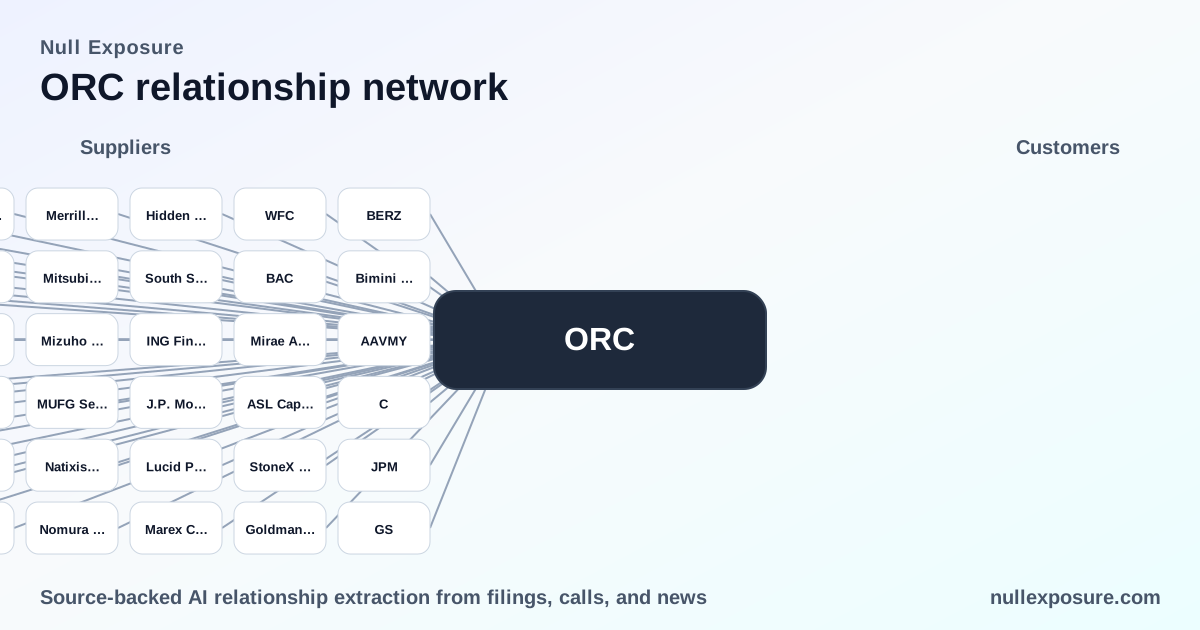
Orchid Island Capital (ORC): Who Orchid Pays, Who Runs It, and Where the Risk Lives
Orchid Island Capital is an externally managed mortgage REIT that earns a spread on Agency RMBS by buying pass‑through and structured agency mortgage securities and funding them largely through short‑dated repurchase agreements; the company monetizes through net interest spread, management fee pass‑throughs to its external manager, and distributable cash paid as monthly dividends. Investors should view ORC as a portfolio‑management business with significant reliance on repo counterparties and its external manager, Bimini, rather than an operating company with internal origination. For operational diligence, see the manager and repo counterparties first. For more supplier and counterparty intelligence, visit https://nullexposure.com/.
How the business actually operates — the operating model in plain English
Orchid purchases Agency RMBS (Fannie Mae, Freddie Mac, Ginnie Mae) and finances those positions with short‑term repurchase agreements arranged through a broad set of capital markets counterparties. The Company is externally managed by Bimini Advisors and related Bimini entities that supply investment management, trading, clearing, legal and compliance functions and for which Orchid pays management fees and expense reimbursements. Orchid’s liquidity profile is therefore dual: large repo lines (hundreds of millions to billions outstanding) and reliance on the TBA and securities markets to rotate assets. That structure produces high operational leverage to funding markets and high counterparty concentration risk in repo providers.
- Contracting posture: mix of usage‑based and short‑term repo contracts with some long‑term management agreements that auto‑extend, producing both tactical funding exposure and a single critical outsourced manager relationship (evidence in company filings).
- Concentration and criticality: Manager relationship is critical to daily operations and the Company’s ability to operate; repo counterparties are concentrated large financial firms.
- Maturity and stage: repo funding is short‑dated (weighted average maturity ~26 days) while the management agreement is longer term with one‑year auto‑extensions.
- Spend profile: management/operational fees and trading/clearing services are material (management and repo servicing expenses in the low‑double digit millions annually) while total repo balances represent hundreds of millions to billions on the liability side.
If you want a deeper counterparty map for underwriting and vendor risk, explore our coverage at https://nullexposure.com/.
Relationship map — counterparties, brokers and the manager (each entry cites the source)
-
Bank of Montreal — Orchid lists Bank of Montreal among repo counterparties and recorded borrowings reported in the company’s press release (Mar 10, 2026). (Source: Yahoo Finance press release, Mar 10, 2026) https://sg.finance.yahoo.com/news/orchid-island-capital-announces-estimated-212700444.html
-
Bimini Advisors Holdings, LLC — Bimini Advisors Holdings is identified as the Bimini subsidiary through which Orchid is externally managed; the management relationship is documented in Orchid press materials. (Source: Globe and Mail / press release, 2026) https://www.theglobeandmail.com/investing/markets/stocks/ORC-N/pressreleases/71140/bimini-capital-management-to-announce-fourth-quarter-2025-results/
-
ABN AMRO Bank N.V. — Listed as a repo counterparty with specific borrowings and rates in Orchid’s portfolio disclosure. (Source: Yahoo Finance press release, Mar 10, 2026) https://sg.finance.yahoo.com/news/orchid-island-capital-announces-estimated-212700444.html
-
Citigroup Global Markets Inc — Citigroup appears among top repo counterparties with material outstanding balances in the company disclosure (Nov 30, 2025 snapshot). (Source: QuiverQuant dividend/filing summary, Dec 2025) https://www.quiverquant.com/news/Orchid+Island+Capital%2C+Inc.+Declares+December+2025+Monthly+Dividend+of+%240.12+Per+Share
-
J.P. Morgan Securities LLC — J.P. Morgan is listed as a repo counterparty with substantial borrowings and short maturities in Orchid’s repo schedule. (Source: QuiverQuant, Dec 2025) https://www.quiverquant.com/news/Orchid+Island+Capital%2C+Inc.+Declares+December+2025+Monthly+Dividend+of+%240.12+Per+Share
-
Goldman, Sachs & Co — Goldman appears in Orchid’s counterparty list for repo borrowings and is repeatedly cited across portfolio disclosures. (Source: QuiverQuant & Yahoo Finance, Dec 2025 / Mar 2026) https://www.quiverquant.com/news/Orchid+Island+Capital%2C+Inc.+Declares+December+2025+Monthly+Dividend+of+%240.12+Per+Share
-
Wells Fargo Securities, LLC — Wells Fargo is a named counterparty in repurchase agreements with quantified exposures in company statements. (Source: QuiverQuant, Dec 2025) https://www.quiverquant.com/news/Orchid+Island+Capital%2C+Inc.+Declares+December+2025+Monthly+Dividend+of+%240.12+Per+Share
-
Merrill Lynch, Pierce, Fenner & Smith — Merrill Lynch is listed among large repo lenders with assigned balances and repo rates. (Source: QuiverQuant, Dec 2025) https://www.quiverquant.com/news/Orchid+Island+Capital%2C+Inc.+Declares+December+2025+Monthly+Dividend+of+%240.12+Per+Share
-
Mirae Asset Securities (USA) Inc. — Mirae Asset is shown as a repo counterparty with recorded borrowings and maturities in Orchid’s disclosure. (Source: QuiverQuant & Yahoo Finance, Dec 2025 / Mar 2026) https://www.quiverquant.com/news/Orchid+Island+Capital%2C+Inc.+Declares+December+2025+Monthly+Dividend+of+%240.12+Per+Share
-
ASL Capital Markets Inc. — ASL is included in the repo counterparty schedule with specific exposure and rate details. (Source: Yahoo Finance press release, Mar 10, 2026) https://sg.finance.yahoo.com/news/orchid-island-capital-announces-estimated-212700444.html
-
StoneX Financial Inc. — StoneX is listed among repo providers with day‑to‑maturity data in the company’s repo schedule. (Source: QuiverQuant, Dec 2025) https://www.quiverquant.com/news/Orchid+Island+Capital%2C+Inc.+Declares+December+2025+Monthly+Dividend+of+%240.12+Per+Share
-
Hidden Road Partners Civ US LLC — Hidden Road is a named repo counterparty with material activity and maturities disclosed. (Source: Yahoo Finance press release, Mar 10, 2026) https://sg.finance.yahoo.com/news/orchid-island-capital-announces-estimated-212700444.html
-
South Street Securities, LLC — South Street appears with a meaningful repo balance and extended maturities in Orchid’s disclosures. (Source: QuiverQuant, Dec 2025) https://www.quiverquant.com/news/Orchid+Island+Capital%2C+Inc.+Declares+December+2025+Monthly+Dividend+of+%240.12+Per+Share
-
ING Financial Markets LLC — ING is included among repo counterparties with weighted rates and maturity lines. (Source: Yahoo Finance press release, Mar 10, 2026) https://sg.finance.yahoo.com/news/orchid-island-capital-announces-estimated-212700444.html
-
Lucid Prime Fund, LLC — Lucid Prime shows up in the portfolio counterparty list with a small but noted repo position. (Source: Yahoo Finance press release, Mar 10, 2026) https://sg.finance.yahoo.com/news/orchid-island-capital-announces-estimated-212700444.html
-
Marex Capital Markets Inc. — Marex is cited as a repo counterparty with transactional repo balances disclosed. (Source: Yahoo Finance press release, Mar 10, 2026) https://sg.finance.yahoo.com/news/orchid-island-capital-announces-estimated-212700444.html
-
Brean Capital, LLC — Brean Capital is listed among smaller repo counterparties in the company schedule. (Source: Yahoo Finance press release, Mar 10, 2026) https://sg.finance.yahoo.com/news/orchid-island-capital-announces-estimated-212700444.html
-
Cantor Fitzgerald & Co — Cantor Fitzgerald is included in the repo list with balances and rate metrics. (Source: Yahoo Finance press release, Mar 10, 2026) https://sg.finance.yahoo.com/news/orchid-island-capital-announces-estimated-212700444.html
-
Clear Street LLC — Clear Street is shown as a repo provider with short maturities and recorded rates. (Source: Yahoo Finance & QuiverQuant, Dec 2025 / Mar 2026) https://sg.finance.yahoo.com/news/orchid-island-capital-announces-estimated-212700444.html
-
Daiwa Securities America Inc. — Daiwa appears with repo borrowings and maturity information in Orchard’s disclosures. (Source: Yahoo Finance press release, Mar 10, 2026) https://sg.finance.yahoo.com/news/orchid-island-capital-announces-estimated-212700444.html
-
DV Securities, LLC Repo — DV Securities (repo) is a named counterparty with disclosed borrowing amounts and rates. (Source: Yahoo Finance press release, Mar 10, 2026) https://sg.finance.yahoo.com/news/orchid-island-capital-announces-estimated-212700444.html
-
Fannie Mae — Orchid explicitly targets and holds pass‑through Agency RMBS issued by Fannie Mae as a core investment category. (Source: Orchid press materials / Jan 2026 filing) https://sg.finance.yahoo.com/news/orchid-island-capital-announces-january-220100814.html
-
Banco Santander SA — Banco Santander is listed among repo counterparties with assigned exposures. (Source: Yahoo Finance press release, Mar 10, 2026) https://sg.finance.yahoo.com/news/orchid-island-capital-announces-estimated-212700444.html
-
Freddie Mac — Orchid holds RMBS issued by Freddie Mac as a primary asset class in its portfolio disclosures. (Source: Orchid press materials / Jan 2026 filing) https://sg.finance.yahoo.com/news/orchid-island-capital-announces-january-220100814.html
-
Ginnie Mae — Ginnie Mae pass‑throughs are listed as part of Orchid’s Agency RMBS universe in company statements. (Source: Orchid press materials, Jan–Feb 2026) https://sg.finance.yahoo.com/news/orchid-island-capital-announces-january-220100814.html
-
Bimini Advisors, LLC / Bimini Advisors LLC — The Manager (Bimini Advisors, LLC) administers day‑to‑day operations for Orchid and receives management fees and expense reimbursements per the management agreement. (Source: multiple press releases and filings, Jan–Mar 2026) https://www.manilatimes.net/2026/01/15/tmt-newswire/globenewswire/orchid-island-capital-announces-estimated-fourth-quarter-2025-results-and-december-31-2025-rmbs-portfolio-characteristics/2259244
-
Bimini Capital Management, Inc. — The parent Bimini and its subsidiaries manage Orchid through Bimini Advisors; the relationship is documented in investor communications. (Source: Globe and Mail press release, 2026) https://www.theglobeandmail.com/investing/markets/stocks/ORC-N/pressreleases/71140/bimini-capital-management-to-announce-fourth-quarter-2025-results/
-
Nomura Securities International, Inc. — Nomura appears in the repo counterparty list with recorded balances and rates. (Source: QuiverQuant, Dec 2025) https://www.quiverquant.com/news/Orchid+Island+Capital%2C+Inc.+Declares+December+2025+Monthly+Dividend+of+%240.12+Per+Share
-
Mizuho Securities USA LLC — Mizuho is cited among repo providers with transactional repo exposures. (Source: QuiverQuant, Dec 2025) https://www.quiverquant.com/news/Orchid+Island+Capital%2C+Inc.+Declares+December+2025+Monthly+Dividend+of+%240.12+Per+Share
-
Mitsubishi UFJ Securities (USA), Inc. — Mitsubishi UFJ is named in the repo schedule with balances and dates. (Source: Yahoo Finance press release, Mar 10, 2026) https://sg.finance.yahoo.com/news/orchid-island-capital-announces-estimated-212700444.html
-
MUFG Securities Canada, Ltd. — MUFG Canada is listed as a repo counterparty with a small maturity profile. (Source: QuiverQuant, Dec 2025) https://www.quiverquant.com/news/Orchid+Island+Capital%2C+Inc.+Declares+December+2025+Monthly+Dividend+of+%240.12+Per+Share
-
Natixis, New York Branch — Natixis appears in Orchid’s repo counterparty disclosures with a modest position. (Source: Yahoo Finance press release, Mar 10, 2026) https://sg.finance.yahoo.com/news/orchid-island-capital-announces-estimated-212700444.html
-
RBC Capital Markets, LLC — RBC is listed among repo counterparties with material borrowings noted. (Source: Yahoo Finance press release, Mar 10, 2026) https://sg.finance.yahoo.com/news/orchid-island-capital-announces-estimated-212700444.html
-
The Bank of Nova Scotia — Scotiabank is included in the repo schedule and funding disclosures. (Source: Yahoo Finance press release, Mar 10, 2026) https://sg.finance.yahoo.com/news/orchid-island-capital-announces-estimated-212700444.html
(That completes the company‑identified counterparties and manager entities disclosed across Orchid Island press releases and dividend/portfolio summaries. For deeper counterparty analytics and aggregation, see https://nullexposure.com/.)
What this map means for investors — concentrated, short‑dated funding with a single outsourced operations engine
- Critical dependency: Orchid is completely dependent on its external manager and on repo counterparties for liquidity and execution; management termination would be operationally disruptive (company filings state replacement risk).
- Funding profile risk: repo lines are usage‑based, short‑term and material — short maturities (weighted average ~26 days) and daily fees create sensitivity to money‑market dislocation. The company reports both mid‑double‑digit repo balances and annualized management/operational expenses in the low tens of millions.
- Counterparty mix: counterparties are large, regulated financial institutions and specialized broker‑dealers, which reduces single‑counterparty credit risk but maintains market‑access risk if multiple providers tighten simultaneously.
Actionable takeaways
- Underwrite the manager: prioritise operational due diligence on Bimini Advisors and key personnel because the manager is operationally critical. (See multiple filings and press releases, Jan–Mar 2026.)
- Stress funding lines: model scenarios where short‑term repo access tightens for 30–90 days and measure the balance‑sheet and dividend impact.
- Monitor counterparties: track the health and activity of the top repo providers named above and maintain a watchlist for concentration drift.
For institutional risk teams and allocators needing a structured counterparty briefing, start here: https://nullexposure.com/. If you want an institutional‑grade counterparty map and alerting on ORC counterparties and management contract events, visit https://nullexposure.com/ for vendor engagement and briefing packages.
Conclusion — Orchid is a funding‑sensitive, externally managed RMBS investor with a broad mix of large repo counterparties and a single critical manager; investment decisions should prioritize counterparty, funding and manager continuity analysis over simple yield metrics. For supplier and counterparty risk products tied to ORC, find our research hub at https://nullexposure.com/.