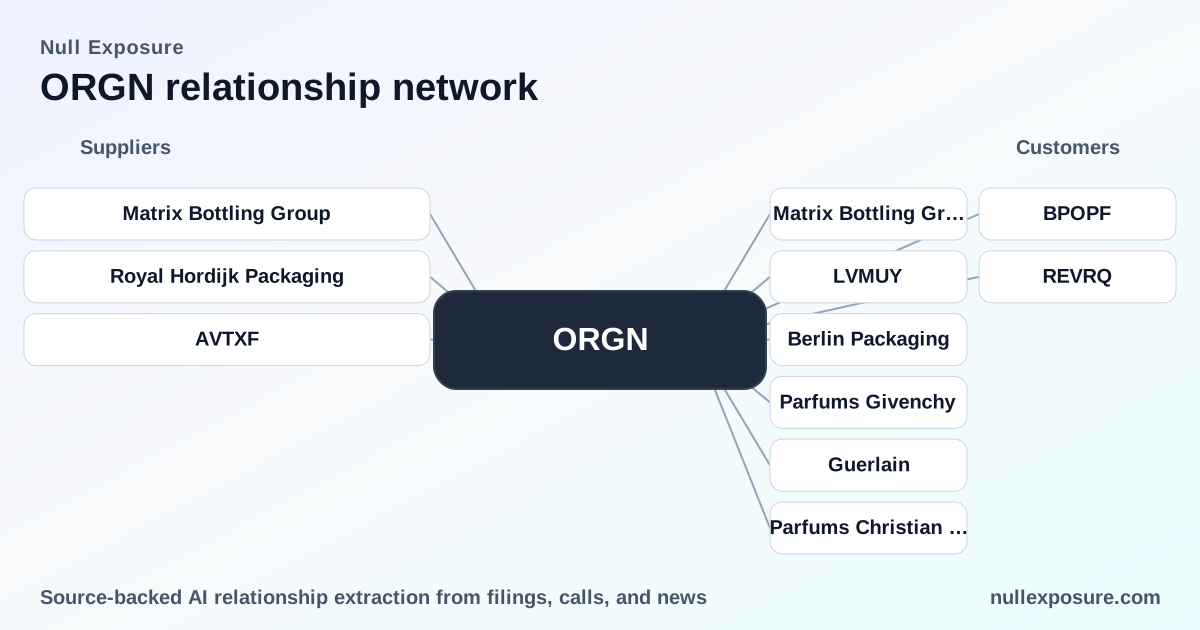
Origin Materials (ORGN): supplier relationships that shape scale and risk
Origin Materials is a chemical and packaging innovator that converts renewable feedstocks into PET closures and intermediate chemicals, monetizing through product sales, long-term conversion contracts, and conditional offtake arrangements with industrial partners and co-manufacturers. The company combines in-house manufacturing with third‑party bottling and capping services to move finished closures into beverage and consumer supply chains, while securing upstream supply of building‑block chemicals through strategic offtake deals. Investors should read supplier and partner relationships as operational levers that determine near‑term production capacity, revenue visibility, and capital intensity. Learn more about our supplier coverage at https://nullexposure.com/.
Business model snapshot: Origin sells finished PET caps and plans to scale intermediate chemical sales (FDCA/PEF) through partnerships; revenue comes from direct product sales and service agreements (including take‑or‑pay commitments) that lock in volumes and capital obligations.
How Origin runs the business and why suppliers matter
Origin operates with a hybrid manufacturer/service posture: it owns or leases production facilities and simultaneously relies on a small number of third‑party partners for downstream integration and upstream feedstock/chemical supply. The company’s public disclosures show long‑dated facilities leases and explicit take‑or‑pay conversion commitments that create revenue visibility but also fixed cost obligations.
- Contracting posture: Origin uses multi‑year contracts and take‑or‑pay purchase commitments to secure capacity and to underwrite capital deployed in production lines. That reduces volume risk for manufacturers but increases operating leverage.
- Concentration and criticality: Origin depends on a limited number of manufacturing sites to serve PET closure demand and to produce intermediate chemicals; adverse events at a single site would have a disproportionate impact on output and revenues.
- Maturity of relationships: Partnerships range from operational co‑manufacturing/bottling for immediate product commercialization to conditional offtake agreements tied to pilot and forthcoming commercial plants, indicating staged maturity across the supplier base.
These company‑level signals (long‑term contracts, material reliance on few facilities, mix of buyer and service provider roles) should shape any investment or vendor‑management assessment.
Supplier and service relationships investors should track
Below are the supplier and partner relationships surfaced in recent reporting, each summarized for investor use.
Matrix Bottling Group — downstream bottling and capping partner
Origin has contracted Matrix Bottling Group to provide bottling and capping services for Origin’s PET caps, beginning with 28 mm caps and expanding into other formats, to help launch beverage products for customers ranging from startups to global brands. According to press coverage in March 2026, Matrix will handle bottling and capping operations tied to Origin’s caps for beverage customers. (Packaging Europe; Yahoo Finance; Packaging Gateway, March 2026)
Royal Hordijk Packaging — co‑production partner for PET caps
Origin has teamed with Royal Hordijk Packaging to mass‑produce PET bottle caps across food, personal care, pharmaceutical and horticultural sectors, extending Origin’s manufacturing footprint and go‑to‑market reach for closures. Packaging Europe reported the collaboration as part of Origin’s push to scale cap manufacturing capacity in FY2026. (Packaging Europe, March 2026)
Avantium — conditional offtake for FDCA and PEF (upstream chemical supply)
Origin has a conditional offtake relationship with Avantium under which Avantium will sell FDCA and PEF to Origin, initially from Avantium’s FDCA pilot in Geleen and later from the Delfzijl commercial plant as it comes online. Packaging Europe documented the arrangement, noting the supply timeline and the role of Avantium’s pilot and future commercial output in Origin’s chemical feedstock planning (references to 2023 pilot activity and expected 2024 commercial start referenced in the original agreement). (Packaging Europe, FY2026 coverage of historic 2023/2024 supply plans)
Why these relationships change the investment case
Origin’s partner map shows a deliberate strategy to de‑risk go‑to‑market execution while taking on fixed commitments to secure capacity. That trade‑off has four practical implications for investors:
- Revenue visibility through long contracts. Take‑or‑pay and multi‑year commitments provide predictable demand for conversion services and finished goods, supporting near‑term revenue and utilization targets.
- Capital and operational leverage. These same contracts amplify downside when volumes fall or when a limited manufacturing site is disrupted; the company’s reliance on a small number of facilities is a clear concentration risk.
- Operational acceleration via co‑manufacturers. Working with bottlers and packaging specialists like Matrix and Royal Hordijk accelerates product launches without the full capex of vertically integrated bottling. That reduces time to market but increases dependency on third‑party execution.
- Upstream supply tied to industrial partners. The Avantium offtake gives Origin access to FDCA/PEF feedstock necessary for chemical sales, but availability is linked to Avantium’s plant commissioning schedule and prior pilot performance.
Investors should weigh the predictability of contracted volumes against the operational concentration that those contracts conceal.
Practical steps for investors and operators
- Track commissioning and ramp timelines for the facilities Origin references; one site outage can meaningfully impact output.
- Monitor execution milestones with Matrix and Royal Hordijk for product launch cadence and SKU expansion; operational slippage in co‑manufacturing partners will directly affect sales ramp.
- Assess Avantium’s commercial plant progress and historical pilot performance to gauge upstream supply reliability and timing for chemical sales.
- Review contract terms for take‑or‑pay obligations and lease maturities to model downside cash flow under stress.
For deeper supplier mapping and on‑the‑ground monitoring, visit https://nullexposure.com/ to access our research hub and supplier intelligence.
Final verdict and next steps
Origin Materials deploys a partnership‑centric scaling strategy: it uses co‑manufacturers and conditional offtake contracts to accelerate product commercialization while accepting fixed contractual obligations and concentration risk. For investors, the most material questions are execution of partner ramp plans and the operational resilience of a small number of facilities. Operators should prioritize contingency plans with bottling and packaging partners and keep a close watch on Avantium’s plant milestones.
Explore more supplier intelligence and scenario models at https://nullexposure.com/ — whether you are sizing downside exposure or assessing upside from successful partner‑led rollouts, supplier relationships are the operational fulcrum for Origin’s next phase.