Oruka Therapeutics (ORKA): Supplier relationships that determine runway and execution risk
Thesis: Oruka Therapeutics is an antibody-focused biotechnology developer that monetizes through in‑licenses, option exercises and downstream commercialization rights rather than product sales today. The company runs a licensing-and-partnership model—securing cell line and antibody licenses, paying option and milestone fees, and outsourcing manufacturing to contract partners—while it advances clinical programs toward value‑creating inflection points. Investors should price Oruka as a development‑stage biotech with material supplier concentration and licensing obligations that are central to its ability to execute.
If you want a concise supplier risk scorecard and relationship map for ORKA, visit https://nullexposure.com/ for the detailed view.
How Oruka runs the business and turns science into value
Oruka operates as a classic small‑cap biotech: it holds exclusive and non‑exclusive licenses to engineered antibodies and cell lines, funds R&D through capital markets and partner payments, and relies on CMOs and collaborators to supply clinical material. There is no product revenue reported to date; the company’s market capitalization and analyst expectations reflect anticipated clinical progress and a future commercialization pathway rather than current sales. Financials show negative EBITDA and no revenue in the latest period, underlining the reliance on financing and strategic partner arrangements to sustain operations.
Key operational facts: the company has exercised option rights (triggering milestone payments), recognizes multi‑million dollar service expenses to collaborators, and maintains active licensing agreements for both cell lines and antibody programs. These are not peripheral activities: they are the business model.
The supplier and collaborator landscape — what relationships matter today
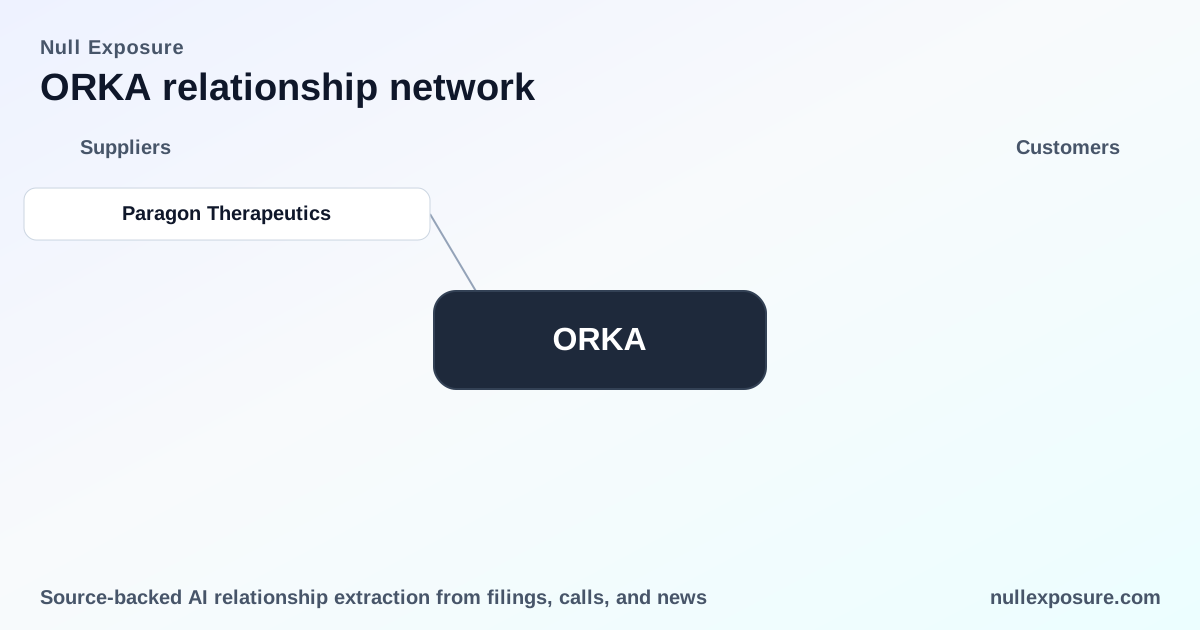
Oruka’s publicly cited supplier and collaborator footprint centers on two named partners in its disclosures and news releases: Paragon Therapeutics and WuXi Biologics. Below are plain‑English summaries of each relationship drawn from company disclosures and contemporaneous press.
-
Paragon Therapeutics — Oruka advanced a portfolio of engineered antibodies that were originally developed by Paragon and Oruka exercised options to license ORKA‑001, taking a royalty‑bearing, worldwide exclusive license (excluding inflammatory bowel disease) to develop and commercialize IL‑23 targeted assets; Paragon also provided services and option‑related work that generated material service expense recognized by Oruka. According to a GlobeNewswire press release and subsequent Yahoo Finance coverage, Oruka closed a merger and referenced the Paragon‑engineered antibody portfolio as core to its pipeline (GlobeNewswire, Sept 2024; Yahoo Finance news items linked through 2024–2026 reporting).
Sources: GlobeNewswire announcement on merger closing (Sept 3, 2024) and multiple Yahoo Finance releases covering the ARCA/Oruka/Paragon transactions and option exercises in FY2024–FY2026. -
WuXi Biologics (Ireland) — Oruka secured a Cell Line License Agreement that gave it a non‑exclusive, worldwide, sublicensable license to WuXi’s cell line, know‑how and biological materials used to produce certain therapeutic products; this agreement supports manufacturing activities for ORKA‑001 and ORKA‑002. The license was executed in March 2024 and covers media/feeds and cell line technology used in manufacturing.
Sources: Company filing excerpts describing the Cell Line License Agreement with WuXi Biologics (March 2024 disclosure, FY2024 filing text).
Each of the above relationships is documented in Oruka’s public disclosures and in press coverage of its merger and option arrangements; together they form the operational backbone for the ORKA programs currently in development.
What the constraints say about Oruka’s operating model — concentration, posture and criticality
The textual constraints extracted from Oruka’s filings reveal a clear and actionable supplier profile:
-
Licensing is the core contracting posture. Oruka’s model is licensing‑heavy: it relies on option agreements and exclusive/non‑exclusive licenses (e.g., ORKA‑001 License Agreement with Paragon and a Cell Line License with WuXi). Licensing creates near‑term fixed obligations (milestones, royalties) and long‑term rights that determine commercial upside.
-
Sole‑source manufacturing risk is material and critical. Oruka discloses a sole‑source arrangement for supply of ORKA‑001 and ORKA‑002, which the company identifies as a vulnerability that could disrupt clinical development if supply is interrupted. This is a company‑level criticality signal that elevates operational risk until redundant suppliers or in‑house capacity are qualified.
-
Geographic and regulatory footprint extends into EMEA through WuXi Ireland. The Cell Line License is with WuXi Biologics Ireland Limited, indicating EMEA jurisdiction for part of the manufacturing license and associated regulatory interactions.
-
Service provider dependence and expense concentration are evidentiary of outsourced execution. Oruka recorded $42.0 million of expenses to Paragon and related parties for services under the option agreements in its initial period; this indicates both the scale and dependency on external technical teams early in the company’s life.
-
Relationship maturity is active but early stage. Agreements continue unless terminated under standard breach or notice provisions; the relationships are live with exercised options and recorded milestone payments, marking an operational phase beyond simple discovery but short of commercial maturity.
Taken together, these constraints present a profile of a development‑stage biotech with high supplier concentration, licensing governance that controls upside and downside, and manufacturing dependence that is operationally critical.
If you want an investor‑grade supplier risk assessment tied to these disclosures, see the detailed engagement analysis at https://nullexposure.com/.
Investment implications: upside drivers and concentrated risks
Oruka’s upside is straightforward: exclusive license rights to engineered antibodies and successful clinical readouts would re‑rate valuation materially, supported by analyst targets that reflect therapeutic potential. The company’s negative EBITDA, zero reported revenue, and high R&D spend mean that execution on clinical milestones and secure supply chains are the primary value levers.
Primary risks to price and delivery:
- Sole‑source manufacturing adds binary supply risk that can delay trials and increase costs.
- License economics (royalties/milestones) create persistent margin drag on eventual commercialization and are already producing non‑trivial cash outflows.
- Concentration of technical know‑how with external service providers (Paragon, CMOs) raises operational dependency until proprietary processes or multiple suppliers are qualified.
Operational investors and operators should prioritize supply redundancy, contract clarity on indemnities and milestones, and a timeline to de‑risk sole‑source suppliers.
What investors and partners should watch next
- Track any announcements about qualifying additional CMOs or transferring cell lines to alternate manufacturers.
- Monitor milestone and option‑related cash flows—especially incremental payments to Paragon—that affect cash runway.
- Watch regulatory filings and press around any merger/transaction consummations that change counterparty obligations (e.g., ARCA/Oruka combinations covered in 2024–2026 notices).
For an actionable supplier diligence pack and ongoing monitoring of these relationships, visit https://nullexposure.com/ for analytical coverage and supplier scoring.
Bottom line
Oruka is a licensing‑centric biotech whose value trajectory depends on converting licensed antibody assets into clinical success while managing high supplier concentration and sole‑source manufacturing risk. Investors should treat the company as a development play whose downside is concentrated in supply and partner execution, and whose upside is concentrated in clinical inflection points tied to the licensed IL‑23 program.
Final note: review the company’s public filings for the precise license terms and milestone schedules discussed in the FY2024 disclosures and the subsequent press releases for the latest updates. Explore deeper supplier intelligence and ongoing relationship tracking at https://nullexposure.com/.