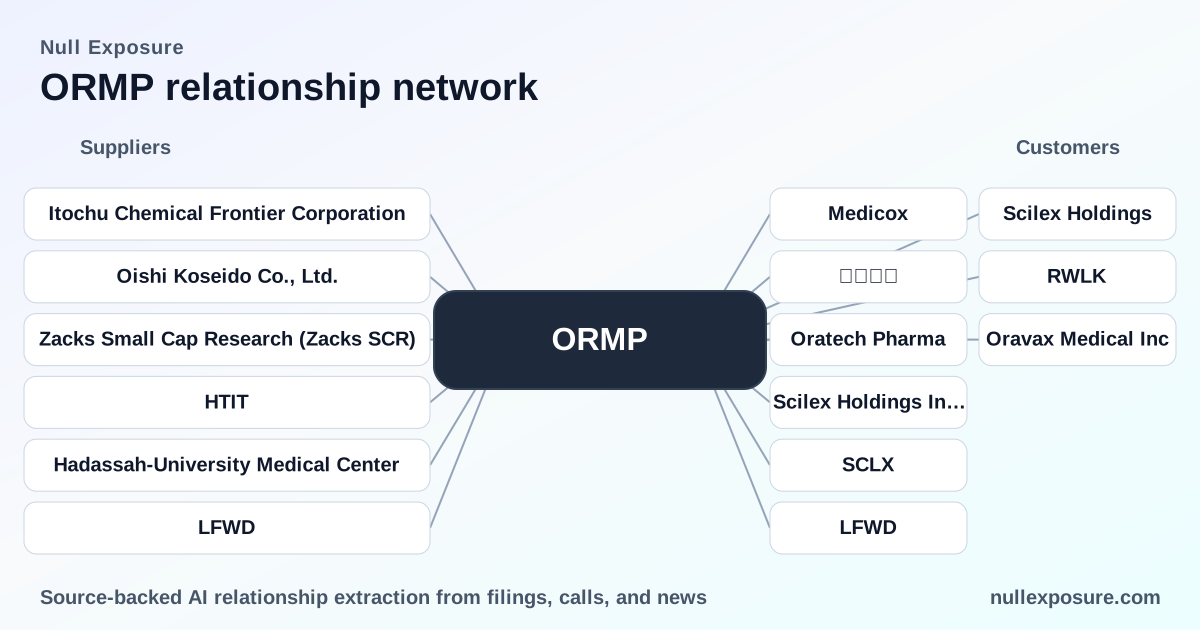
Oramed Pharmaceuticals (ORMP): supplier relationships that shape a small-cap biotech’s path to commercialization
Oramed Pharmaceuticals develops orally ingestible polypeptide therapeutics and pursues commercialization through licensing, joint ventures and selective third‑party investments; the company monetizes by advancing clinical candidates toward approval and capturing value via license fees, royalties and strategic financial instruments. With a market capitalization near $139 million, nominal revenue (~$2.0M trailing twelve months) and ongoing clinical spend, Oramed’s supplier and partner network drives both R&D progress and near‑term financing dynamics. For investors evaluating supplier counterparties and strategic counterpart risk, the partner roster matters as much as the pipeline. Learn more about supplier exposures and commercial partners at https://nullexposure.com/.
Why supplier and partner relationships are a material lens for investors
Oramed operates as an R&D‑heavy biotech that outsources critical activities and structures IP commercialization through third‑party arrangements. That operating posture produces three practical realities for investors: outsourced execution (CROs and contract manufacturing) creates dependency on vendor performance and milestones, licensing/joint‑venture structures concentrate long‑term economic rights into a handful of counterparties, and strategic investments or convertible instruments are used to bridge funding gaps. These are not abstract; they show up in Oramed’s filings and public reporting.
Counterparty breakdown — who Oramed works with and why
Itochu Chemical Frontier Corporation
Oramed’s FY2024 Form 10‑K discloses plans to hold the Lido License Agreement through a joint venture, RoyaltyVest, together with institutional investors — a structure that contemplates commercial and royalty management with partners including Itochu Chemical Frontier Corporation. According to the company’s 2024 10‑K, the JV is the expected vehicle for holding that license. (Source: Oramed FY2024 Form 10‑K.)
Oishi Koseido Co., Ltd.
The same 10‑K references Oishi Koseido in the context of the contemplated RoyaltyVest structure, indicating that Oramed is organizing the Lido license under a joint venture with institutional partners and named commercial counterparties. This signals licensing and royalty monetization routed through external partners. (Source: Oramed FY2024 Form 10‑K.)
Zacks Small Cap Research (Zacks SCR)
A 2020 disclosure from Zacks Small Cap Research notes that Zacks SCR received compensation from the issuer or associated investor relations arrangements for research coverage, signaling a paid research relationship historically relevant to investor communications and sell‑side visibility. (Source: Zacks SCR disclosure, 2020.)
HTIT (Chinese partner linked to Sinopharm)
A 2016 Globes report documents a multi‑stage investment from Chinese company HTIT (partially owned by Sinopharm) that included a pledged $50 million investment and early capital transfers used to support production‑scale activity in China, showing Oramed’s historical willingness to accept strategic manufacturing partners and external capital for scale. (Source: Globes, 2016.)
Hadassah‑University Medical Center / Oravax Medical Inc.
Reporting from 2021 records Oramed’s joint venture activity with Hadassah‑University Medical Center and India‑based Premas Biotech to form Oravax Medical Inc. for an oral vaccine program — an example of technology licensing and JV formation built on academic IP. This underscores Oramed’s recurring use of JVs to commercialize specific programs. (Source: Georgia Today, 2021.)
Lifeward (LFWD)
Recent media coverage in 2026 indicates Oramed entered multiple material agreements that included acquiring $9 million of senior secured convertible notes from Lifeward, with an additional $9 million contingent on conditions — a financing instrument that ties Oramed’s capital position to a creditor/partner and represents a counterparty exposure through convertible securities. (Source: TradingView news summary, 2026.)
What the contract excerpts and filing signals say about Oramed’s operating model
Oramed’s public disclosures and excerpted clauses point to a clear, repeatable operating pattern:
- Contracting posture — outsourced and JV‑centric. Oramed engages CROs for Phase 3 execution and uses joint ventures (RoyaltyVest, Oravax) to hold licenses and scale manufacturing or commercialization. The company’s Sep 23, 2024 CRO agreement (executed by a subsidiary) formalized strategic outsourcing of clinical, regulatory and data services, with defined milestone payments and relatively modest near‑term expense recognition. (Source: Oramed 2024 disclosures.)
- Concentration and criticality. Licensing via a joint‑venture vehicle suggests future royalty streams could be concentrated and controlled outside the parent company, making the final structure and partner selection material to future cash flows. The CRO arrangement is mission‑critical for Phase 3 timelines.
- Maturity and duration. Relationships span a decade (2016 manufacturing investment) through 2026 financing activity, indicating a history of staged investments and evolving partner roles — from manufacturing commitments to convertible note financings and license JV planning.
- Commercial vs. research stance. The combination of academic tech licensing (Hadassah/Oravax), manufacturing investments (HTIT), and outbound convertible note acquisitions (Lifeward) illustrates a hybrid business model that pursues both product commercialization and opportunistic financing.
Note: the CRO excerpt specifies the subsidiary entered into a Clinical Research Organization Services Agreement on September 23, 2024, with total consideration of $11,577 and $775 recognized through December 31, 2024; that figure and milestone structure are company‑level signals of outsourced R&D cost exposure rather than an attribution to any single counterparty named elsewhere.
Investment implications — what to watch and where risk concentrates
- Operational dependency: Phase 3 progress depends on outsourced CRO execution; monitor milestone achievement and expense recognition tied to those agreements. Missed CRO milestones would directly delay regulatory timelines.
- License monetization concentration: The Lido License being moved into RoyaltyVest concentrates future revenue rights into a JV vehicle; investors must watch the JV’s final structure, partner covenants and royalty waterfall. Royalty collection and governance mechanics determine how license economics flow to Oramed.
- Funding cadence: Acquisition of convertible notes from Lifeward shows active use of financial instruments for capital management — track conversion terms and potential dilution. Convertible security exposure can alter capital structure quickly if triggers occur.
- Investor communications: Historical paid research disclosures (Zacks SCR) and publicized strategic investments (HTIT) require scrutiny for conflicts and third‑party influence on coverage and perceived valuation.
For deeper diligence on counterparties, governance and licensing economics, review Oramed’s filings and JV documents at the company site and regulator filings. Explore supplier and partner exposures further at https://nullexposure.com/.
Bottom line and next steps for portfolio managers
Oramed runs a JV + outsource model: it develops proprietary oral delivery technology, outsources execution (CROs, manufacturing partners), and seeks to monetize via licensing and structured royalties, occasionally supplementing cash with strategic financings. That model generates upside if clinical readouts and license JVs execute as planned, but concentrates risk in vendor performance, JV governance and financing terms. Active monitoring of the Lido License adjudication, RoyaltyVest final structure, Phase 3 CRO milestones and the Lifeward convertible note terms is essential for any investor allocating to ORMP.
For a practical follow‑up and tailored counterparty risk brief, visit https://nullexposure.com/ — we track supplier relationships and contract signals that drive valuation outcomes. If you want an annotated memo covering the RoyaltyVest structure and potential cashflow scenarios, return to https://nullexposure.com/ and request a prioritized note.