Oshkosh Corporation (OSK) — what the Canvas robotics move means for supplier strategy
Thesis: Oshkosh Corporation designs, manufactures and sells specialty vehicles and bodies across commercial and defense markets and monetizes through vehicle sales, long-duration defense contracts, and aftermarket services; incremental investments in embedded automation and collision-avoidance systems convert product differentiation into higher-margin content per vehicle and greater aftermarket software/service revenue. For investors and operator-partners, the Canvas robotics integration is a supplier-facing signal that Oshkosh is shifting procurement and supplier relationships toward technology vendors that provide safety-critical sensors, software and system-integration capabilities. Learn more at https://nullexposure.com/.
Why this matters: Oshkosh’s scale (Revenue TTM ~$10.42B, Market Cap ~$9.35B, EBITDA ~$1.18B) gives it leverage with suppliers, while its margin profile (Operating margin ~7.95%, Profit margin ~6.21%) means technology that increases per-vehicle value or lowers warranty/field costs is a direct lever on profitability.
The Canvas development in plain English: automation moving from bolt-on to embedded
Oshkosh’s recent move to acquire Canvas’s core robotics technology and roll out systems such as HARR-E and a Collision Avoidance Mitigation System signals a transition from buying commodity hardware to integrating safety-critical software and perception stacks into its vehicle platforms. According to a Sahm Capital piece published Jan. 18, 2026, the Canvas acquisition and product rollout illustrate Oshkosh extending intelligent, safety-focused automation across its specialty vehicle portfolio (Sahm Capital, Jan 18, 2026 — https://www.sahmcapital.com/news/content/the-bull-case-for-oshkosh-osk-could-change-following-new-defense-wins-and-automation-push-learn-why-2026-01-18).
Key takeaway: this is no longer a peripheral supplier purchase; it’s supplier strategy being used to lock in higher-value system content and recurring software/service opportunities.
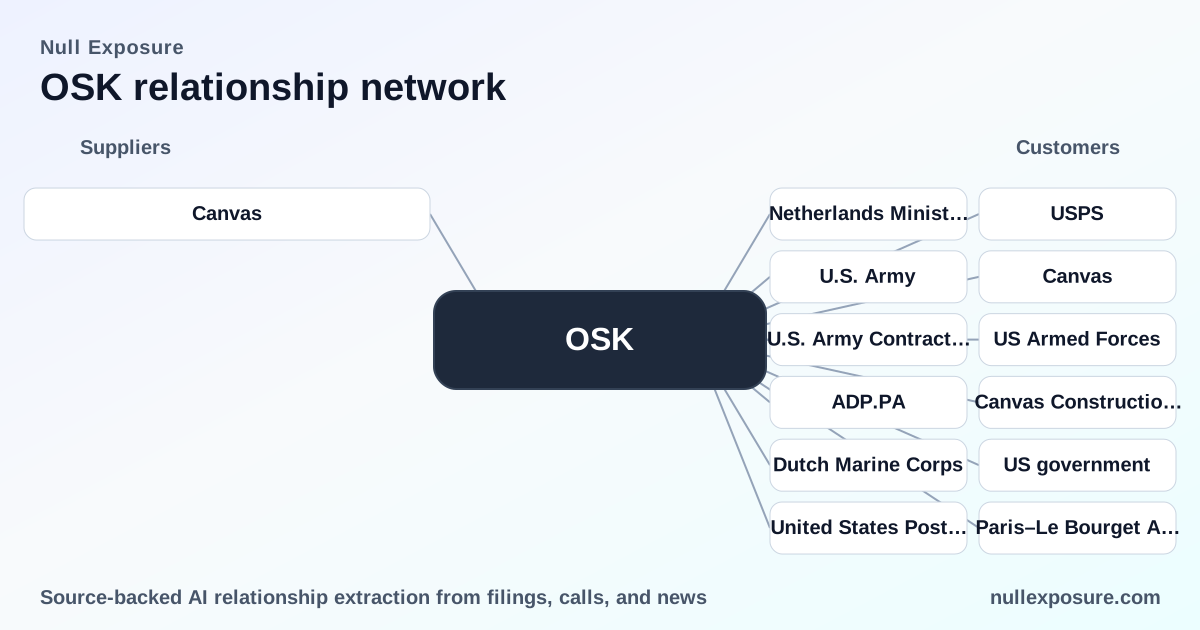
Supplier relationships shown in the public record — exhaustive list from the supplied results
- Canvas: Oshkosh acquired Canvas’s robotics technologies and is deploying systems like HARR-E and a Collision Avoidance Mitigation System to embed automation and safety functionality into its products. The move expands Oshkosh’s reliance on robotics and perception suppliers and elevates such suppliers’ strategic importance. (Sahm Capital, Jan 18, 2026 — https://www.sahmcapital.com/news/content/the-bull-case-for-oshkosh-osk-could-change-following-new-defense-wins-and-automation-push-learn-why-2026-01-18).
There are no other supplier relationships listed in the provided materials; the Canvas linkage is the only explicit supplier-related entry in the results set.
Operating-model constraints and what they say about procurement posture
No explicit supplier constraints were provided in the supplied material, so the following are company-level signals derived from Oshkosh’s business model and financial profile rather than relationship-specific excerpts.
-
Contracting posture — long-cycle, high-certainty procurement. Oshkosh operates in defense and specialty vehicles where customers demand certified, durable systems and long-term support. That produces procurement cycles where suppliers must deliver validated, safety-grade components and commit to long lifecycle support contracts. This favors established suppliers or technology partners that can demonstrate rigorous testing and traceability.
-
Concentration — diversified end-markets but supplier specialization increases. Oshkosh serves defence, fire & emergency, commercial, and construction segments. Revenue scale reduces single-supplier dependency at the corporate level, but automation and robotics suppliers become more concentrated and critical as the company embeds software stacks and perception systems into multiple product lines.
-
Criticality — elevated for safety and software suppliers. Acquisitions like Canvas shift certain suppliers from commodities to strategic partners: perception, LIDAR/RADAR/vision stacks and integrated software become mission-critical, not optional add-ons, raising the bar for supplier qualification and continuity planning.
-
Maturity — OEM with scale but evolving supplier needs. Oshkosh’s mature manufacturing base and stable margins mean it can finance in-house integration or acquisitions to lock supply and control IP. The Canvas deal is consistent with a posture of buying specialist capability to reduce external supplier risk and capture value internally.
How the Canvas move changes supplier negotiation dynamics
Embedding robotics and safety systems transforms a supplier from a replaceable component vendor into a long-term, high-value partner. That has immediate implications:
- Suppliers that provide validated software/perception stacks gain leverage; Oshkosh will prioritize supplier stability, IP security and lifecycle support over unit-cost savings alone.
- Margin mix shifts toward higher-content vehicles and recurring service streams, improving revenue per vehicle and aftermarket opportunities — this is aligned with Oshkosh’s current profitability metrics (Operating margin ~7.95%, Profit margin ~6.21%).
- Capital deployment choices tilt to acquisitions and integration, which reduces the pool of new supplier entrants and increases certification costs for external vendors.
If you track supplier risk or evaluate partnership opportunities, you should treat robotics/software vendors as strategic counterparties rather than simple parts suppliers. For more context on OSK’s supplier posture and market positioning, visit https://nullexposure.com/.
Investment implications and risk posture for operators
-
Upside: Improved product differentiation through embedded automation can justify pricing power, increase aftermarket service revenue and tighten customer lock-in in defense and municipal segments where safety features are prioritized. This aligns with analyst sentiment; the consensus target price sits around $172.67 and the stock trades on a forward P/E ~12.58 (company filings/market data).
-
Downside and execution risk: Integrating safety-critical systems increases certification, warranty and liability exposure; suppliers that fail to meet long-term support expectations can create operational disruptions. Oshkosh’s move to acquire Canvas mitigates some supplier dependency but increases the company’s burden to integrate and commercialize the technology across fleets.
-
Supplier risk management: Expect Oshkosh to raise procurement thresholds (testing, cybersecurity, SLAs) for robotics and software partners and to prioritize suppliers with proven defense or commercial vehicle deployments.
A practical next step for investor diligence is to watch for product certification milestones, pilot fleet performance data and any third-party supplier agreements that disclose SLAs or lifecycle commitments. See more analysis at https://nullexposure.com/.
Bottom line — what investors and potential suppliers should do next
Oshkosh is transitioning select supplier relationships from transactional to strategic by incorporating robotics and perception technology into core vehicle platforms. That increases supplier criticality, elevates margin potential per vehicle, and shifts procurement toward certified, long-duration partnerships. Investors should treat these technology integrations as positive for long-term revenue-per-unit and aftermarket prospects while monitoring execution and certification risk. Supplier partners should prepare for higher qualification standards and opportunities for recurring-service contracts.
For an in-depth supplier-risk assessment or to explore how this affects fleet economics, visit https://nullexposure.com/ for additional research and supplier-mapping tools.