One Stop Systems (OSS): Supplier Ecosystem and Contracting Signals for Investors
One Stop Systems designs and manufactures high-performance compute systems and modules for edge and defense applications and monetizes through direct product sales, engineering partnerships, and government/prime contracts. The company’s revenue mix combines commercial sales and nascent defense bookings, supported by channel and investor-relations engagement that amplify visibility to institutional investors. For investors evaluating supplier and partner risk, OSS presents a blend of growth upside from defense engagements and meaningful supply-concentration risk that requires active monitoring. Learn more about supplier intelligence and relationship risk at https://nullexposure.com/.
Why supplier relationships matter for OSS valuation
OSS’s business is hardware-centric and supply-chain sensitive. High-performance compute modules are differentiated but component-dependent, which creates an operating model where supplier terms, geographic sourcing, and contract backlog directly influence margins and delivery cadence. On the positive side, defense and engineering partnerships validate product-market fit and create predictable program revenue; on the negative side, vendor concentration and regional sourcing create single-point failure risk that can compress revenue and increase working capital needs.
Detailed relationship notes — what the record shows
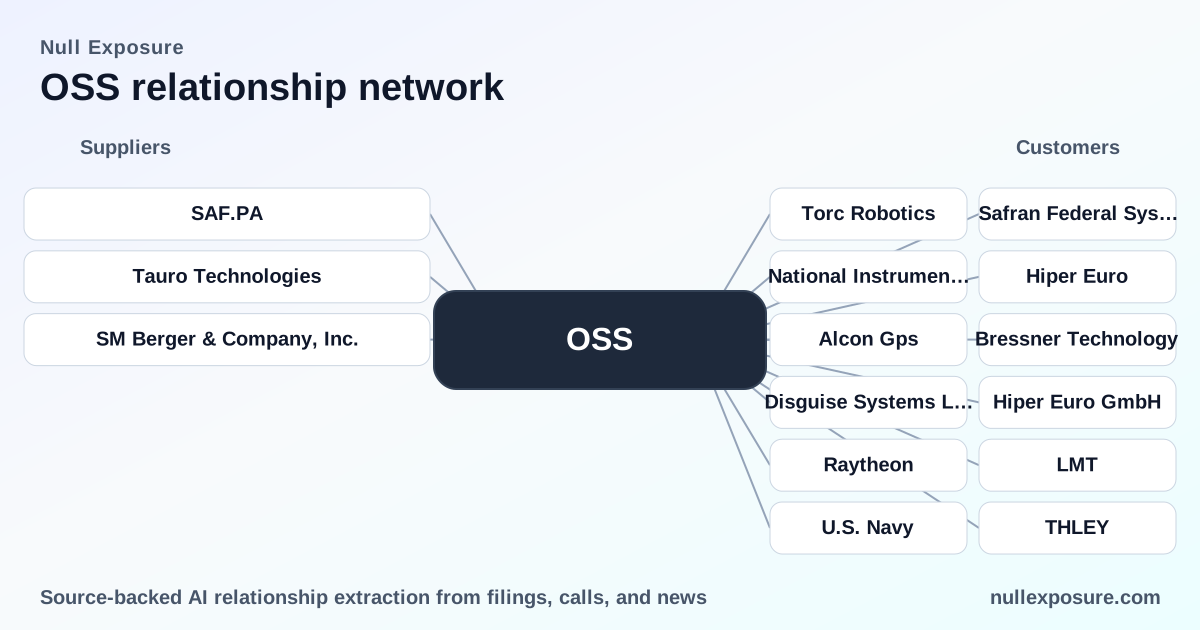
Safran Federal Systems — a direct defense contract
OSS disclosed an initial $500,000 contract with Safran Federal Systems with additional orders expected totaling over $3 million, indicating a program-stage defense engagement that can translate to multi-million-dollar recurring bookings if follow-on orders materialize. This information came from OSS’s Q3 2025 earnings call where management highlighted the booking as a notable contract win.
Tauro Technologies — engineering partner on sensor/AI demonstrations
Tauro Technologies is an engineering partner on OSS’s Sensor Bridge/Homeland Security Boards used in defense AI demonstrations; Tauro’s CEO characterized defense customers as transitioning from experiments to deployed physical AI systems, which supports OSS’s commercial strategy for edge compute. The partnership and related comments were detailed in a GlobeNewswire release dated February 9, 2026.
SM Berger & Company, Inc. — investor relations engagement
SM Berger & Company is referenced as OSS’s investor relations contact, with Andrew Berger listed as Managing Director and the firm handling investor communications, earnings disclosures, and outreach. This contact detail appears in OSS’s March 4, 2026 press release announcing Q4 2025 financial reporting on GlobeNewswire.
What the constraints tell investors about OSS’s operating posture
OSS’s public record includes two clear company-level supply signals:
- APAC sourcing concentration: Management disclosed that products and supplies sourced from Taiwan were material to the most recent fiscal quarter. This is a company-level geographic sourcing signal that elevates geopolitical and logistics risk for component procurement.
- Vendor concentration is material: OSS reported purchases from two suppliers each representing greater than 10% of vendor purchases for the year ended December 31, 2024, and warned that the loss or limited availability of certain component suppliers could have a material adverse effect on the business.
These constraints translate into concrete operating model characteristics:
- Contracting posture: OSS operates from a supplier-dependent posture where upstream vendors hold leverage on critical components; procurement strategy likely emphasizes qualified second sources but remains exposed until qualification is complete.
- Concentration: The procurement concentration indicates high vendor risk; a single supplier disruption can materially impact production and delivery schedules.
- Criticality: Components sourced from APAC suppliers, particularly Taiwan, are critical to product assembly and cannot be substituted overnight without technical requalification.
- Maturity: OSS is still in a growth and program-qualification phase where defense bookings are ramping but supplier diversification is incomplete; the firm’s margin and delivery stability will improve only as supply redundancy is established.
Investors should treat these constraints as company-level risk factors that influence both operational resilience and valuation multiples.
Financial context that frames supplier risk
Key financials that intersect with supplier dynamics: Revenue TTM $60.26M, Market Capitalization ~$250.3M, Gross Profit TTM ~$17.48M, and Diluted EPS -$0.32. Operating margin sits positive at about 3.0% while the net profit margin is negative, reflecting non-operating charges or scale effects. Analyst sentiment skews positive with price targets around $9 and three Buy recommendations, but institutional ownership is only about 44%, leaving room for multiple re-rating if defense bookings and supply stability scale. For a deeper view of how supplier relationships translate into financial outcomes, visit https://nullexposure.com/.
Practical implications for investors and operators
- Monitor bookings from defense primes: small initial awards (e.g., $0.5M) can grow into multi-million program streams, but investors should confirm signed follow-on orders and delivery timelines.
- Track supplier diversification efforts: APAC sourcing and two vendors >10% of purchases are critical red flags until management files clear mitigation plans or alternative sourcing is qualified.
- Consider working capital sensitivity: component shortages or single-source disruptions create inventory and revenue volatility that can stress cash flow and require incremental capital.
- Use investor relations as a signal: a named IR partner like SM Berger increases disclosure transparency and eases access for analysts and large holders.
Bottom line — how to act on these signals
One Stop Systems combines validated, high-value defense engineering partnerships with a supply chain that is not yet fully de-risked. The upside is clear: defense program expansion and engineering partnerships can lift revenue and margins, but the risk is equally tangible: concentrated APAC sourcing and high vendor concentration can interrupt program delivery and compress valuation. Investors should prioritize management disclosures about supply diversification, contract backlog detail, and confirmed follow-on orders from primes.
For a concise, prioritized supplier-risk briefing tailored to investor diligence or operational hedging, start here: https://nullexposure.com/. If you need a supplier-risk deep dive or ongoing monitoring for portfolio positions, see the services and intelligence options available at https://nullexposure.com/.
Final recommendation: treat OSS as a growth-at-risk hardware play—allocate based on conviction in management’s ability to convert small defense wins into sustained programs and to execute supplier diversification.