Blue Owl Technology Finance (OTF): How external management and strategic funding shape the cash flows
Blue Owl Technology Finance Corp. (OTF) operates as an externally managed finance vehicle that sources and holds technology-focused credit investments and monetizes those positions through investment income and dividend distributions to shareholders while paying its manager a base management fee and incentive fee. The company’s operating model centers on an affiliate adviser that provides day-to-day portfolio management and administrative services under fee-bearing agreements, and the balance sheet is supplemented by public debt issuances to fund the investment program. For investors and operators evaluating supplier and counterparty relationships, the adviser and the bank underwriters for debt are the two relationships that most directly determine economics, governance and funding flexibility. Learn more about how we catalogue these ties at https://nullexposure.com/.
The single most important supplier: Blue Owl Technology Credit Advisors LLC
Blue Owl Technology Credit Advisors LLC is OTF’s external investment adviser and administrator; under the Investment Advisory and Administration Agreements the adviser manages sourcing, diligence, structuring and portfolio monitoring while also providing administrative services, and the company reimburses the adviser for expenses and pays both base and incentive fees. According to OTF’s December 31, 2025 financial results and related press materials, the Adviser is an SEC‑registered investment adviser and an indirect affiliate of Blue Owl Capital Inc., operating as OTF’s external manager (PR Newswire, March 2026; KBRA filing, FY2025).
Funding counterparty: Deutsche Bank
Deutsche Bank serves as a placement/indenture counterparty for public debt, with OTF issuing unsecured notes to access longer-dated funding—most recently a $400 million tranche of 6.125% unsecured notes due 2031. The $400 million supplemental indenture and issuance was disclosed in company announcements and market reporting around the FY2026 period (InsiderMonkey coverage, FY2026; Finviz summary, FY2026).
How these two relationships map to OTF’s economics and risk profile
- Adviser relationship drives core value capture. The adviser receives management and incentive fees and executes the investment strategy; that fee flow is an explicit line-item deducted from gross investment returns, which directly affects distributable cash flow to shareholders. (See the Investment Advisory Agreement disclosures in the company filing excerpts.)
- Debt counterparties supply leverage and liquidity. Public note issuances such as the Deutsche Bank‑supported $400M 2031 notes increase available capital to deploy into credit investments but create fixed interest obligations that influence net yields and credit coverage.
- Brand licensing ties governance to the adviser. A license agreement grants OTF the non‑exclusive right to use the “Blue Owl” name for as long as the adviser or its affiliate remains the company’s investment adviser, linking brand continuity to the adviser relationship (License Agreement disclosure, July 2023).
Read our supplier intelligence hub for more context: https://nullexposure.com/.
All identified relationships, explained plainly
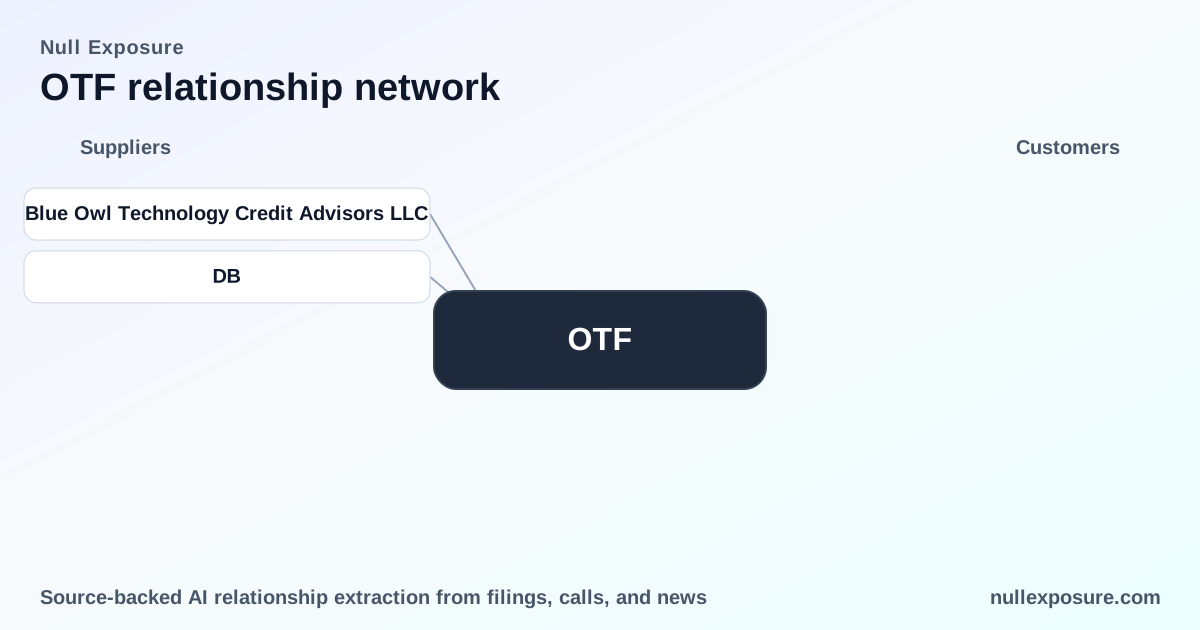
Blue Owl Technology Credit Advisors LLC — The Adviser Blue Owl Technology Credit Advisors LLC is the external manager and administrator that runs OTF’s investment program and handles administrative functions, and OTF pays base management and incentive fees and reimburses expenses under these agreements (PR Newswire, December 31, 2025 results; KBRA publication, FY2025).
Deutsche Bank — Indenture / note placement agent Deutsche Bank is the counterparty on a supplemental indenture used for a $400 million issuance of 6.125% unsecured notes due 2031, providing long‑dated unsecured funding to support OTF’s investment activities (InsiderMonkey reporting, FY2026; Finviz market note, FY2026).
Contracting posture, concentration and maturity — signals investors need to weigh
- Contract duration and termination rights are short-term oriented at the operating level. The administration agreement can be renewed annually and is terminable on 60 days’ notice, or by vote of the board or holders; this gives shareholders and directors an effective short-term lever over the adviser relationship and creates a recurring governance review cadence (company Administration Agreement excerpt).
- The adviser relationship is both critical and concentrated. The adviser is the single external manager and administrator, so operational continuity, investment sourcing and brand licensing are concentrated with one affiliated counterparty, elevating counterparty concentration risk and the importance of adviser governance and information security controls (Investment Advisory and Administration Agreement excerpts).
- License dependence links brand and adviser tenure. The license to use “Blue Owl” is conditional on the adviser (or its affiliate) remaining OTF’s investment adviser, creating a brand‑for‑service dependency that ties marketing and identity to the adviser relationship (License Agreement, July 2023).
- Funding maturity is a mix; funding via unsecured notes shifts cash‑flow timing risk to fixed interest obligations. Recent unsecured note issuance to support the balance sheet pushes part of funding into longer maturities (2026 2031 notes), exchanging short-term liquidity flexibility for longer-term interest commitments (market announcements).
Investment implications and risk checklist
- Positive: External management gives OTF access to Blue Owl’s credit platform and origination channels, which supports near‑term revenue growth and portfolio scale without heavy internal operating overhead.
- Negative: Fee extraction through management and incentive fees reduces distributable income; concentration of advisory and administrative services in one affiliate increases operational and governance risk, especially given the short-term termination mechanics of the administration agreement.
- Funding risk: Reliance on unsecured public debt introduces interest rate and refinancing risk that will compress net yields if credit spread or base rates rise; the $400M 2031 issuance is evidence of this funding strategy.
Key takeaways for operators and investors:
- Adviser-centric model = concentrated counterparty risk.
- Short-term administrative contracting gives governance control but injects potential operational instability if relations sour.
- Public unsecured notes increase leverage and make cash-flow timing a critical metric to monitor.
If you want a deeper supplier risk score or an integrated view of how adviser contracts affect distributable yield, start here: https://nullexposure.com/.
Final read: where to focus your diligence
Focus diligence on the adviser’s track record on credit sourcing and loss rates, the fee schedule and incentive alignment in the Investment Advisory Agreement, the termination mechanics and board independence that control the adviser relationship, and the maturity profile and covenant structure of any unsecured debt. Governance and counterparty concentration are the dominant strategic risks for OTF; funding structure is the dominant balance-sheet risk.
For continuous monitoring and supplier mapping tied to investment decisions, visit our platform: https://nullexposure.com/.