Outlook Therapeutics (OTLK): supplier relationships that determine commercial optionality
Outlook Therapeutics is a late-stage ophthalmology biopharmaceutical company that develops and commercializes monoclonal antibody therapies, with its lead candidate ONS-5010/LYTENAVA positioned for wet AMD and related indications. The company monetizes through product sales on commercialization, supported by outsourced manufacturing and clinical services, and through periodic capital raises to fund regulatory interactions and commercialization readiness. Key value drivers are regulatory progress on ONS-5010 and the company’s ability to sustain supply through single-source manufacturing partners.
Learn more about counterparty risk and supplier exposure at https://nullexposure.com/.
How Outlook structures its supplier footprint and why it matters
Outlook runs a highly outsourced operating model. Core functions—drug substance production, fill-finish, and many clinical trial services—are conducted by third parties rather than in-house. This contracting posture lowers fixed costs and accelerates scale-up, but creates concentration and single-source dependency that is critical to commercial execution.
- Contracting posture: Outlook relies on established contract manufacturing organizations (CMOs) and contract research organizations (CROs) to execute clinical and commercial supply. Company SEC disclosures and public statements list selected partners for cGMP manufacturing and fill-finish activities.
- Concentration and criticality: The company discloses single-source engagement for clinical trial services, drug substance manufacturing and fill-finish; the loss of any single-source supplier is described as capable of harming the business. This elevates operational risk relative to peers with diversified supply chains.
- Geography and trade exposure: ONS-5010 is manufactured in the United States, a deliberate choice that limits exposure to cross-border tariff volatility but concentrates geographic operational risk domestically.
- Maturity and financing posture: Outlook is late-stage clinically but remains small by market cap and revenue, running a negative EBITDA profile and relying on capital markets activity to fund regulatory interactions and commercial launch preparation.
These characteristics create a supplier-driven treadmill: regulatory milestones (FDA interactions) and financing events are tightly coupled to the company’s ability to secure consistent, high-quality supply.
Mid-cycle constraints that shape decision-making
Outlook’s public filings and press releases reveal a compact set of constraints that investors should treat as structural, not transitory:
- Single-source manufacturing is material and critical. The company explicitly identifies single-source suppliers for clinical, drug substance and fill-finish activities, and highlights the dependence on PCI San Diego for fill-finish supply. That concentration makes operational continuity a gating factor for revenue realization.
- Manufacturing in the U.S. reduces tariff risk but concentrates operational geography. Domestic manufacturing mitigates international trade risk but leaves production continuity susceptible to U.S.-centric disruption scenarios.
- Cybersecurity is identified as a material business risk. The company flags potential adverse outcomes from IT compromises affecting clinical data and business operations as a material issue for operations and reputation.
- Outsourced manufacturer relationships are established with recognized CMOs. SEC disclosures name FUJIFILM Diosynth Biotechnologies for manufacturing and PCI San Diego for fill-finish, indicating the company engages large-scale contract partners to meet cGMP standards.
These signals frame supplier risk as a central investment consideration: regulatory and commercial outcomes are contingent on external counterparties that are both critical and concentrated. Learn more about how to measure supplier concentration at https://nullexposure.com/.
Who Outlook is talking to (public, recent relationships)
Below are the relationships surfaced in recent public notices and media items. Each entry includes a concise, plain-English summary and the original public reference.
-
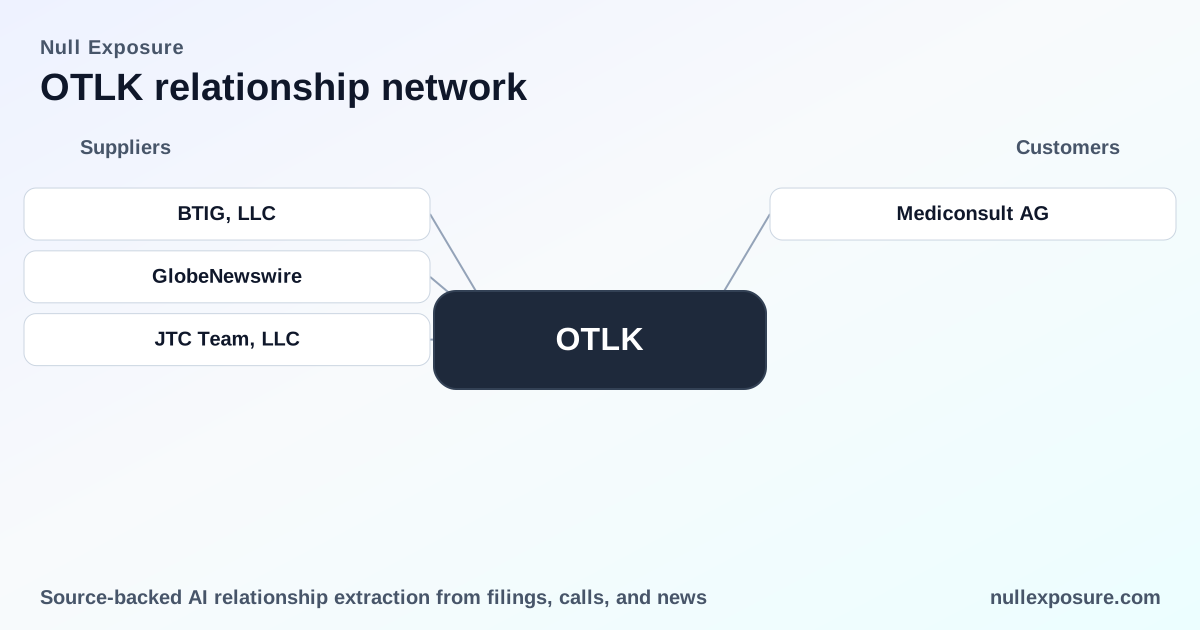
BTIG, LLC — BTIG acted as the sole book-running manager for Outlook’s March 2026 offering, indicating BTIG led distribution and pricing for the equity raise that underwrites near-term regulatory and operational spend (finance.yahoo.com press release, March 10, 2026: https://finance.yahoo.com/news/outlook-therapeutics-announces-pricing-13-103000529.html).
-
GlobeNewswire — GlobeNewswire distributed Outlook’s announcement that it received a Complete Response Letter from the FDA regarding the ONS-5010/LYTENAVA BLA, which is a pivotal regulatory communication that frames the company’s next steps (press release carried on QuiverQuant referencing GlobeNewswire, March 10, 2026: https://www.quiverquant.com/news/Outlook+Therapeutics+Receives+Complete+Response+Letter+from+FDA+Regarding+ONS-5010%2FLYTENAVA%E2%84%A2+BLA+for+Wet+AMD+Treatment).
-
JTC Team, LLC — JTC Team is the company’s investor-relations contact and appears on multiple press releases as the point of contact for investor inquiries, signaling outsourced IR support for corporate communications and capital markets engagement (examples include a November 2025 conference notice and the March 2026 offering release; see Sahm Capital November 24, 2025 and finance.yahoo.com March 10, 2026: https://www.sahmcapital.com/news/content/outlook-therapeutics-to-present-at-the-piper-sandler-37th-annual-healthcare-conference-2025-11-24 and https://finance.yahoo.com/news/outlook-therapeutics-announces-pricing-13-103000529.html).
These public relationships reflect a mix of capital markets activity, press distribution, and outsourced investor relations—each supporting the company’s financing and communication strategy around regulatory events.
What these relationships mean for investors: risk and action
- Manufacturing concentration is the top operational risk. Named partners in filings—FUJIFILM Diosynth Biotechnologies and PCI San Diego—carry outsized operational importance because they provide cGMP capacity required for both clinical supply and any eventual commercial launch. Loss or delay at those suppliers would directly delay revenue generation. Company filings and public releases explicitly reference these arrangements and the risks inherent in single-source dependence.
- Regulatory outcomes will drive near-term financing needs. The March 2026 offering (BTIG as bookrunner) and the public reporting of an FDA Complete Response Letter make clear that capital markets activity is an active lever for Outlook. Investors should evaluate runway and financing cadence against expected regulatory milestones.
- Outsourced IR and press distribution shape information flow. Use of firms like JTC Team and press distributors like GlobeNewswire centralizes message control; monitoring the cadence and content of those releases provides timely signals about regulatory dialogue and supplier status.
Bottom line and investor action
Outlook’s value realization hinges on three linked items: regulatory progress for ONS-5010, uninterrupted supply from critical CMOs and CROs, and access to capital. The company’s supplier posture—single-source manufacturing for core steps and U.S.-based production—creates both defensibility in quality control and concentrated operational risk.
- If you evaluate supplier counterparty risk as central to investment decisions, prioritize monitoring manufacturing confirmations from FUJIFILM and PCI SD, communications routed through JTC Team, and capital raises led by bookrunners such as BTIG.
- For a structured review of counterparties, exposure and concentration metrics, visit https://nullexposure.com/ to benchmark Outlook against peers and track supplier signals in real time.
Key takeaway: OTLK is a late-stage developer whose commercial feasibility is contingent on a small number of critical external partners; regulatory feedback and capital raises will determine whether that outsourced model converts into sustainable revenue.