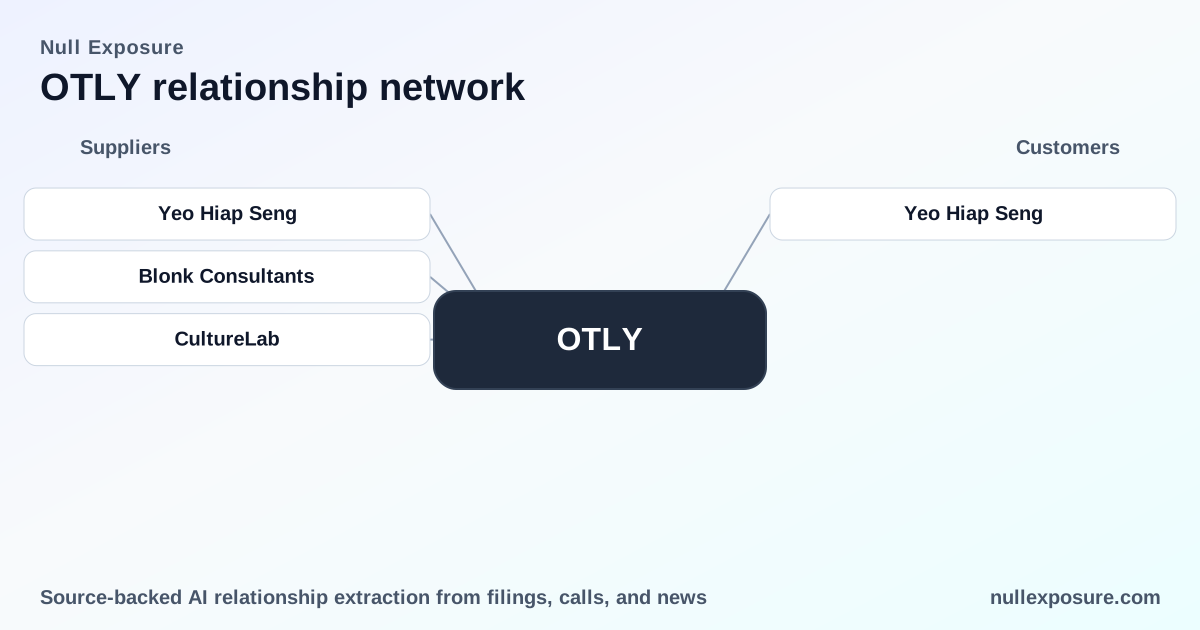
Oatly’s supplier footprint: where counterparty decisions influence margins and brand value
Oatly sells oat-based dairy alternatives and monetizes through retail packaged goods, foodservice channels, and B2B co-packing/licensing arrangements that scale production without fully internalizing manufacturing capacity. Supplier relationships — from co-packers who run plants to independent consultants who certify environmental claims — influence Oatly’s cost structure, balance-sheet flexibility, and the credibility of its sustainability premium. Investors should treat supplier events as operational levers that convert into margin and reputational outcomes.
Explore more supplier intelligence at https://nullexposure.com/.
Why suppliers matter for Oatly’s business model
Oatly’s reported fiscal profile shows scale with pressure: trailing revenue of roughly $862m and positive gross profit ($277m) but negative operating margins and EPS. That profile reflects a business that combines branded pricing power with high operational leverage, so shifts in supplier contracts translate directly to profitability. Co-packing agreements reduce capital intensity but concentrate operational risk; sustainability qualifications from third-party consultants underpin premium pricing while exposing the company to scrutiny.
Key company-level signals about operating posture:
- Contracting posture: Oatly outsources a meaningful portion of production through co-packing, which lowers capex but increases dependency on counterparties for throughput and quality.
- Concentration and criticality: Manufacturing partners and packagers are operationally critical; termination or renegotiation of major co-packing contracts can have immediate balance-sheet and working-capital implications.
- Maturity: Oatly uses a mix of long-term and flexible supplier relationships and supplements production resilience with brand-driven demand management rather than heavy vertical integration. These are company-level inferences drawn from public reporting and recent supplier events; they are not attributed to a single contractual excerpt.
The supplier landscape, relationship by relationship
Yeo Hiap Seng — co-packing agreement conclusion influenced the balance sheet
Ad-hoc-news reported on March 10, 2026 that the conclusion of Oatly’s co-packing agreement with Yeo Hiap Seng is a significant factor affecting Oatly’s balance sheet, indicating the company is resetting manufacturing arrangements that have direct P&L and working-capital consequences. This point was referenced in recent coverage discussing Oatly’s path to profitability. (Source: ad-hoc-news, March 10, 2026 — https://www.ad-hoc-news.de/boerse/ueberblick/oatly-s-path-to-profitability-fourth-quarter-2025-results-in-view/68539302)
Blonk Consultants — lifecycle analyses that support Oatly’s sustainability claims
An InvestingNews feature (March 10, 2026) cites Blonk Consultants’ LCAs (2022 and 2023) comparing Oatly Barista and other oat drink SKUs against cow’s milk, which are central to Oatly’s environmental differentiation and go-to-market narrative with retailers and foodservice partners. These third-party LCAs underpin marketing claims that affect premium pricing and buyer behavior. (Source: InvestingNews, March 10, 2026 — https://investingnews.com/from-decaf-dominance-to-a-post-matchamania-world-oatly-spotlights-the-emerging-taste-trends-reshaping-beverages-in-2026-and-beyond/)
CultureLab — barista and channel insights that shape product strategy
The same InvestingNews piece references CultureLab’s research compiling interviews with baristas and drinks experts across 23 countries, providing qualitative and quantitative trends data that feed product development and account management for foodservice channels. Oatly leverages this type of supplier-research relationship to align SKUs with on-premise demand and maintain category leadership. (Source: InvestingNews, March 10, 2026 — https://investingnews.com/from-decaf-dominance-to-a-post-matchamania-world-oatly-spotlights-the-emerging-taste-trends-reshaping-beverages-in-2026-and-beyond/)
How those ties translate into investment risk and upside
The supplier events detailed above drive discrete, investable outcomes:
- Cost and margin sensitivity: Ending a co-packing agreement can reduce recurring fees or unlock more efficient capacity, improving gross margins if replacement capacity is cheaper or better utilized; conversely, transition costs and near-term production disruptions compress margins. The market is sensitive because Oatly’s operating margin is already negative.
- Balance-sheet and cash-flow swings: Contract conclusions and renegotiations can produce one-time restructuring charges, inventory write-offs, or changes to receivables/payables timing that affect quarterly results and covenant headroom.
- Reputational and demand effects: Blonk’s LCAs and CultureLab’s channel intelligence bolster Oatly’s sustainability narrative and product-market fit, supporting premium shelf prices and retention in coffee chains; losing or discrediting those external validations would undercut pricing power.
- Concentration risk: Reliance on named co-packers or a small set of production partners concentrates operational risk; investors should treat supplier disruption scenarios as realistic downside cases.
Strong takeaway: supplier events are not peripheral; they are operational levers that convert into visible earnings volatility for a brand-driven, capital-light food company.
Explore detailed supplier analytics at https://nullexposure.com/.
Practical next steps for investors and operators
- Stress-test scenarios where major co-packing partners are replaced or unavailable for one quarter, and quantify cash, margin, and timing impacts.
- Validate environmental claims by reviewing the original LCA reports from Blonk Consultants and the research methodology used by CultureLab before pricing in sustainability-driven premiums.
- Monitor regulatory and retail scrutiny: sustainability claims and contract terminations attract analyst and media attention that affect reputation and shelf placement.
For deeper supplier risk assessments and counterparty mapping, see https://nullexposure.com/.
Final read: what to watch and the verdict
Oatly operates on a model that blends brand monetization with outsourced production and third-party validation. Supplier relationships are both a cost-management mechanism and a reputational asset; recent reports about the Yeo Hiap Seng co-packing conclusion are a tactical event that feeds directly into margin runway and balance-sheet narratives. Investors should prioritize monitoring contract transitions, the integrity of sustainability validations, and the operational resilience of Oatly’s packer network.
Bold signal for investors: supplier events will continue to act as catalysts for quarterly volatility and medium-term margin recovery.