Ovid Therapeutics (OVID) — supplier relationships that drive a lean neuroscience play
Ovid Therapeutics is a small-cap biopharma that builds value by licensing and developing targeted neurology assets and outsourcing execution; it monetizes through milestone and royalty-bearing licensing arrangements today and ultimately through product sales if candidates reach commercialization. The company’s operating model is centered on collaborations, outsourced manufacturing, and partnered R&D, which concentrates counterparty risk but preserves capital efficiency for investors. For a compact, transaction‑level view of partner exposure and operational constraints, visit https://nullexposure.com/.
How Ovid runs the business and where revenue comes from
Ovid is a development-stage biotechnology company focused on treatments for neurological disorders. The firm’s financial profile shows limited product revenue (Revenue TTM $6.61M) and a negative operating margin (-94.87%), indicating that near-term value realization depends on successful progression of partnered programs or licensing milestones rather than sustained product sales. Ovid’s capital-light model relies on licensing in assets, licensing out rights, and contracting third parties for manufacturing and trials; this yields lower fixed cost leverage but creates dependency on suppliers and collaborators for execution and supply continuity.
The partner list — every supplier relationship in the record, explained
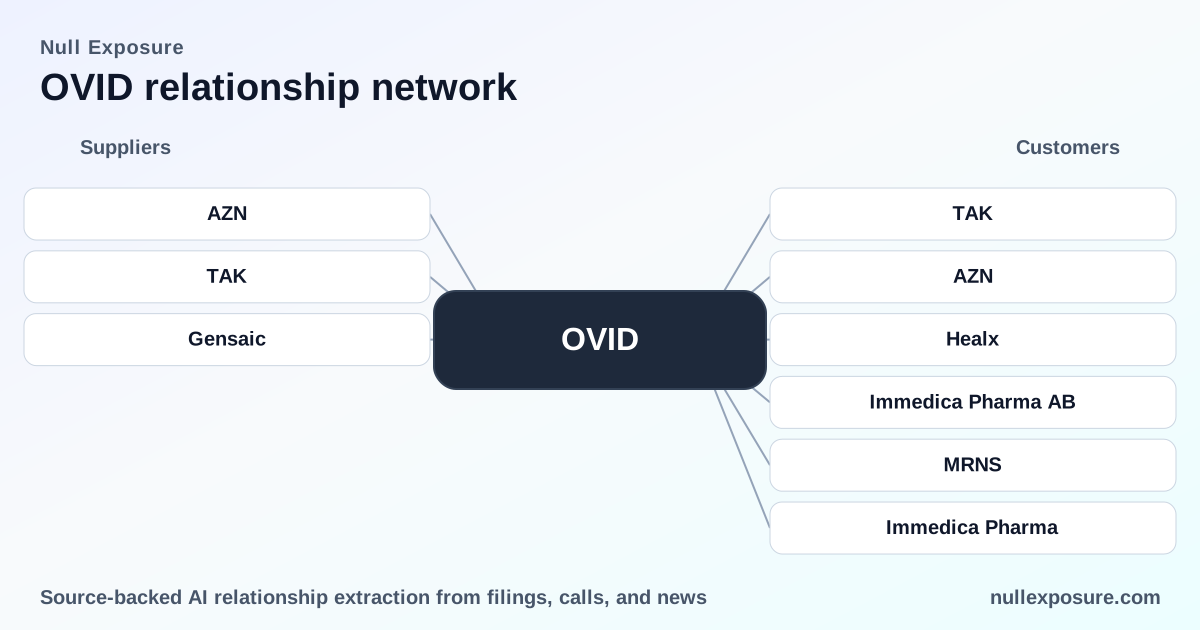
AstraZeneca — exclusive license to KCC2 activators and rights acquisition
Ovid entered an exclusive license with AstraZeneca for a library of early‑stage small molecules targeting the KCC2 transporter, including lead candidate OV350, and subsequently acquired global rights to AstraZeneca-originated molecules that address a novel epilepsy target. According to a GlobeNewswire release and contemporaneous MedCityNews coverage from January 2022, these transactions expanded Ovid’s epilepsy franchise and transferred control of those candidate assets to Ovid (GlobeNewswire, Jan 3, 2022; MedCityNews, Jan 2022).
Takeda Pharmaceutical — originator of a licensed molecule
One of the molecules Ovid progressed into its pipeline originated in Takeda’s laboratories and was licensed to Ovid in 2017. MedCityNews noted this provenance when reporting on Ovid’s consolidation of rights and pipeline expansion, establishing a legacy link between Takeda discovery efforts and Ovid’s development pathway (MedCityNews, Jan 2022).
Gensaic — collaboration on CNS gene delivery vehicles
Ovid contracted Gensaic to develop phage‑derived gene delivery vehicles tailored for central nervous system indications of interest to Ovid, under an exclusive development arrangement. A 2022 EurekAlert news release describes the collaboration as focused on advancing gene delivery technology for CNS disorders important to Ovid’s pipeline (EurekAlert, 2022).
What the supplier mix implies about Ovid’s operating posture
Ovid’s commercial and operational posture is outsourced and partnership-dependent. The constraints extracted from corporate disclosures paint a consistent company-level signal:
- Long-term commitments exist (company leases principal executive offices under a ten‑year lease commenced in March 2022), indicating fixed overhead horizons that influence cash planning.
- Manufacturing is outsourced and essential: Ovid does not maintain internal manufacturing capabilities and uses contract manufacturers for clinical and commercial supply, which elevates supplier concentration and supply-chain criticality.
- Clinical execution depends on external service providers: reliance on CROs and clinical sites limits Ovid’s direct control over timeline and quality, making program delivery dependent on third-party performance.
- Regulatory and clinical risk is material: management explicitly links supplier or trial disruptions to the potential for clinical delays or failure to obtain approvals, which is a direct risk to value realization.
Together these signals mean Ovid operates with low capital intensity on internal manufacturing but high operational risk from supplier performance and regulatory dependency.
Investment and operational implications for investors and operators
Ovid’s capital-light model is attractive for preserving cash but requires active supplier and partner risk management. Key facts for decision-making:
- Balance sheet and scale: Market capitalization is ~$139M with limited revenue scale (Revenue TTM $6.61M) and negative EBITDA (-$38.652M), which constrains runway unless milestone receipts or capital raises occur.
- Valuation and analyst view: Analysts maintain a consensus target (Analyst Target Price $4.049) and a skew toward buy ratings (11 Buy, 0 Hold/Sell), signaling positive development expectations priced into the stock.
- Concentration and criticality: outsourcing manufacturing and relying on collaborators for discovery and trials creates single‑point dependencies; operational disruptions in suppliers would have outsized clinical and commercial consequences.
For operators negotiating with Ovid, the company’s posture suggests flexibility to accept licensing and co-development terms but limited appetite for long, capital‑heavy supply commitments from its side — instead, Ovid delegates manufacturing and execution. For investors, the path to value is binary: successful clinical advancement or commercial partnerships unlock upside; supply or regulatory setbacks compress valuation quickly.
- Practical priorities for portfolio managers: monitor partner milestone schedules, watch contracting language on supply exclusivity and capacity, and track any announcements regarding internal capability changes that would reduce supplier dependency.
If you want a consolidated supplier risk profile or monitoring feed for Ovid and comparable small-cap biotechs, see our platform at https://nullexposure.com/.
Tactical risk checklist for immediate monitoring
- Track regulatory filings and trial status for OV350 and other KCC2 assets licensed from AstraZeneca.
- Monitor milestone payments, licensing amendments, or sublicensing activity with AstraZeneca and Takeda-originated assets.
- Watch for manufacturing agreements, contingency plans, and confirmations of CMO capacity and quality — a single CMO disruption can delay pivotal trials.
- Review updates on the Gensaic collaboration for milestones and IP/ownership terms that affect downstream commercialization.
Bottom line — where value and risk concentrate
Ovid is a partnership-driven biotech with value tied to a small number of external relationships and outsourced execution. The AstraZeneca license/rights transfer and the Takeda-origin linkage provide scientific upside; the Gensaic collaboration adds a technology angle in CNS delivery. Investors should price in operational concentration risk and the binary nature of development outcomes while operators and contract partners should treat Ovid as a capital-efficient but supplier-dependent counterparty. For an investor-ready supplier due‑diligence package and ongoing monitoring, visit https://nullexposure.com/.