Oxford Industries (OXM): Supplier Relationships, Constraints, and Strategic Takeaways
Oxford Industries designs, sources, markets and distributes branded lifestyle apparel globally. The company monetizes by purchasing full-package finished goods from third‑party manufacturers and selling them through its owned and partner retail channels under brands such as Tommy Bahama, Lilly Pulitzer and Johnny Was, generating roughly $1.49B in trailing revenue and producing material gross profit but near-term pressure on operating margins. Investors should evaluate Oxford’s supplier profile as a mix of spot-oriented procurement from APAC manufacturers combined with long‑dated corporate financing and lease commitments, a hybrid that concentrates sourcing risk while locking in fixed overhead.
For a fast view of supplier risk and to run additional relationship queries, visit the NullExposure homepage: https://nullexposure.com/
Executive snapshot — how suppliers fit the economics
Oxford’s cash flow model depends on buying finished apparel from external producers and converting branded inventory into retail revenue. The company purchases “package” finished goods from third‑party manufacturers, which positions suppliers as critical execution partners rather than commodity inputs; supplier performance directly affects margin and inventory turns. At the same time, Oxford maintains long‑term financial and real estate commitments—including a U.S. revolving credit facility extended to March 2028 and distribution/retail leases running into the mid‑2030s—creating a fixed‑cost base that raises the penalty for any supply disruption.
Key company‑level signals derived from its public disclosures:
- Contracting posture: dual signals. Oxford runs supplier relationships largely on an order‑by‑order (spot) basis, yet the company also holds long‑term financial and lease commitments (credit facility maturity and leases into 2035–2037). This combination creates operational flexibility in sourcing but amplifies financial exposure if suppliers fail to deliver.
- Geographic concentration: heavy APAC sourcing — Fiscal 2024 purchases were roughly 39% China and 24% Vietnam for apparel acquired directly or via vendors, with Johnny Was sourcing ~90% from China after its 2022 acquisition. North American sourcing is present mainly for food & beverage operations.
- Relationship role and maturity: suppliers are predominantly manufacturers of finished goods, while Oxford supplements capabilities with service providers (e.g., cybersecurity consultants); supplier relationships operate at scale and are currently active per the company’s borrowing and covenant disclosures.
For deeper supplier mapping and monitoring tools, see https://nullexposure.com/
What the disclosed relationships tell us
-
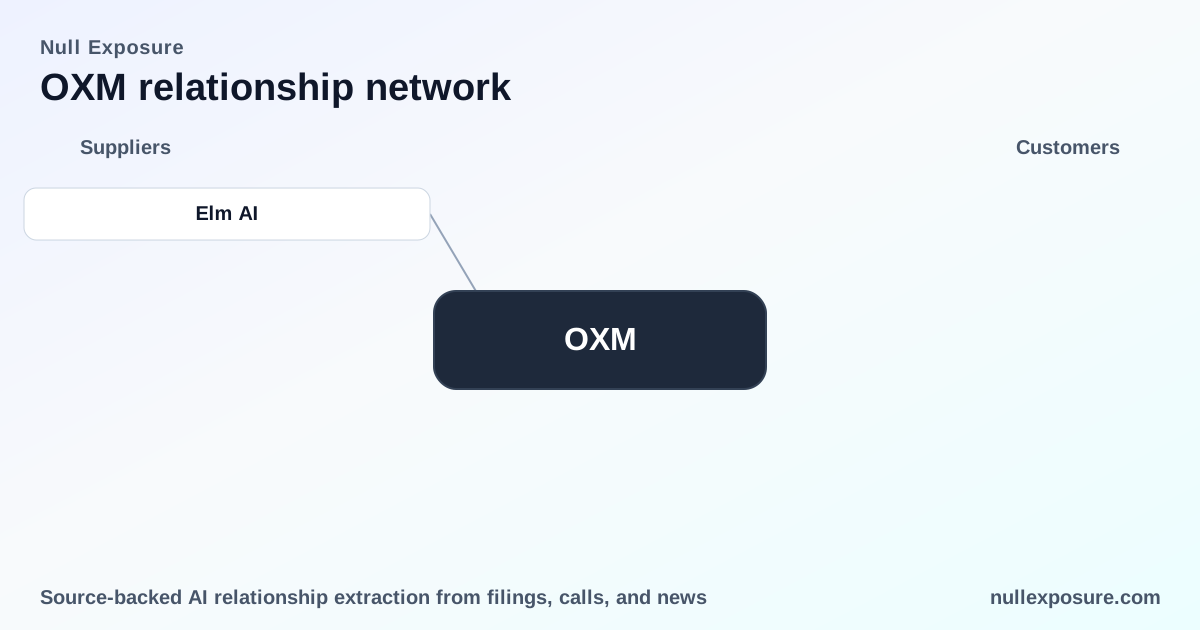
Elm AI — Desert Sun press release (March 10, 2026): Oxford has selected Elm AI to transform supplier due diligence across its global supply chain, signaling a material investment in automated risk and compliance tooling for vendor oversight. Source: Desert Sun press release dated March 10, 2026 (https://www.desertsun.com/press-release/story/81551/oxford-industries-selects-elm-ai-to-bring-artificial-intelligence-to-responsible-sourcing-across-global-supply-chain/).
-
Elm AI — Progress‑Index press release (March 10, 2026): A parallel press release distributed via Progress‑Index repeats the initiative, underscoring that the Elm AI engagement is a public, company‑level program to centralize responsible sourcing due diligence across Oxford’s supply base. Source: Progress‑Index press release dated March 10, 2026 (https://www.progress-index.com/press-release/story/27367/oxford-industries-selects-elm-ai-to-bring-artificial-intelligence-to-responsible-sourcing-across-global-supply-chain/).
Both announcements confirm a single new supplier engagement (Elm AI) directed at supplier due diligence and responsible‑sourcing workflows; the duplicated press distribution indicates an orchestrated communications rollout rather than multiple discrete partnerships.
Constraints and what they imply for procurement risk
Oxford’s public disclosures surface company‑level constraints that shape supplier exposure and operational risk:
-
Long‑term financing and leases: The company amended its U.S. revolving credit agreement on March 6, 2023, extending maturity to March 2028 and holding significant unused capacity, while key distribution and retail leases run into 2035–2037. These fixed commitments increase the urgency of reliable supply flow and predictable margins, since fixed interest and occupancy costs are not easily trimmed in the event of production disruption. Evidence: company filing excerpts referencing credit agreement amendments and lease expirations.
-
Spot purchasing behavior: Oxford explicitly states it conducts business on an order‑by‑order basis with many of its apparel suppliers, meaning there are no broadly binding, long‑term supply contracts with manufacturers. This gives Oxford flexibility to change suppliers or volumes, but reduces contractual protection against sudden supplier failures or capacity constraints.
-
APAC concentration: FY2024 sourcing data show ~39% of purchases from China and ~24% from Vietnam, and the Johnny Was brand sources roughly 90% from China post‑acquisition. This concentration increases exposure to trade policy, tariffs, labor and logistics shocks in those markets.
-
Supplier role and structure: Oxford purchases finished goods as package deals from third‑party producers; suppliers therefore are critical manufacturers rather than commodity vendors. Service provider relationships (cybersecurity and consulting) exist to support internal controls and risk management.
Taken together, these constraints imply a high operational dependence on APAC manufacturing capacity, a procurement model that prioritizes flexibility over contractual lock‑ins, and a corporate balance sheet that sustains long‑dated fixed obligations. The Elm AI engagement directly addresses the supplier oversight gap created by spot‑based buying and geographic concentration.
Strategic implications for investors and operators
-
For investors: monitor execution of the Elm AI program as a leading indicator of reduced compliance and reputational risk; improvements can lower the probability of supplier‑related disruptions and costly recalls. Simultaneously, track covenant compliance and leverage trends against the backdrop of negative operating margins and near‑term EPS headwinds (diluted EPS TTM -$0.26).
-
For operators: prioritize vendor segmentation — distinguish critical package manufacturers supplying core SKUs from low‑risk, replaceable partners — and negotiate contingency terms or safety‑stock arrangements for APAC‑sourced product lines. The lack of long‑term manufacturing contracts requires operational levers (dual sourcing, inventory buffers) to meet fixed financial obligations.
-
Risk‑return tradeoffs: Oxford’s model gives the company pricing and assortment agility, but APAC concentration and spot contracting increase supply volatility, elevating the value of centralized due diligence and continuous monitoring programs such as Elm AI.
If you want a supplier risk scorecard or a tailored review of Oxford’s vendor map, start here: https://nullexposure.com/
Bottom line
Oxford Industries operates a brand‑led apparel business built on third‑party manufacturing in APAC while shouldering long‑dated financial and lease commitments. That structural mix creates concentrated supply risk even as the company pursues technological controls to improve oversight. The Elm AI engagement is a strategic response to those dynamics; investors should watch rollout metrics and ongoing sourcing concentration as the clearest signals that supplier risk is being materially reduced. For additional supplier intelligence and relationship monitoring, visit https://nullexposure.com/ and explore the supplier modules.