Occidental Petroleum (OXY) — Supplier relationships and operating constraints that matter for investors
Occidental Petroleum is a vertically integrated energy company that monetizes through hydrocarbon production, petrochemical sales, midstream services and emerging carbon-capture commercial arrangements. Its core cash flows derive from oil, NGL and gas sales and chemical product margins, while midstream take-or-pay capacity, storage leases and strategic service arrangements underpin distribution economics and counterparty exposure. For investors and operators evaluating supplier relationships, the practical focus is on long-term contracting posture, large absolute procurement flows and selective strategic partnerships—particularly around carbon capture. For deeper supplier intelligence, visit NullExposure: https://nullexposure.com/.
How Occidental contracts and pays: the big-picture commercial posture
Occidental operates with a long-term contracting stance in key infrastructure areas. Company filings document take-or-pay pipeline capacity of roughly 850 Mbbl/d to the Gulf Coast, leased storage capacity near 9 MMbbl and crude terminal throughput capacity around 525 Mbbl/d, which creates locked-in transportation economics and predictable fixed commitments. Several of these take-or-pay agreements expire in 2025, giving counterparties and investors a clear calendar point to reassess rates and routing economics.
Capital deployment and supplier spend are significant and recurring. Occidental reported oil and gas capital expenditures of approximately $5.3 billion in 2024, and line-item disclosures for sales, purchases and third-party services reflect multi-hundred-million to billion-dollar flows, placing the company firmly in a > $100m supplier spend band. Despite the scale, management has stated these expenditures are not expected to have a material adverse effect on liquidity or financial position, which signals internal confidence in cash generation and balance-sheet resilience.
Occidental transacts in multiple roles across the value chain: it is both a buyer of oil, NGL and chemicals for resale and a service-recipient for gathering, processing and treatment performed by equity investees and related parties. Simultaneously, it runs third-party marketing activities that purchase local supply near its transportation and storage assets—creating bilateral supplier and customer relationships that complicate counterparty risk profiles.
What that means for suppliers and investors
- Counterparty commitment and stickiness are high. Take-or-pay and storage leases lock suppliers and service providers into predictable revenue streams but introduce sensitivity to contract expirations and renegotiation cycles.
- Supplier concentration and criticality are material. Large capital projects and recurring service line items position select suppliers to wield pricing leverage and make them strategically important to operations.
- Cash-flow-backed counterparty risk is manageable. Reported EBITDA and revenue metrics indicate Occidental generates substantial operational cash flow to support both capital programs and contractual obligations; the company’s stated expectation that capex will not materially impair liquidity underscores that stance.
These operating characteristics make Occidental a strategic, long-term counterparty for infrastructure, logistics and specialized services, while also imposing diligence requirements around contract durations, renegotiation timing and the fiscal effects of major projects.
For practical supplier-screening and competitive intelligence, explore the NullExposure portal: https://nullexposure.com/.
Every supplier relationship uncovered in the results
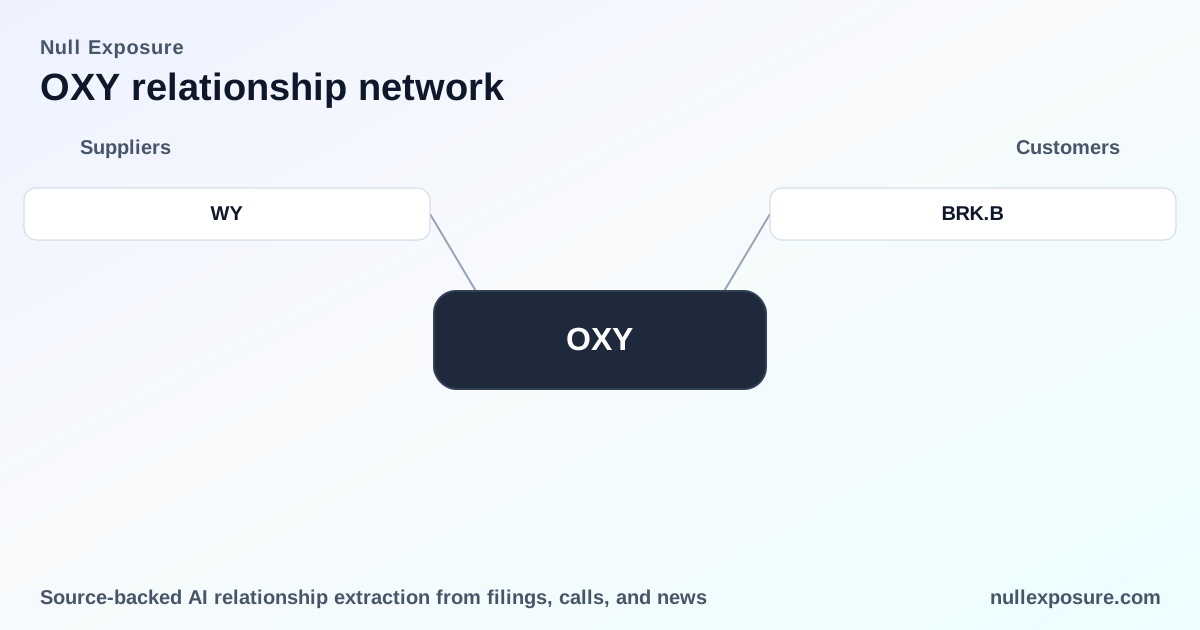
Occidental’s supplier relationship data in this review surfaced a single public relationship:
- Weyerhaeuser — Occidental has a carbon capture and sequestration (CCS) agreement with Weyerhaeuser that integrates OXY’s CCS services with Weyerhaeuser’s Natural Climate Solutions offering, creating a revenue pathway tied to decarbonization services. According to a Simply Wall St news note dated March 10, 2026, the CCS arrangement is positioned as a growth opportunity for Weyerhaeuser’s business and underscores Occidental’s commercial push into CCS markets. (Simply Wall St, March 10, 2026).
This is the only named supplier/customer relationship flagged in the provided results; the Weyerhaeuser tie highlights how Occidental leverages core capture and sequestration capabilities as commercialized services beyond traditional midstream and commodity sales.
Constraints and operating-model signals investors should price in
Several company-level signals from filings and disclosures frame supplier risk and negotiating posture:
- Contracting timeframe: long-term. Documented take-or-pay pipeline and leased storage capacities establish extended commitments that favor counterparties able to finance infrastructure and that reward suppliers who can deliver long-term reliability.
- Spend magnitude: > $100m band. Capital expenditures and service line items are large and persistent, making Occidental a buyer with significant purchasing power but also creating concentrated exposure to a relatively small set of large suppliers.
- Relationship roles: buyer and service-recipient. Occidental’s trading and third-party marketing activities mean it both buys commodities for resale and pays for gathering/processing services, which complicates net counterparty exposure and can create intra-group flows with equity investees.
- Materiality of discrete projects: immaterial to liquidity. Management statements classify individual expenditures as not materially adverse to liquidity, signaling mature cash-generation expectations though investors should monitor aggregate capex trends and commodity price sensitivity.
These constraints collectively present a company that is operationally mature, capital-intensive and contractually committed, with supplier dynamics driven by long-term infrastructure contracts and a handful of strategically critical partners.
How investors and operators should act
- Prioritize counterparty diligence on suppliers tied to midstream and storage contracts that intersect OXY’s take-or-pay arrangements; contract expirations in 2025 represent immediate renegotiation risk.
- For private suppliers and service providers, quantify concentration risk: large line items and recurring capex create single-customer dependency potential that should be priced into supplier contracts.
- Monitor commercial CCS deals like the Weyerhaeuser agreement as revenue diversification signals; CCS partnerships translate operational capability into recurring service revenues that alter long-term supplier demand.
For more targeted supplier analytics and relationship heat maps tailored to energy sector counterparties, visit NullExposure: https://nullexposure.com/.
Bottom line
Occidental operates as a cash-flow-generating energy producer with material long-term contractual commitments and large supplier spend, while selectively commercializing carbon-capture capabilities through partnerships such as the Weyerhaeuser CCS arrangement. Investors and procurement teams should treat OXY as a deep-pocketed, infrastructure-focused counterparty—one that creates both stability through long contracts and focal points of renegotiation at contract expirations. For ongoing monitoring of supplier exposure and contract timelines, consider leveraging marketplace-grade supplier intelligence at NullExposure: https://nullexposure.com/.
Key takeaways: Occidental’s supplier relationships are defined by long-term contracts, high absolute spend, and strategic CCS partnerships; contract expirations and capex pacing are the immediate levers that will shape supplier risk and negotiating power going forward.