Oyster Enterprises II (OYSER): a short, practical investor thesis
Oyster Enterprises II is a SPAC that raises capital by selling units (shares + warrants/rights) on Nasdaq and monetizes through the initial offering proceeds and a future business combination that converts public securities into operating equity. Investors in the rights ticker OYSER hold the warrant-like instrument that delivers leverage to any successful de‑SPAC transaction; the vehicle itself generates fees and sponsor economics at deal close while relying on capital markets execution to complete a merger. For a deeper look at counterparties and market positioning, visit https://nullexposure.com/.
What Oyster is and how it actually operates
Oyster Enterprises II is a blank‑check acquisition company focused on technology and consumer targets, structured to raise cash via an IPO of units that separate into Class A shares, warrants/rights (OYSER), and potentially other instruments. The entity has no operating revenue, no EBITDA, and exists solely to identify and consummate a business combination that creates public equity for a private target. Public filings show book value roughly negative and traditional operating metrics are not applicable; the economic proposition is entirely execution and deal‑selection driven.
Key structural signals:
- Pre‑deal maturity: Oyster reports zero revenue and no operating profit, consistent with an early‑stage acquisition vehicle awaiting a target.
- Market dependence: Nasdaq listing and a single lead bookrunner govern distribution and liquidity dynamics.
- Capital posture: The SPAC model concentrates counterparty risk around underwriting, exchange listing, and eventual target counterparties; Oyster’s economics are contingent on deal completion and sponsor terms.
Learn more about supplier and market relationships at https://nullexposure.com/.
The counterparties that matter (each relationship summarized)
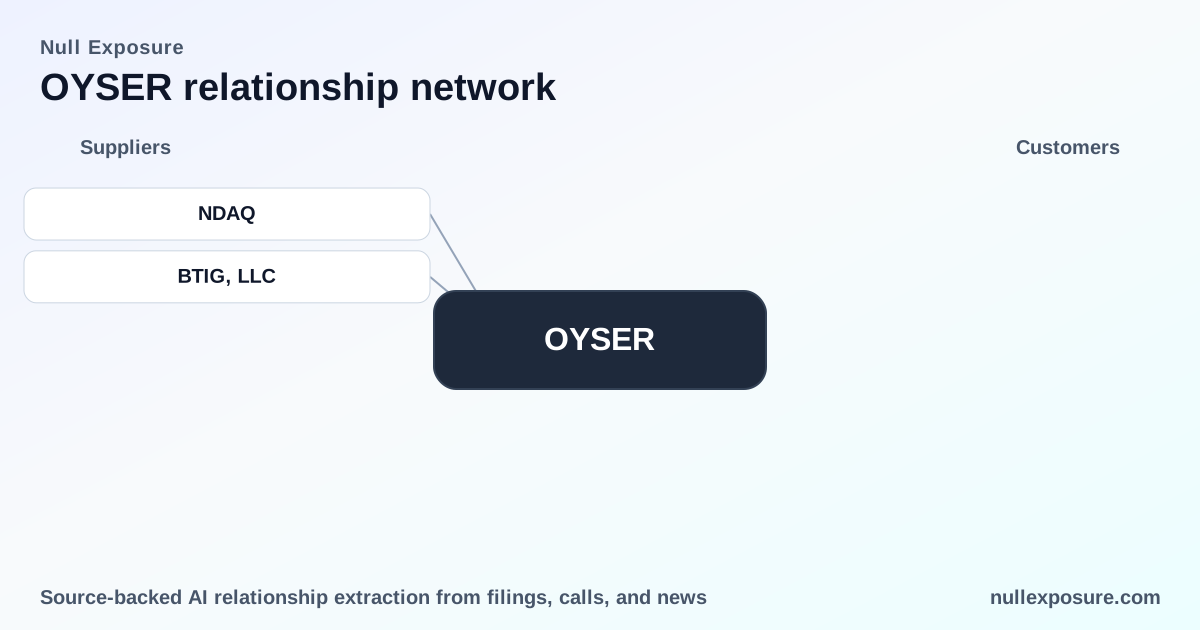
Nasdaq Global Market (Nasdaq) — According to a GlobeNewswire press release dated May 21, 2025, Oyster’s securities were slated to list on the Nasdaq Global Market, with the Class A ordinary shares and the Share Rights expected to trade under the symbols “OYSE” and “OYSER” once the unit components begin separate trading. A subsequent GlobeNewswire release on May 23, 2025 confirms that the Company’s units began trading on May 22, 2025 on Nasdaq under the ticker “OYSEU.” These listings are the primary liquidity and regulatory gateway for investors in Oyster’s public securities.
BTIG, LLC — BTIG is the sole book‑running manager for Oyster’s initial public offering; GlobeNewswire announcements dated May 21 and May 23, 2025 specify BTIG’s role in pricing and completing the upsized offering. BTIG is the central distribution and underwriting partner for this SPAC, meaning deal syndication, investor placement, and aftermarket support are concentrated through this single manager.
(These two counterparties are the only suppliers identified in the public offering announcements; both Nasdaq and BTIG are operationally critical to Oyster’s market access and initial capital raise.)
What these relationships mean for investors and operators
The relationship footprint is deliberately narrow: Nasdaq provides the public market venue and BTIG provides distribution and underwriting muscle. That narrowness creates clear operational characteristics for Oyster:
- Contracting posture — centralized and single‑point: Oyster engaged a single lead underwriter (BTIG) for the IPO and relies on one exchange (Nasdaq) for listing and subsequent trading, which concentrates execution risk but simplifies coordination for a rapid offering process.
- Concentration risk — high: With underwriting and listing concentrated, any failure or friction with these partners directly impacts Oyster’s ability to raise capital and list securities.
- Criticality — structurally critical: Listing on Nasdaq and distribution via a lead manager are non‑substitutable in the short term; they determine liquidity, pricing, and investor reach.
- Maturity and optionality — pre‑operational: Oyster’s balance sheet and public metrics reflect a pre‑combination vehicle: no revenues, no operating margins, and floating instruments (rights/warrants) that derive value solely from future transaction outcomes.
Key risk takeaway: the entire public investment thesis for OYSER is execution‑dependent — on the SPAC’s ability to source, negotiate, and close a value‑accretive combination while maintaining market support from its underwriter and exchange liquidity.
How to track execution and what matters next
Focus your monitoring on a small set of high‑impact events and metrics:
- Announced target and definitive merger agreement (backstop for valuation).
- Shareholder redemption rates and the size of trust cash at the time of a deal vote.
- Any changes in underwriting support or secondary market liquidity for OYSER/OYSE instruments.
- Nasdaq notices or qualification items that would affect listing status.
Each of these events directly changes the conversion economics of the rights and the likelihood of sponsor economics crystallizing.
Take action: if you evaluate SPAC counterparty strength as part of your investment process, review Oyster’s filings and manager relationships on https://nullexposure.com/ for consolidated supplier and market partner intelligence.
Final assessment and practical next steps
Oyster Enterprises II is a classic SPAC thesis: no operating business today, leverage to a future transaction tomorrow, and dependence on a narrow set of market counterparties (Nasdaq for liquidity and BTIG for underwriting). For investors and operators, that means the decision is less about current metrics and more about counterparty credibility, sponsor alignment, and deal execution probability.
If you are vetting OYSER for exposure or operational partnership, prioritize: counterparty continuity (BTIG and Nasdaq), time to announcement (deal cadence), and the structure of warrants/rights that determine upside and downside in a combination scenario. For consolidated supplier intelligence and to monitor future relationship developments, visit https://nullexposure.com/.
Bold final point: OYSER’s value crystallizes only through execution — market access and underwriting are the thin end of the wedge that determines whether that value is realised.