Grupo Aeroportuario del Pacífico (PAC): supplier relationships that shape capital access and operations
Grupo Aeroportuario del Pacífico (PAC) operates and monetizes a portfolio of 12 airports in Mexico’s Pacific region through aeronautical charges, retail and concession revenue, parking and ground services, and long-term concession agreements. The company generates cash by scaling passenger traffic and extracting higher ancillary revenue per passenger while financing capital expenditures through a mix of bank credit lines, debt issuance and structured financing tied to sustainability goals. For investors and operators, PAC is a cash-generative airport operator whose supplier and financing relationships directly affect capex flexibility and balance-sheet risk. Explore more at https://nullexposure.com/.
What matters to investors: how PAC’s supplier ties move the needle
PAC’s business model is straightforward: control airports under concession, collect regulated and commercial income streams, and invest in capacity to capture traffic growth. Key drivers for valuation and operational resilience are passenger throughput, concession mix, and access to low-cost financing for runway, terminal and cargo infrastructure. Financials underline the scale: Revenue TTM ~ MXN 32.53 billion, EBITDA ~ MXN 21.33 billion, and Market Cap ~ USD 11.67 billion, indicating a high-margin, capital-intensive utility-style operator positioned to monetize steady traffic growth. These economics make PAC sensitive to the cost of capital and the tenor of its financing relationships—areas covered in the relationship summaries below. If you want a consolidated view of supplier and financing counterparties, visit https://nullexposure.com/ for analysis and monitoring.
Counterparties and what they mean for PAC’s funding and operations
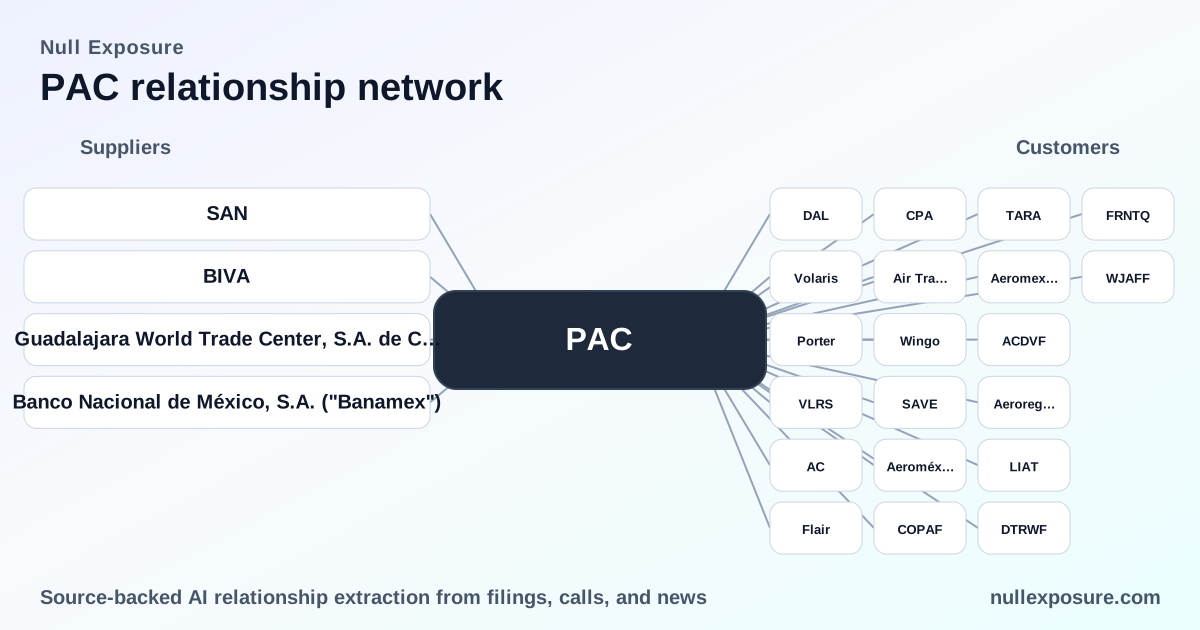
Banco Santander, S.A.
PAC used bank financing with Santander as part of its short-term liabilities: proceeds from bond issuances were allocated to finance Ps. 7,000 million in capex and to repay a Ps. 1,500 million loan from Banco Santander. According to a company press release, this repayment is explicitly tied to the 2025 financing plan and reduces near-term bank exposure while shifting funding toward bond markets (GlobeNewswire, Q3 2025).
Bolsa Institucional de Valores (Biva)
PAC priced its first sustainability-linked bonds on Biva to raise up to Ps. 5,300 million, indicating a strategic shift toward capital markets funding and investor appetite for ESG-conditional instruments. A local capital markets report noted the bond launch occurred on September 21, 2022, and positions PAC to match capital allocation to sustainability targets while diversifying away from traditional bank credit (RealEstateMarket.mx, FY2022).
Guadalajara World Trade Center, S.A. de C.V. (GWTC)
PAC completed the acquisition of a 51.5% stake in GWTC, a logistics and cargo-services group operating free-trade zone facilities at Guadalajara and Puebla airports; GWTC provides handling, storage and custody services for international cargo. The acquisition integrates cargo-handling capabilities into PAC’s operating footprint and enhances control over non-aeronautical revenue channels tied to trade flows (GlobeNewswire, June 11, 2024).
Banco Nacional de México, S.A. (Banamex)
PAC refinanced a USD 40.0 million credit line with Banamex and extended the maturity to September 18, 2030, strengthening medium-term liquidity and extending bank-funded tenors for working capital and capex. PAC disclosed the refinancing in its Q3 2025 results, demonstrating a deliberate management of debt maturity profiles with key domestic banks (GlobeNewswire, Q3 2025).
What these relationships collectively signal for investors
- Diversified funding mix: PAC is actively moving capital from bank loans into public bond markets (Biva issuance) while maintaining bank facilities with long tenors, reducing rollover risk and spreading funding channels across banks and institutional investors.
- Strategic vertical integration: The GWTC acquisition strengthens control over cargo-handling margins and reduces exposure to third-party logistics suppliers at key airports, expanding non-aeronautical revenue capture.
- Credit and liquidity posture: By refinancing the Banamex line to 2030 and retiring Santander exposure with bond proceeds, PAC is lengthening maturities and de-risking near-term liquidity pressures; this is consistent with the capital-intensive but stable cash flow nature of airport operators.
Key takeaway: PAC is deploying a coordinated financing strategy—sustainability-linked bonds, extended bank credit tenors, and targeted acquisitions—to optimize capital structure and unlock higher-margin ancillary services.
Operating model and business-model constraints (company-level signals)
No supplier-level constraints were flagged in the supplier-scope search; this absence is itself informative. At the company level:
- Contracting posture: PAC operates under long-term concession contracts with predictable cash flows; capital needs are planned and financed over multi-year horizons rather than ad hoc short-term lending.
- Concentration: Operating 12 airports provides geographic and traffic diversification within the Pacific region, but the business remains concentrated in Mexican infrastructure and thus sensitive to country-specific regulatory and travel dynamics.
- Criticality: Airports represent critical infrastructure with high fixed costs and essential service obligations, giving PAC pricing power for commercial concessions while requiring disciplined capex execution.
- Maturity: PAC’s operating model is mature—established concession operations, a track record of accessing both bank and capital markets, and active balance-sheet management through bond issuance and targeted acquisitions.
These company-level characteristics explain management’s preference for longer-tenor bank lines and sustainability-linked bond issuance; those instruments align financing costs and tenor with asset lives and operational goals.
Risk profile that investors should watch
- Refinancing and interest-rate risk: While maturity extension reduces near-term roll risk, macro-level rate moves will influence bond yields and bank spread re-pricing at future resets.
- Operational concentration: Traffic shocks in key airports would disproportionately impact consolidated performance despite geographic spread.
- Execution risk on integration: The GWTC acquisition increases exposure to cargo operations and requires integration discipline to realize synergies and margin improvement.
If you are tracking counterparty credit or want a consolidated supplier-risk dashboard for PAC, check https://nullexposure.com/ for ongoing monitoring and supplier-counterparty mapping.
Bottom line and next steps for investors
Grupo Aeroportuario del Pacífico has aligned its supplier and financing relationships with the operational profile of a capital-intensive airport operator: diversified fund sources, longer maturities, and strategic vertical integration to capture non-aeronautical revenue. The documented relationships with Santander, Banamex, Biva and the GWTC acquisition materially affect PAC’s liquidity, capex flexibility and revenue mix. For a real-time view of PAC’s supplier exposures and structured relationship analysis, visit https://nullexposure.com/ and subscribe for alerts.