Ranpak Holdings (PACK) — supplier relationships and the investment implications
Ranpak operates and monetizes a two-sided packaging business: it sells capital equipment (paper-based protective packaging machines) and recurring consumables and services (paper, parts, maintenance). Revenue is driven by equipment placement cycles and steady consumable purchases, with Ranpak reporting $395 million in trailing revenue and a gross profit of $130.7 million; market capitalization sits near $292 million. Investors should treat supplier posture and input concentration as first-order risk drivers for margins and working capital. For an operational view of supplier relationships, visit https://nullexposure.com/.
Why the 2021 underwriting roster matters for supplier analysis
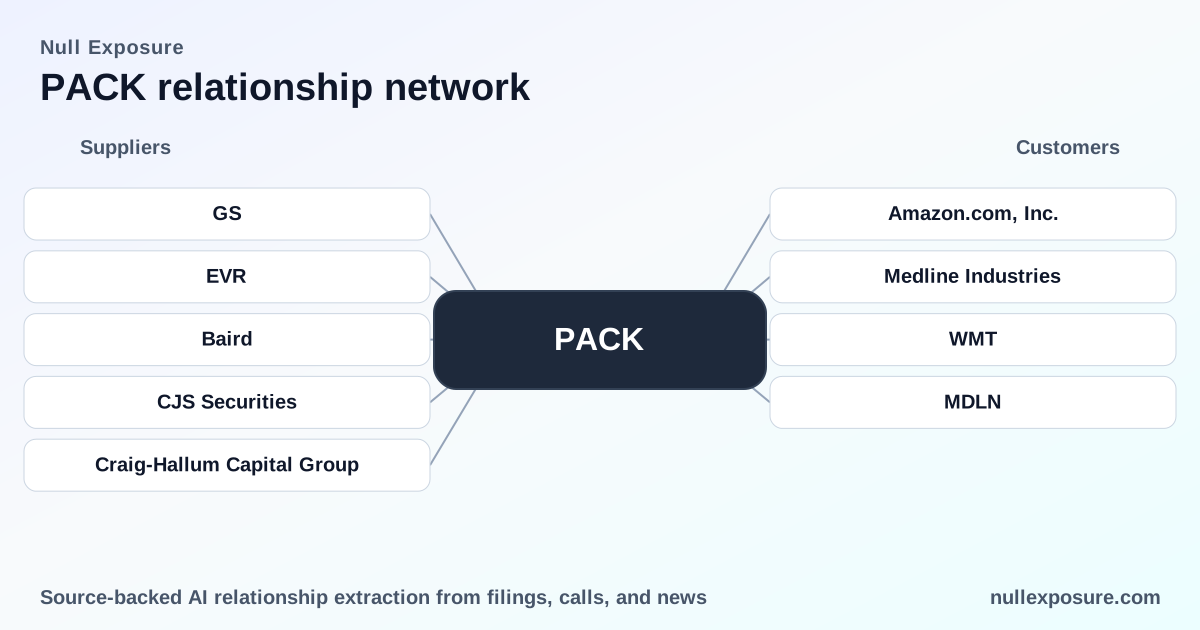
Ranpak’s publicly reported relationships in the sources provided are capital-markets counterparties that led its 2021 equity offering, not raw-material vendors. These engagements exposed the company to a short-term liquidity exercise and provided capital to support growth and working capital — a relevant datapoint for supplier strategy because capital events change procurement flexibility and negotiating leverage. According to Ranpak press releases distributed via PR Newswire in May 2021, Goldman Sachs and Baird acted as joint book-running managers, with Evercore, Craig‑Hallum and CJS Securities as co-managers for the proposed and priced offering.
Relationship notes — underwriters and co-managers from the 2021 offering
- Goldman Sachs & Co. LLC — Goldman Sachs served as a joint book-running manager on Ranpak’s proposed offering (May 25, 2021) and on the subsequent priced offering (May 27, 2021), positioning the bank at the center of Ranpak’s capital raise. Source: Ranpak press releases via PR Newswire / FinancialContent, May 25 & 27, 2021.
- Baird — Baird joined Goldman Sachs as the other joint book-running manager on the proposed offering, sharing primary execution responsibility for distribution to institutional investors on May 25, 2021. Source: Ranpak press release via PR Newswire / FinancialContent, May 25, 2021.
- Evercore Group L.L.C. — Evercore acted as a co‑manager on both the proposed offering and the priced offering, playing a supporting syndicate role for distribution and pricing (May 25 & 27, 2021). Source: Ranpak press releases via PR Newswire / FinancialContent, May 25 & 27, 2021.
- Craig‑Hallum Capital Group — Craig‑Hallum participated as a co‑manager on the offering syndicate and is listed across the May 25 and May 27 notices as part of the distribution team. Source: Ranpak press releases via PR Newswire / FinancialContent, May 25 & 27, 2021.
- CJS Securities — CJS Securities appears as a co‑manager on the priced offering announcement dated May 27, 2021, completing the smaller-broker support tranche for the deal. Source: Ranpak press release via PR Newswire / FinancialContent, May 27, 2021.
What the company-level constraints tell us about procurement and concentration
Ranpak’s SEC-style disclosure language signals a short-term contracting posture for paper inputs: the company states it typically negotiates supply and pricing arrangements with most paper suppliers on a quarterly or semi‑annual cadence, while noting many long-standing supplier relationships. That combination creates a hybrid profile: frequent price renegotiation with durable counterparty relationships, which helps manage near-term volatility but leaves the company exposed to supplier concentration.
Disclosure also shows clear materiality in input dependence: Ranpak reported purchasing paper from roughly 27 suppliers in 2024, yet its largest single paper source supplied approximately 73% of North American purchases and 39% of global purchases. This is a decisive concentration signal at the company level — it increases supplier power and creates single‑point-of-failure risk for North American operations.
Taken together, these constraints imply:
- Contracting posture: short-term pricing windows (quarterly/semi-annual) even where relationships are mature.
- Concentration & criticality: a single supplier dominates North American paper supply, making continuity and price exposure critical to margin stability.
- Maturity: relationships are longstanding, reducing onboarding risk for alternates but not eliminating concentration risk.
For a focused supplier intelligence briefing and ongoing monitoring, go to https://nullexposure.com/.
Investment and operational implications
- Margin sensitivity is real. With operating margin near 7.1% and negative reported EPS on a trailing basis, a meaningful paper cost shock would compress already-tight operating economics; procurement concentration amplifies that channel.
- Negotiation leverage is asymmetric. Short-term contracts allow Ranpak to re-price quickly, but the dominant single supplier in North America creates supplier pricing power in practice. Operators should quantify fallback sourcing timelines and costs.
- Working capital and capital markets access matter. The 2021 equity raise — executed by the underwriter group listed above — provided liquidity that can fund inventory buffers or capital for dual-sourcing; capital access is therefore a tactical mitigation for supplier risk.
Practical next steps for investors and operators
- Stress-test margins under paper-cost shock scenarios and model the effect of losing the largest North American supplier for multiple quarters.
- Prioritize dual‑sourcing or inventory hedges for critical paper grades; assess capex to shift to alternative materials if economically viable.
- Monitor procurement cadence and supplier contract renewals ahead of quarterly renegotiations; these are the windows where margin volatility will be realized.
- Watch capital markets activity. Any future equity or debt transactions (syndicate composition and timing) will directly affect Ranpak’s ability to fund strategic inventory or supplier diversification.
For ongoing supplier mapping and to subscribe to alerts that track these relationships, visit https://nullexposure.com/.
Final take
Ranpak’s business model is fundamentally driven by equipment placements and recurring consumables, making paper supply both a cost lever and an operational dependency. The 2021 underwriting roster documents a capital event that improved near-term flexibility; the company‑level constraints — short-term contracting cadence and pronounced supplier concentration — define the core procurement risk profile investors and operators must manage. For a consolidated view of this supplier intelligence and the implications for portfolio risk, return to https://nullexposure.com/.