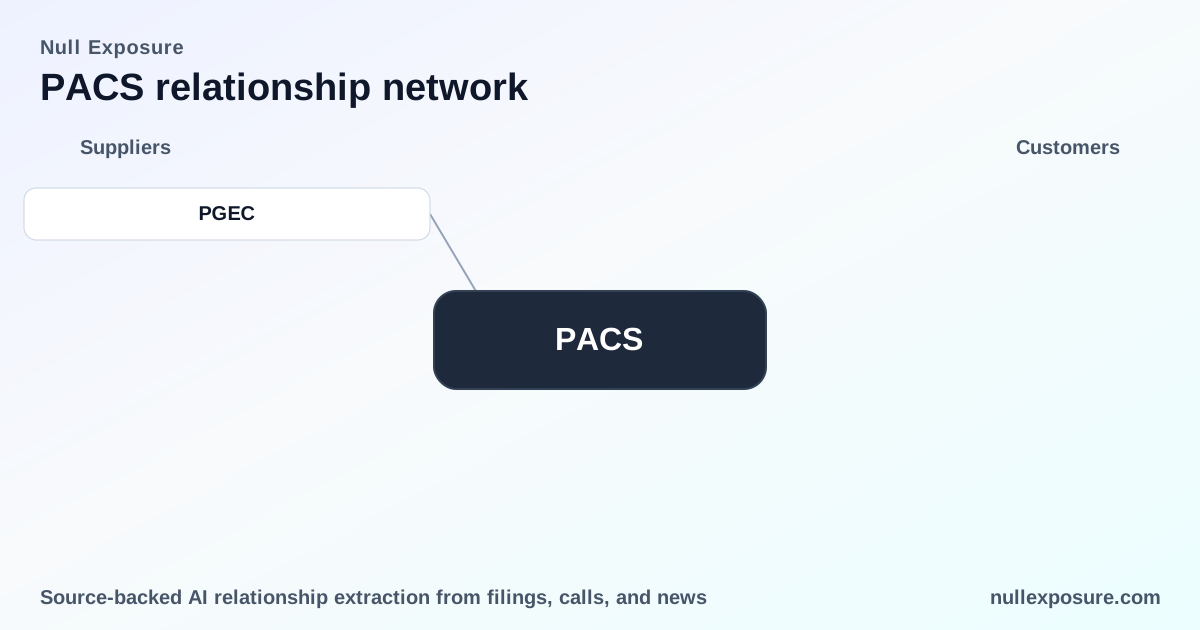
PACS Group, Inc. — supplier posture, recent deals, and what investors should act on now
PACS Group, Inc. operates as a technology and services provider focused on healthcare operational efficiency, monetizing through a mix of software and hardware sales, recurring service contracts, and facility-level operations. The company combines organic product sales with acquisitive expansion into operating capacity, and reports sizeable recurring revenue and margins consistent with a scaled healthcare technology operator (Revenue TTM $5.29B; EBITDA $365M; Market Cap ~$5.51B). Investors should view PACS as a growth-oriented supplier/operator with a hybrid monetization model: product sales plus steady, contract-backed services and leased facility operations. For a broader supplier landscape and comparative mapping, see https://nullexposure.com/.
How PACS actually runs the business — the operating model that matters to counterparties
PACS' operating profile is defined by four structural characteristics that influence supplier relationships and counterparty risk.
- Contracting posture: long-term, lease-driven operations. Company filings describe a majority of facilities operated under long-term, triple‑net leases and note that recent operations brought on through long-term leases did not transfer material assets or liabilities beyond tenant rights — a posture that preserves operating flexibility while locking in recurring obligations and revenue streams.
- Role: operating service provider rather than pure reseller. The company reports its cost of services as payroll, purchased services and ancillary patient costs — reflecting that PACS is a provider of ongoing services and not simply a vendor. That operating posture increases the criticality of partner performance for day-to-day revenue.
- Relationship maturity and activity: active, ongoing engagements. PACS records right‑of‑use assets and liabilities across multiple leases and acknowledges ongoing audit and professional service arrangements, signaling mature, active supplier and landlord relationships rather than one-off projects.
- Financial footprint and spend profile: meaningful lease and capital commitments. Finance lease right‑of‑use assets were reported at $139,472 and $37,850 as of December 31, 2024 and 2023 respectively, indicating material capitalized lease activity and potential >$100M spend bands in related commitments.
Together these elements create a supplier profile that requires long lead-time contracts, tight operational SLAs, and careful integration oversight for any counterparty. Concentration signal: insider ownership totals high (>70% insiders reported), which implies strategic control and potential governance advantages — and cash flow concentration risk for minority holders. For a supplier-focused view of peers and counterparty intelligence, visit https://nullexposure.com/.
What the deals reported in the market say — every relationship in the dataset
Below I cover every recorded relationship result in the supplied data. Each paragraph is a plain-English summary with the source noted.
-
Prestige — TradingView (Brazil) reported on March 10, 2026 that PACS completed an acquisition of operations from Prestige, which is expected to increase PACS' market presence and operational capacity in healthcare; the brief item characterizes the move as a capacity and market-share expansion. Source: TradingView news post (br.tradingview.com, March 10, 2026).
-
Prestige — TradingView (US) carried the same item on March 10, 2026, repeating that the acquisition of Prestige operations is an accretive capacity play for PACS and part of its inorganic growth strategy in the sector. Source: TradingView news post (tradingview.com, March 10, 2026).
Both items reference the same counterparty and the same operational implication: PACS is expanding through acquisitions of operating capacity. These public reports align with the company’s filing language about bringing on operations via long‑term leases without assuming material assets.
Why the Prestige relationship matters to investors and suppliers
The Prestige acquisition has three immediate implications:
- Scale and revenue diversification. Adding operating capacity through Prestige expands the service footprint and should bolster recurring revenue generation tied to patient services and ongoing vendor contracts.
- Integration and execution risk. Acquiring operations — especially where the firm did not take on material assets — implies heavy reliance on contractual continuity and successful operational transfer, which elevates short‑term integration execution risk for suppliers and purchasers of PACS services.
- Supplier negotiation leverage. As PACS grows its operating platform, suppliers that are early partners on new locations can gain preferred positioning; conversely, suppliers should price for scale and longer payment cycles given PACS’ lease-driven footprint.
Tactical takeaways for investors and operators
- Prioritize counterparties experienced with long-term, triple-net lease operators. Suppliers should price contracts to reflect tenant responsibilities and the company’s role as an active service provider.
- Stress-test integration scenarios. Investors should model near-term margin compression driven by integration costs even as revenue base grows from acquisitions like Prestige.
- Monitor governance concentration. With a high insider ownership percentage, strategic decisions can be made quickly; investors should track insider actions for acquisition cadence and capital allocation shifts.
If you need a granular supplier map or counterparty risk profile for PACS’ partners, explore our analysis hub at https://nullexposure.com/ — the comparative view is useful for pricing, RFPs, and diligence.
Final investment posture and recommended next steps
PACS is executing a clear inorganic growth playbook: scale operating capacity via acquisitions while running a service-heavy, lease-backed operating model. That combination creates predictable recurring revenue but demands disciplined execution on integration and supplier management. For investors, the stock’s valuation reflects growth expectations (Forward PE ~16.2) and operational leverage; for suppliers, the company is a counterparty that requires long-term contractual discipline and operational SLAs.
Recommended next actions:
- Investors should monitor integration KPIs from the Prestige deal and upcoming SEC filings for explicit revenue and margin contributions.
- Suppliers and operators should draft contract terms that reflect long-term lease exposure and service continuity requirements.
- For deeper supplier scoring and exposure analytics to PACS and comparable operators, visit https://nullexposure.com/ for bespoke dashboards and reports.