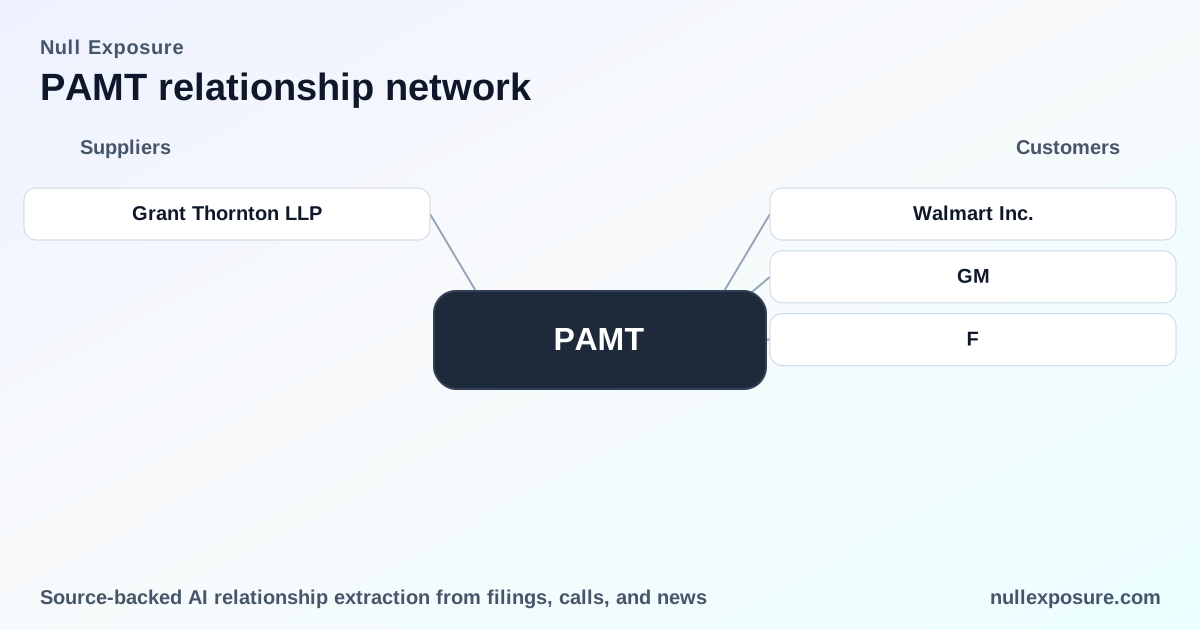
PAMT CORP: Supplier relationships, capital structure signals, and what investors should price in
PAMT Corp operates as a regional asset-light/asset-managed trucking business that earns revenue primarily by hauling freight and monetizing a fleet of revenue equipment under long-dated financing arrangements. The company’s economics are driven by freight rates, utilization of owned and financed tractors and trailers, and resale or salvage values captured through manufacturer arrangements; financing charges and residual risk therefore directly affect cash flow and return on invested capital. Investors should evaluate PAMT not only on top-line freight trends but on its supplier and financing posture, which determines capital intensity, balance sheet flexibility, and counterparty exposure. For a quick overview of supplier risk tooling and benchmarking, visit https://nullexposure.com/.
Why supplier contracts and manufacturer ties are the operational heartbeat
PAMT’s operating model is capital-intensive and inherently dependent on three supplier classes: equipment manufacturers (for vehicle purchases and residual guarantees), finance counterparties (for installment financings secured by equipment), and professional services such as auditors that underpin public reporting credibility. From the disclosure excerpts available, equipment financing is structured as long-term installment obligations secured by the financed assets, which shapes both liquidity needs and credit risk over the medium term. According to the company’s fiscal disclosures covering equipment financings, installment obligations for revenue equipment carry maturities through November 2031 and a weighted-average interest rate of roughly 5.00% as of December 31, 2024.
That financing profile implies several operating characteristics:
- Maturity laddering and predictable cash outflows: Having equipment obligations extending to 2031 provides visibility into scheduled debt service, reducing refinancing frequency but increasing cumulative interest exposure over the cycle.
- Collateralized, asset-backed posture: Financing is secured by revenue equipment, which keeps debt structurally tied to fleet value and increases the importance of salvage/resale outcomes.
- Manufacturer dependency for residual value: The company has contractual relationships with manufacturers that guarantee salvage values and deliver warranty coverage, a structural risk mitigator that also introduces counterparty concentration risks if a manufacturer program changes.
These are company-level signals: they describe PAMT’s contracting posture, criticality of manufacturer relationships, and the maturity profile of its financing obligations rather than any single supplier’s behavior.
What’s on the record: the company’s named supplier and professional relationships
Grant Thornton LLP — PAMT’s independent registered public accounting firm. Shareholders reappointed Grant Thornton LLP as the company’s independent auditor for 2025, and a news report noted the formal appointment at the shareholder meeting that followed executive leadership change events. This is confirmation of continuity in external audit oversight, important for governance and the credibility of forward-looking financial statements (TalkBusiness, May 2025; Arkansas Business, 2025).
- According to a TalkBusiness report in May 2025, shareholders appointed Grant Thornton LLP as the independent registered public accounting firm for 2025 and discussed executive transitions at the shareholder meeting.
- Arkansas Business likewise reported that the proxy agenda included the reappointment of Grant Thornton LLP as the independent auditor, reinforcing the firm’s ongoing audit role into the 2025 fiscal year.
These items are operationally relevant because stable audit relationships reduce execution risk around annual reporting and can accelerate investor confidence during management transitions.
How the supplier posture translates into investment signals
PAMT’s disclosed arrangements and supplier language generate clear investment implications:
- Capital structure sensitivity: Long-term equipment financing through 2031 at a weighted average interest rate of 5% locks in funding costs and makes PAMT’s operating leverage highly sensitive to freight rate swings; higher utilization or improved equipment residuals directly boost free cash flow. This is not a theoretical point — it is embedded in the company’s financing disclosures as of year-end 2024.
- Residual value risk mitigated but concentrated: Manufacturer salvage guarantees and warranty coverage reduce downside on asset disposal, but those same manufacturer programs concentrate counterparty exposure and can affect resale economics if contract terms change.
- Governance and reporting continuity: The reappointment of a recognized audit firm supports transparency as the company navigates executive change, which is material for traders and longer-term holders who depend on timely, reliable reported metrics.
Key takeaways for allocators and operators: PAMT’s investment profile is tied to fleet economics, financed tenure, and manufacturer programs—capital allocation decisions should weigh current freight fundamentals alongside the scheduled financing maturities and the quality of manufacturer guarantees. For help mapping supplier exposures to balance-sheet stress tests, see https://nullexposure.com/.
What to watch next — catalysts and downside triggers
Monitor these items closely over the next 12–24 months:
- Contract renewals with manufacturers or material changes to salvage-value guarantees, which would change realized resale proceeds and leverage metrics.
- Any refinancing events that alter the current weighted-average cost of equipment debt or shift maturities earlier than the disclosed November 2031 horizon.
- The stability and scope of external audit engagement and related governance signals during and after management transitions, as audits influence market confidence in reported margins and cash flows.
Practical checklist for investor diligence
- Confirm the current schedule and interest rates on equipment installment obligations and stress-test cash flows at +/- 20% freight-rate scenarios.
- Obtain the terms of manufacturer salvage guarantees and warranty coverage to model residual sensitivity.
- Validate continuity in external reporting (audit letters, restatements, or scope changes) to ensure no near-term reporting shocks.
Closing perspective and next steps
PAMT is a fleet-driven operator whose earnings power and balance-sheet resilience are tightly coupled to long-term equipment financing and manufacturer arrangements that define residual risk and liquidity cadence. The presence of a stable external auditor, as recorded in shareholder disclosures, reinforces reporting continuity through management change. For investors and operators focused on counterparty concentration and financing maturity, these supplier dynamics are central to valuation and risk management.
For a broader comparative view of supplier risk across mid-cap transportation names and tools to map counterparty exposures, visit https://nullexposure.com/. If you want a tailored briefing on how PAMT’s manufacturer and financing arrangements alter downside scenarios for a specific portfolio, start with https://nullexposure.com/ — we provide the frameworks institutional investors use to translate supplier contracts into capital allocation decisions.