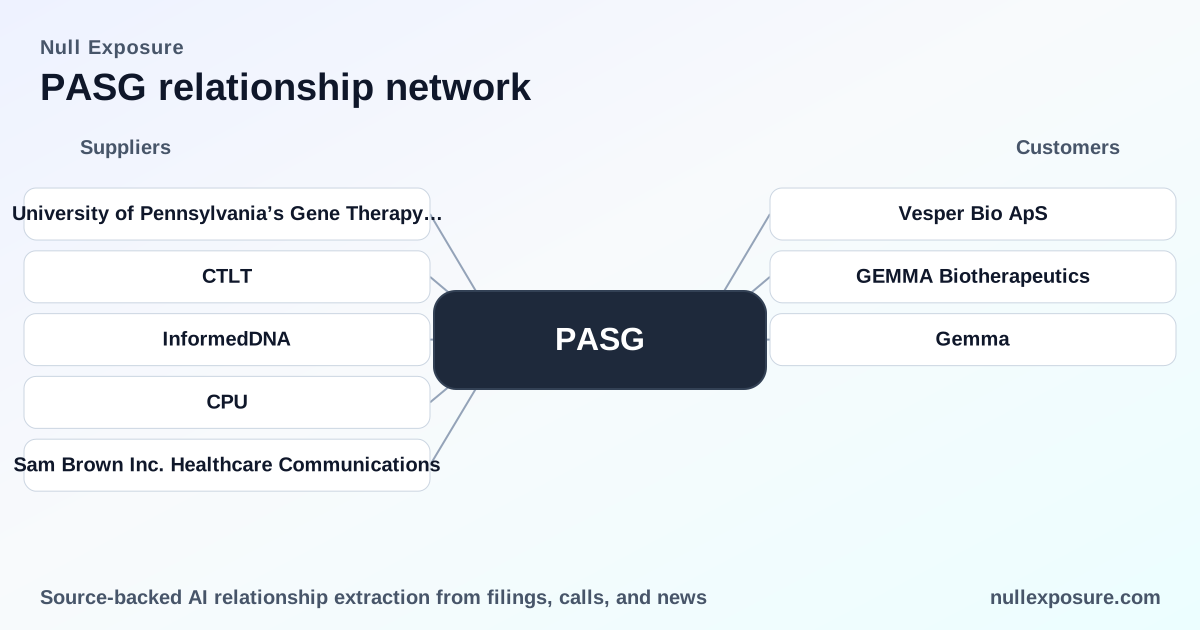
Passage Bio (PASG) supplier map: what investors should know about Catalent, Penn GTP, InformedDNA, Computershare and Sam Brown
Passage Bio is a clinical-stage genetic medicines company focused on rare monogenic CNS disorders; it currently generates no product revenue and monetizes long-term value through clinical progress, licensing/out-licensing and future commercialization of gene therapies. Operationally the company outsources discovery and cGMP manufacturing, relies on third-party partners for clinical enrollment support, and uses external vendors for investor communications and transfer agent services — a supplier mix typical for late pre-commercial biotech that concentrates operational risk in a small number of critical partners. For a quick vendor-oriented briefing and risk scorecards, visit https://nullexposure.com/.
How Passage Bio runs its partner network and why it matters to investors
Passage Bio’s operating model delegates core technical and operational functions to specialized partners rather than vertically integrating manufacturing and large-scale trial logistics. The company relies on external scientific collaboration for discovery and IND-enabling work, locks in manufacturing capacity through multi-year agreements, and purchases services for trial recruitment, communications, and stock administration. This structure conserves capital today but creates concentration and execution risk tied to a handful of suppliers whose capacity and contractual terms directly affect timelines and commercial optionality.
According to regulatory disclosures and company releases, Passage Bio records no product revenue and negative operating results, making partner relationships the functional backbone of near-term execution and a primary driver of program timelines and cash burn. Investors should therefore read supplier agreements as operational leverage points that influence program feasibility and the timing of value realization.
Visit https://nullexposure.com/ for a concise supplier risk profile and benchmarking against peers.
Key supplier relationships — plain-English summaries and evidence
University of Pennsylvania’s Gene Therapy Program
Passage Bio has a strategic collaboration and licensing arrangement with the University of Pennsylvania’s Gene Therapy Program to support discovery and IND-enabling preclinical work, reflecting an academic-to-biotech translation model for early-stage science. This arrangement is referenced in company statements from fiscal 2022 and positions Penn GTP as a scientific originator for programs. (CityBiz, FY2022).
Catalent
Catalent is Passage Bio’s primary cGMP manufacturing partner, governed by an amended collaboration and development/clinical supply agreement that extends capacity commitments and limited exclusivity through November 6, 2030; the company also recorded a small divestiture-related fee in connection with a program transfer. Catalent provides process development, manufacturing, supply chain and analytical testing for Passage Bio’s gene therapy candidates and carries multi-year minimum commitments. (TradingView summary of company 10-K, FY2026; regulatory excerpts describe the Amended Catalent Agreements and minimum commitments).
InformedDNA
Passage Bio partners with InformedDNA to provide no-cost genetic counseling and testing for adults diagnosed with frontotemporal dementia (FTD) as part of clinical trial recruitment initiatives, demonstrating the company’s use of vendor-supported patient-identification and counseling services to accelerate enrollment. This collaboration is cited in program updates and the company’s FY2025–FY2026 reporting. (GlobeNewswire, FY2025; GlobeNewswire company update, FY2026).
Computershare Trust Company, N.A.
Computershare Trust Company, N.A. serves as Passage Bio’s transfer agent and was appointed exchange agent for the company’s reverse stock split, reflecting standard securities administration outsourcing for capital-structure actions. (Yahoo Finance press release, FY2025).
Sam Brown Inc. Healthcare Communications
Sam Brown Inc. provides media and investor communications support for Passage Bio, listed as the company’s media contact on investor announcements and earnings releases; this is a standard outsourced IR/communications relationship used to manage market messaging. (Yahoo Finance investor notice and GlobeNewswire press releases, FY2026).
Constraints and what they imply for operating risk and investor due diligence
Passage Bio’s supplier relationships present several company-level and partner-specific characteristics that drive both runway and execution risk:
-
Long-term, framework manufacturing posture with Catalent. Regulatory language establishes a five-year Manufacturing and Supply Agreement and an amended framework extending relationships into 2030, showing a deliberate, long-term outsourcing strategy for cGMP capacity. This structure reduces near-term procurement risk but concentrates manufacturing dependency. (Company regulatory excerpts describing the Manufacturing and Amended Catalent Agreements).
-
Exclusive obligations for certain products. The Amended Catalent Agreements include limited exclusivity for bulk drug substance and drug product manufacture of specific programs, which restricts the company’s flexibility to pivot manufacturing partners for those programs and increases single-supplier criticality. (Amended Catalent Agreements excerpt).
-
Meaningful committed spend but described as operationally manageable. Passage Bio reported an annual minimum manufacturing commitment of approximately $10.6 million for a five-year period under the original agreements — placing Catalent in a defined mid-range spend band that is significant for a company with no product revenue but not on the scale of full commercialization. (Disclosure of annual minimum commitment).
-
Materiality labels that reduce headline financial exposure but not operational dependency. The company characterizes certain fees related to program divestiture as immaterial, which limits balance-sheet shocks but does not eliminate the operational impact of capacity restrictions or exclusivities. (Divestiture fee disclosure).
-
Active, mature supplier relationship for manufacturing. Multiple references confirm the relationship with Catalent is active and intended to serve current and future clinical trial production needs, suggesting a mature partnership with embedded processes for scale-up and regulatory compliance. (Amended Catalent Agreements and manufacturing descriptions).
These constraints collectively indicate high operational leverage to Catalent for the development timetable of Passage Bio’s lead programs and a secondary operational dependency on external scientific collaborators (Penn GTP) and patient-recruitment vendors (InformedDNA) to support clinical advancement.
Investment implications and recommended next steps
-
Monitor Catalent capacity and licensing clauses. Given the long-term, partially exclusive manufacturing posture and multi-year minimum spend, investors should track any disclosures on capacity constraints, supply interruptions, or renegotiations that would affect program timelines and cash burn.
-
Assess concentration risk relative to cash runway. With no product revenue and negative EBITDA, reliance on a single primary manufacturer increases program execution risk; prioritize signals that Passage Bio is diversifying manufacturing options or securing contingency manufacturing slots.
-
Track enrollment partnerships and IR infrastructure as execution enhancers. Vendor relationships with InformedDNA for genetic counseling and Sam Brown for communications are positive operational signals that the company is investing in recruitment and market transparency, which reduce go-to-market friction if clinical data are favorable.
-
Corporate actions and shareholder mechanics are standard. Computershare’s role as transfer and exchange agent is routine but worth noting for investors during capital-structure events such as a reverse split.
For a focused supplier risk scorecard and benchmarking against peers, see our supplier intelligence hub at https://nullexposure.com/.
Bottom line
Passage Bio’s supplier network reflects a capital-efficient, outsourced model that accelerates program development while creating concentrated execution risk centered on Catalent’s manufacturing capacity and contractual terms. Investors should treat supplier disclosures as primary drivers of timeline and value realization, not ancillary details. For a concise vendor risk assessment tailored to biotech portfolios, visit https://nullexposure.com/ and download the Passage Bio supplier brief.