PAYH: Strategic supplier map and what it means for investors
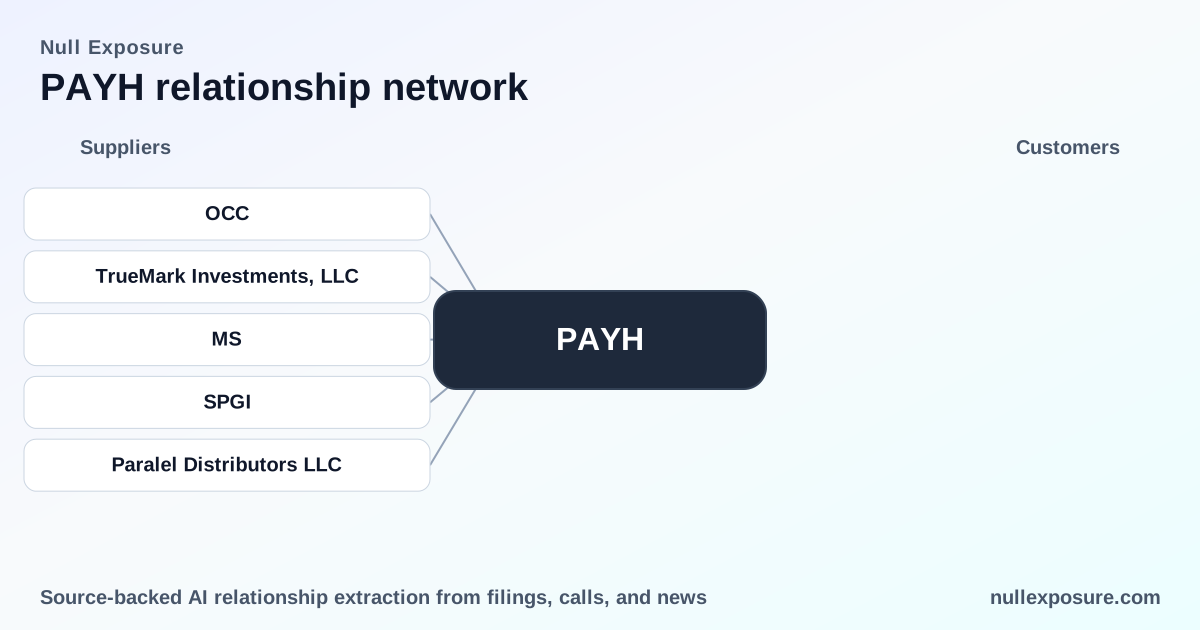
PAYH is an exchange-traded fund that packages synthetic autocallable exposure into a liquid wrapper and monetizes through advisory and fund-level fees while outsourcing index construction, hedging, distribution and option settlement to specialist counterparties. The fund’s economics come from investor-paid management fees and from delivering differentiated yield via structured-product replication rather than cash equity ownership. For investors evaluating supplier risk, the model is defined by a small number of high‑impact third parties that deliver critical pieces of the product plumbing — index licensing, hedging, option settlement, advisory and distribution. Explore more analysis at https://nullexposure.com/.
What PAYH actually sells to investors
PAYH offers income-focused exposure to a portfolio of synthetic autocallable products linked to a volatility-controlled index. That index is created and administered by S&P, and the autocallable exposure is hedged by a major investment bank, while options used for settlement are guaranteed through the OCC. The fund’s monetization is straightforward: investor flows generate fee revenue for the advisor and issuer while counterparties earn fees and spread on hedging and licensing arrangements. For institutional due diligence and counterparty monitoring, the concentration of these roles raises both operational dependency and counterparty credit considerations. See more on supplier mapping at https://nullexposure.com/.
Who supplies what — the counterparties you need to know
S&P (SPGI): index design and administration
S&P is the creator and administrator of the custom volatility‑controlled index that underlies PAYH’s synthetic autocallable exposure. According to an ETFGI news story in December 2025, PAYH links its portfolio to a custom index created and administered by S&P, making index continuity and licensing central to the product’s behavior and representativeness.
Morgan Stanley (MS): the hedging counterparty
Morgan Stanley provides the hedging that replicates the autocallable payoff for PAYH, effectively running the delta and volatility management that delivers the synthetic exposure. ETFGI reported in December 2025 that the ETFs’ exposure is hedged by Morgan Stanley, which creates a concentrated counterparty relationship around market risk management.
OCC: options settlement guarantor for FLEX options
The Fund may invest in FLEX Options that are “issued and guaranteed for settlement by the OCC,” making the Options Clearing Corporation the settlement guarantor for structured option instruments the fund uses. ETFGI coverage in December 2025 notes the use of FLEX options with OCC settlement, placing operational settlement risk within the clearinghouse tier rather than a single dealer.
TrueMark Investments, LLC: investment advisor and fee collector
TrueMark Investments, LLC is the fund’s investment advisor and receives advisory fees from the fund for portfolio management and product execution. As reported by ETFGI in December 2025, TrueMark is explicitly identified as the advisor, positioning it as the entity responsible for ongoing management, fee collection, and public representation of PAYH.
Paralel Distributors LLC: retail and broker-dealer distribution
Paralel Distributors LLC acts as the ETF’s distributor and is a FINRA member, providing the marketing and share distribution channel for the fund. ETFGI’s December 2025 report lists Paralel Distributors as the fund distributor, which concentrates the fund’s retail / broker distribution pipeline through a single registered entity.
Operational constraints and business-model signals investors should internalize
Because the constraints payload contained no itemized contractual excerpts for PAYH, the following are company‑level signals derived from the supplier map rather than from specific contractual text.
- Contracting posture — standardized but concentrated. PAYH’s suppliers are market-standard (index licensing, bank hedger, clearinghouse, advisor, distributor) with conventional commercial terms, but the arrangement is concentrated among a few counterparties, increasing single‑point dependencies.
- Concentration — a focal risk. A small number of counterparties provide critical services (S&P for the index, Morgan Stanley for hedging, OCC for settlement). This concentration creates systemic single‑counterparty exposure that is disproportionate to a traditional ETF provider network.
- Criticality — hedging and licensing are mission-critical. The fund’s value proposition depends on uninterrupted index licensing, robust hedging, and standard clearinghouse settlement; operational failure or contract disruption at any of these nodes would interrupt NAV replication and distribution.
- Maturity — architected on mature institutions, product-level immaturity. The counterparties (S&P, Morgan Stanley, OCC) are mature and financially deep, which reduces counterparty credit risk. However, the autocallable replication product is new for the ETF wrapper, so execution playbooks and secondary-market dynamics are less proven.
Risk checklist for operator and investor diligence
- Monitor the counterparty credit and operational status of Morgan Stanley and S&P — these two firms determine hedging continuity and index availability.
- Maintain clearance on OCC settlement mechanics and any margining or collateral terms for FLEX options.
- Validate advisory fee structure and potential conflicts at TrueMark, including any revenue-sharing with the hedging or distribution partners.
- Confirm distribution agreements and wash-sale handling with Paralel Distributors to understand liquidity sourcing into the fund.
- Stress-test scenarios where one critical supplier is unavailable and map fallback arrangements.
Bottom line: concentrated model with strong counterparties — operational vigilance required
PAYH delivers a differentiated, yield-oriented product by outsourcing specialized functions to established counterparties. The fund’s economic model is simple and fee-driven, but operational risk is concentrated across the index provider (S&P), the hedge counterparty (Morgan Stanley), and the clearinghouse (OCC). TrueMark provides the advisory governance and Paralel the distribution channel; together they complete the value chain for investors. For investors and operators evaluating PAYH relationships, the question is not whether the counterparties are capable — they are — but whether contractual redundancy, surveillance, and contingency planning are robust enough for a product that relies on a handful of mission‑critical suppliers.
If you need a centralized view of counterparty exposures and supplier constraints for products like PAYH, start here: https://nullexposure.com/.
Action items: request the fund’s legal offering for hedging and licensing fallback provisions, review Morgan Stanley’s hedging counterparty terms, and confirm OCC settlement parameters for FLEX options. For ongoing monitoring and supplier due diligence, visit https://nullexposure.com/ for workflow tools and reporting templates.