Puma Biotechnology (PBYI): Supplier relationships that shape commercial execution and risk
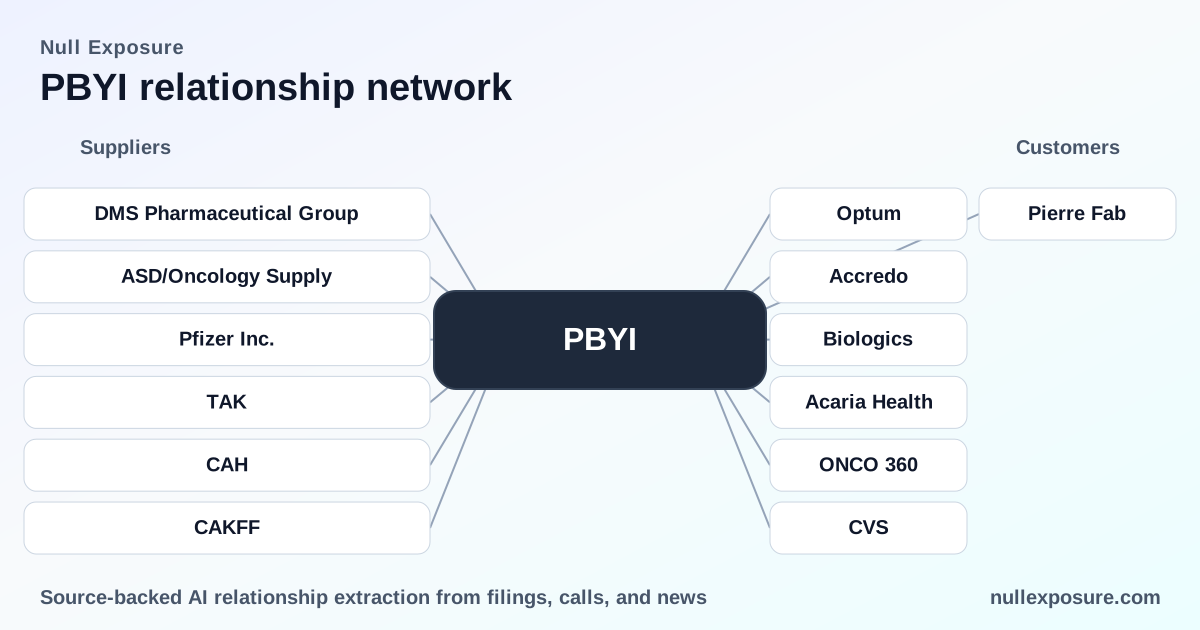
Puma Biotechnology develops and commercializes oncology drugs, monetizing primarily through product sales (notably NERLYNX) distributed into hospitals and physician practices and through strategic in‑licensing deals that transfer development risk and create milestone obligations. The company outsources manufacturing and distribution to a small set of specialty partners and carries contractual liabilities tied to in‑license agreements—this combination drives both upside in market access and concentrated operational risk. For a quick look at counterparty exposure, see the supplier map at https://nullexposure.com/.
How Puma’s commercial engine is organized and how it earns money
Puma’s revenue stream is straightforward: commercial sales of oncology medicines supported by a specialty distributor network that supplies hospitals, physician practices and other sites of care. The company offsets internal development costs by in‑licensing assets from larger pharma players, which accelerates its commercial footprint but creates milestone payment obligations that affect cash flow. Puma does not perform formulation or large‑scale manufacturing in‑house; production, storage and distribution are all handled by third‑party contractors, and its distributor list is intentionally concentrated with major wholesalers and oncology specialists. For a detailed view of counterparties and obligations, review Puma’s filings and supplier references at https://nullexposure.com/.
The supplier set — one line on each relationship investors need to know
- DMS Pharmaceutical Group — Puma lists DMS as a member of its specialty distributor network that channels product to hospitals and physician practices; this is documented in Puma’s 2024 Form 10‑K (FY2024).
- ASD/Oncology Supply — ASD/Oncology Supply is named alongside other specialty distributors handling Puma’s commercial shipments into oncology sites of care, according to the FY2024 10‑K.
- Cardinal Health — Cardinal appears as a core distributor in Puma’s specialty distribution network for NERLYNX and related products, per the FY2024 Form 10‑K.
- McKesson — McKesson is identified as a principal member of Puma’s specialty distributor network and therefore a primary channel for hospital and clinic access, as noted in the FY2024 10‑K.
- Pfizer Inc. — Puma discloses contractual obligations to make substantial payments to Pfizer upon achievement of certain milestones and ongoing clinical trial contract commitments, as described in the FY2024 10‑K; these obligations are material to Puma’s cash‑flow profile.
- Takeda — Puma in‑licensed global development and commercialization rights to alisertib from Takeda in 2022; multiple market reports including TradingView (March 2026) and coverage on Finviz reference this licensing arrangement and Puma’s development role for the asset.
What the supplier map implies about Puma’s operating model
Puma’s supplier relationships reveal a highly outsourced operating posture: the company relies on third parties for formulation, manufacturing, storage and distribution. This is a company‑level structural signal—Puma’s filings state it has no internal capacity for large‑scale manufacturing and uses contractors for both NERLYNX and alisertib programs. Because distribution is concentrated among a handful of large wholesalers and oncology specialists, commercial execution depends on those partners’ logistics, contract terms and inventory policies. The in‑license with Takeda and milestone payments tied to Pfizer obligations create a dual dynamic: the licensing model accelerates product availability but produces lumpy cash‑flow and contractual cadence that investors must model into capital planning.
Constraints and risk characteristics investors should model
- Contracting posture: outsourced manufacturing and distribution increases operational flexibility but shifts counterparty and supply‑chain risk to suppliers. Puma’s reliance on third‑party contractors for drug substance and product is explicitly stated in its filings.
- Concentration: A small number of distributors (McKesson, Cardinal Health, ASD/Oncology Supply, DMS) handle commercial distribution, which concentrates execution risk; service interruptions or adverse renegotiations with any major distributor would have an outsized impact on access and timing.
- Criticality: The listed distributors are mission‑critical—they are the primary route into hospitals and physician offices, so performance metrics (fill rates, cold‑chain handling, compliance) directly influence revenues.
- Maturity: The relationships are active and commercial, supporting current sales and ongoing clinical programs; Puma’s 2024 disclosures describe contractors and distributors as operational partners rather than prospective vendors.
- Financial obligations: Milestone payments to Pfizer create contingent liabilities that are explicit in Puma’s 2024 10‑K and affect net cash available for operations and future investments.
What operators and portfolio managers should monitor next
- Operational KPIs from distributors: fill rates, lead times, and inventory coverage at McKesson and Cardinal Health determine near‑term revenue visibility.
- Contract terms and renewals: concentration means pricing, payment terms and service level agreements directly affect gross margin and working capital.
- Manufacturing continuity and capacity: confirm third‑party contractors’ capacity and quality track records for neratinib and alisertib production.
- Milestone and royalty schedules: model the timing and magnitude of payments to Pfizer and other licensors, and stress‑test liquidity under delayed commercial uptake.
For an investor‑grade supplier exposure report and monitoring tools, visit https://nullexposure.com/ to see how counterparties map to cash‑flow and operational risk.
Tactical takeaways for investment and diligence teams
- Revenue execution is dependent on a concentrated set of specialty distributors; that is a source of operational leverage but also a single point of failure.
- Outsourced manufacturing reduces capital intensity but transfers supply‑chain and quality risk to contractors; active vendor oversight and contingency sourcing are necessary.
- Licensing deals accelerate product shelf presence but introduce milestone payments that compress free cash flow in defined windows; these are contractually disclosed and quantifiable.
- Maintain dialogue with distributors and licensors during diligence—contract amendments or service disruptions will move the P&L more rapidly than many biotech pipelines.
For a concise counterparty profile and to compare Puma’s supplier exposures with peers, check the supplier intelligence hub at https://nullexposure.com/.
Bottom line
Puma’s commercial model is distribution‑led and licensing‑financed: product sales flow through a compact network of specialty distributors while in‑licenses provide assets and accelerate commercialization but create contingent payment obligations. Investors should underwrite both the upside in market penetration and the downside from concentrated supplier risk and milestone liabilities. Operational diligence should prioritize distributor performance metrics, manufacturing continuity, and the timing of licensor payments to fully assess enterprise value. For tailored exposure analysis and scenario planning, visit https://nullexposure.com/ for tools and supplier breakdowns.