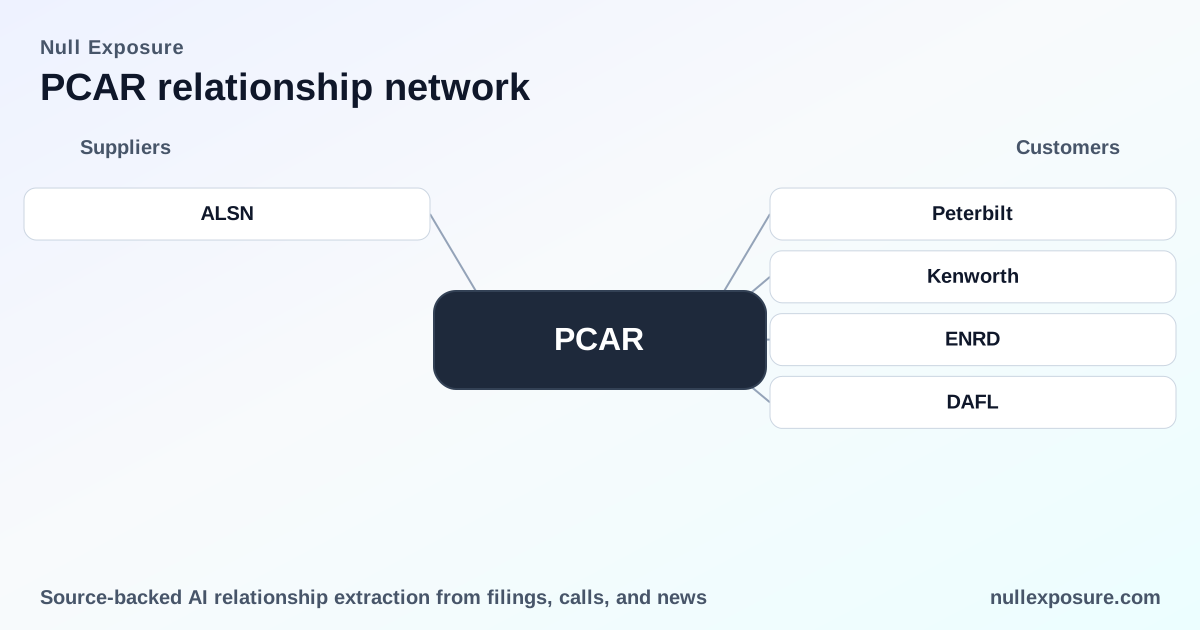
PACCAR (PCAR) — supplier signals and what they mean for owners
PACCAR builds and sells medium- and heavy-duty trucks under Kenworth, Peterbilt, DAF and Leyland; it also monetizes through parts distribution, powertrain sales, finance, and aftermarket services. The company’s profitability depends as much on vehicle volumes as on the depth of its supplier ecosystem and the aftermarket economics that flow from standardized components. For investors evaluating PCAR’s supplier posture, the latest public-sourced signals point to a targeted component standardization that has clear implications for parts revenue and supplier leverage. Learn more at https://nullexposure.com/.
Why supplier relationships change the investment equation
PACCAR’s business model is not a simple OEM sale; it is a bundled cash flow engine:
- truck manufacturing drives upfront revenue and margin;
- parts, service and powertrain components generate high-margin, recurring aftersales revenue;
- captive and partner finance operations smooth demand and capture additional profit.
Supplier decisions — especially standardization of a specific transmission or powertrain feature — directly affect aftermarket revenue predictability, spare-parts inventory dynamics, and long-term supplier bargaining power. Investors should treat supplier moves as strategic decisions with multi-year P&L implications rather than one-off procurement items.
Recent supplier signal: Allison Transmission standardized on key models
Allison Transmission (ALSN) is the primary named supplier in the recent signals. Several March 10, 2026 reports document PACCAR’s decision to standardize Allison’s “Neutral-at-Stop” technology on Kenworth and Peterbilt models, which implicitly makes Allison the default transmission supplier for those configured lines. According to Simply Wall St reporting on March 10, 2026, PACCAR offers Allison Neutral-at-Stop as a standard offering for vehicles equipped with Allison Rugged Duty Series transmissions. A TradingView summary of Zacks commentary on the same date noted that customer wins such as PACCAR standardizing Neutral-at-Stop on Kenworth and Peterbilt reinforce Allison’s fuel-saving value proposition. These items together confirm product-level adoption that increases Allison’s addressable aftermarket within PACCAR’s installed base.
Sources: Simply Wall St report (Mar 10, 2026) and TradingView summary of Zacks commentary (Mar 10, 2026).
What this relationship implies for PACCAR’s operating model
The public signals about Allison highlight several company-level operating characteristics:
-
Contracting posture — pragmatic OEM standardization: PACCAR is willing to adopt supplier technologies as standard specifications on multiple brands, which reduces buyer-side variability and simplifies service networks. This is consistent with an OEM strategy that favors supplier integration where technology delivers measurable fleet economics (fuel savings, reliability).
-
Supplier concentration and criticality — targeted but manageable: Standardizing a transmission feature increases a single supplier’s importance for affected vehicle lines and the aftermarket that follows; however, PACCAR’s global brand footprint and multiple vehicle platforms suggest overall supplier risk remains diversified across many components and vendors.
-
Commercial maturity — from one-off to scale: Making a feature standard converts a vendor’s product from optional equipment into recurring service and parts revenue for the life of the vehicle, increasing predictability and elevating the supplier’s commercial significance to the OEM.
Note: the constraints feed returned no flagged contractual constraints for PACCAR, which is a company-level signal that public supplier-constraint disclosures are not present in the examined feed. That absence suggests no public, documented supplier restrictions were detected in this source set, but it does not replace contract-level due diligence.
(If you want a deeper supplier-risk briefing and supplier-contract analysis, visit https://nullexposure.com/.)
Valuation and strategic consequences investors should watch
Standardizing Allison’s Neutral-at-Stop on Kenworth and Peterbilt drives a few concrete investor-level implications:
- Higher aftermarket visibility for Allison components — this increases the probability of steady parts revenue and potentially higher gross margins for PCAR’s parts distribution channels if margins are shared or if PCAR captures service volumes internally.
- Potential for supplier leverage — as Allison’s footprint in PACCAR trucks grows, Allison gains negotiating power on pricing, warranty terms and supply commitments; PACCAR will balance this by leveraging its scale and alternate platform options.
- Fleet economics and selling propositions improve — demonstrable fuel-saving technologies embedded as standards strengthen Kenworth/Peterbilt selling points to fleet customers, supporting pricing and residual values.
Key risks and monitoring checklist
- Concentration risk on core components: Increased dependency on any single supplier for a standard component creates single-point risks in supply chain disruption, warranty exposure or price pressure.
- Aftermarket margin capture: Track whether PACCAR or Allison secures aftermarket share (service networks, parts pricing), as this will determine how much of the upside accrues to PACCAR versus the supplier.
- Execution and quality: Standardization only converts to durable value if reliability and service networks align; watch warranty claims and service metrics after full deployment.
Quick relationship dossier (every detected relationship)
Allison Transmission Holdings, Inc. (ALSN) — PACCAR has standardized Allison’s “Neutral-at-Stop” feature on Kenworth and Peterbilt models, making Allison the default for those transmissions and expanding Allison’s installed-base and aftermarket opportunity; this was reported by Simply Wall St and summarized in TradingView’s coverage of Zacks commentary on March 10, 2026. Source: Simply Wall St (Mar 10, 2026) and TradingView/Zacks (Mar 10, 2026).
Actionable next steps for investors
- Review PACCAR’s latest parts and aftermarket revenue trends and margin disclosures to quantify how much of recurring revenue could shift with supplier standardizations.
- Monitor Allison’s service and parts announcements and any PACCAR warranty or recall notices for signs of integration friction.
- For a focused supplier-risk briefing and scenario analysis, visit https://nullexposure.com/ for supplier mapping and investor-ready risk summaries.
Bottom line
PACCAR’s decision to standardize Allison’s Neutral-at-Stop on major truck lines is a strategic supplier move that strengthens aftermarket predictability and fleet-level value propositions. The immediate investor implication is clearer revenue visibility in parts and service, balanced against modestly increased supplier concentration. Maintain active monitoring of parts-margin capture, warranty trends, and any public supplier constraints; use targeted supplier analysis to refine PACCAR’s operational and valuation outlook. For deeper supplier relationship intelligence and tailored briefings, go to https://nullexposure.com/.