PCCT (Perception Capital Corp II) — supplier relationships that matter to investors
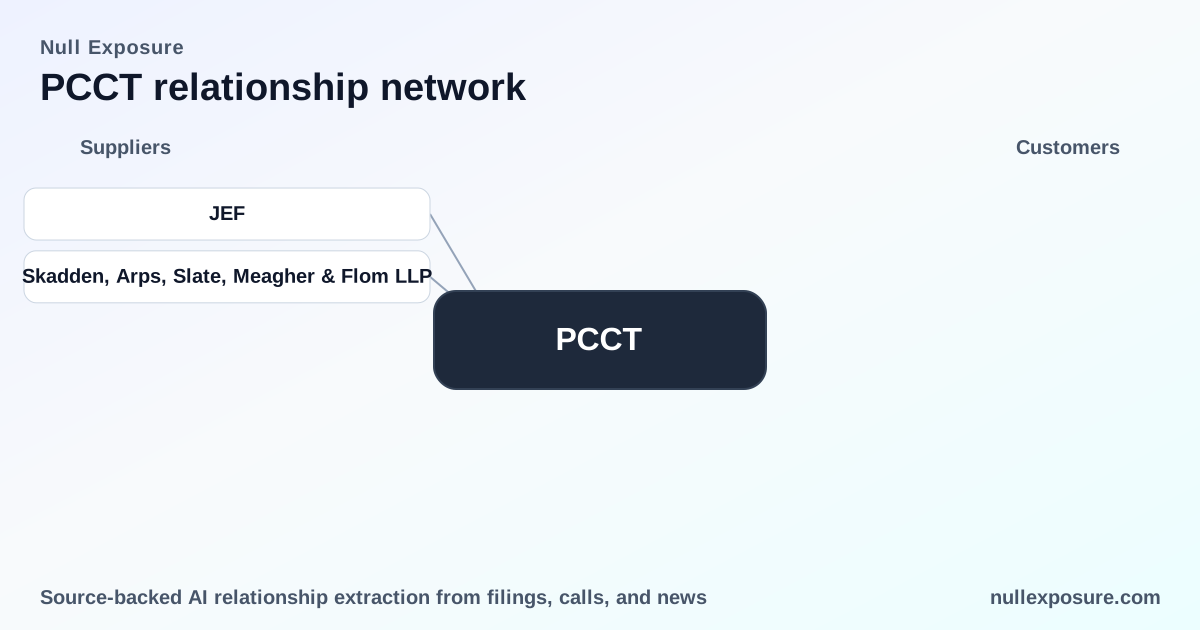
Perception Capital Corp II (PCCT) operated as a special purpose acquisition company that monetized by raising sponsor capital and completing a business combination with an operating target; advisor and counsel fees were paid as part of that transaction economics. For investors and operators evaluating supplier exposure, the most relevant signal is not a long list of vendors but the two external professional partners used to execute the deal: a lead capital markets advisor and outside legal counsel. Learn more about supplier profiling and relationship risk at https://nullexposure.com/.
Quick, investor-focused thesis
PCCT’s economics were transaction-driven: the SPAC structure generates value when a merger closes, and that value capture is allocated to sponsors, PIPE investors, and advisors through fees, warrants, or deal consideration. External advisers (investment banks and law firms) are short-duration but high-impact suppliers—critical to deal execution and reputationally sensitive for post-close integration. This supplier footprint is consistent with a SPAC that completed a combination rather than an operating company with an ongoing vendor base. If you evaluate counterparty risk, prioritize legal and capital-markets relationships and how fees and indemnities were structured.
What the Jefferies relationship reveals about execution
Jefferies LLC acted as the lead capital markets advisor to Perception during the transaction that closed with Spectaire. According to a CityBiz report on March 10, 2026, Jefferies led capital markets advisory services for Perception, which signals a conventional SPAC advisory engagement and provides market access and underwriting expertise for deal financing and investor placement. (CityBiz, March 10, 2026).
What the Skadden engagement reveals about legal oversight
Skadden, Arps, Slate, Meagher & Flom LLP served as legal counsel to Perception in the business-combination process. CityBiz reported on March 10, 2026 that Skadden acted as legal counsel to Perception, indicating the use of a top-tier, full-service law firm for transaction documentation, regulatory work, and closing conditions—an expected choice for deals that require sustained diligence and complex securities work. (CityBiz, March 10, 2026).
How these relationships map to supplier risk and opportunity
These two suppliers—Jefferies and Skadden—are typical for a SPAC closing a business combination, and they convey operational characteristics that investors should treat as company-level signals:
- Contracting posture: Engagements are transaction-focused, with defined scope and finite duration; contracts typically include fee schedules and limited post-close obligations.
- Concentration: Very low supplier breadth but high supplier importance—few vendors, high impact on outcome.
- Criticality: Advisory and legal suppliers are mission-critical for closing and for limiting post-close liabilities; failure or reputational issues with either party would have immediate consequences.
- Maturity: Use of established, global firms signals a conservative approach to execution and litigation risk management rather than reliance on boutique or untested providers.
These characteristics describe the operating model for PCCT as a transaction vehicle: concentrated, high-criticality suppliers engaged on tightly scoped contracts to deliver a decisive outcome—closing the merger.
Practical implications for investors and operators
From a diligence and counterparty-risk perspective, the relationship set implies a few straightforward action items:
- Verify fee structures and any contingent indemnities tied to advisors; these can affect post-close cash availability and litigation exposure.
- Review engagement letters and conflict disclosures for Jefferies and Skadden to confirm whether any ongoing advisory obligations or holdbacks exist after closing.
- Monitor reputational and regulatory developments involving those firms, because adverse headlines or regulatory findings can retroactively complicate a transaction.
Key takeaway: supplier concentration is normal for a SPAC, but the stakes are high because these suppliers directly determine closing probability, documentation quality, and immediate post-close risk.
If you want a concise supplier-risk score and contract extract review for PCCT’s counterparties, visit https://nullexposure.com/ for tailored coverage and workflow tools.
Relationship-by-relationship review (concise, sourced)
Jefferies LLC — Jefferies acted as the lead capital markets advisor to Perception, providing capital-markets access and advisory services central to closing the Spectaire business combination. CityBiz covered this engagement on March 10, 2026, describing Jefferies’ role in the transaction. (CityBiz, March 10, 2026).
Skadden, Arps, Slate, Meagher & Flom LLP — Skadden served as legal counsel to Perception on the business combination, delivering transaction documentation, securities advice, and regulatory support typical of a major law firm in SPAC closings. CityBiz reported the Skadden engagement on March 10, 2026. (CityBiz, March 10, 2026).
Final assessment and next steps for serious diligence
PCCT’s supplier footprint is succinct and targeted: two high-end professional firms executed the transaction mechanics. For investors, that is both efficient and verifiable—efficiency reduces operating drag, verifiability simplifies legal and financial review. For operators, it is a reminder that the supplier risk of a SPAC is concentrated and procedural rather than operational.
To convert this analysis into actionable diligence—contract redlines, fee breakdowns, and exposure modeling—engage with the full supplier intelligence on our platform at https://nullexposure.com/. Conducting a focused review of the Jefferies and Skadden engagement letters and any associated indemnities is the highest-value next step before modeling residual post-close risk.
Bold, concentrated suppliers; transaction economics that determine value capture; and legal/advisory controls that shape post-close exposure—those are the core facts investors need to evaluate PCCT supplier relationships.