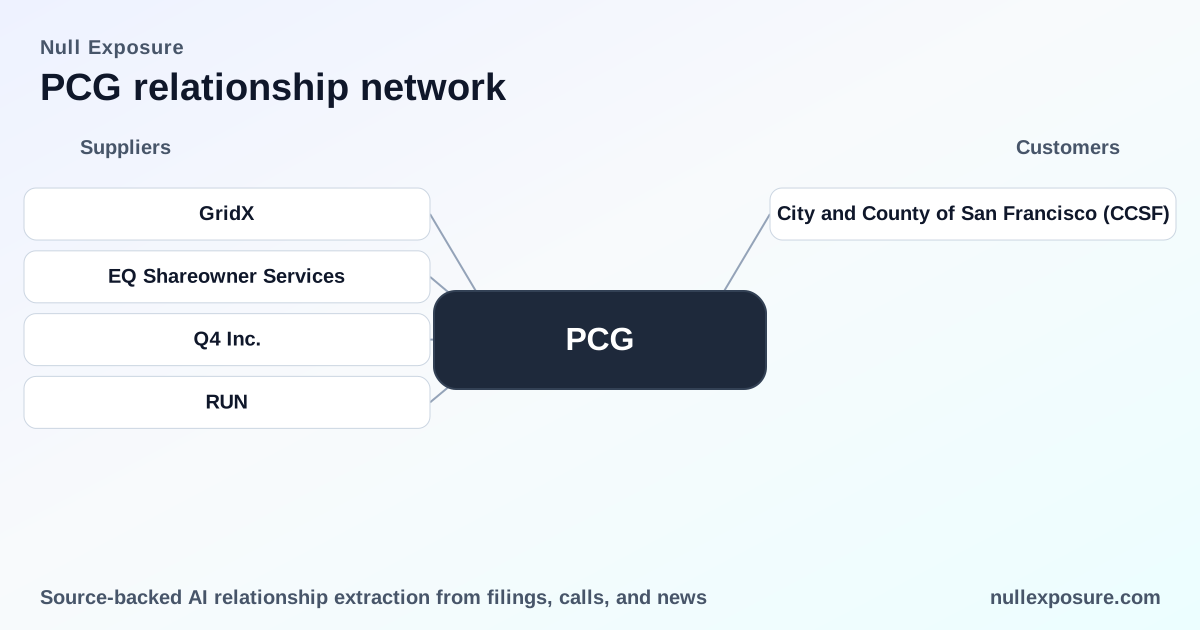
PG&E Corp (PCG) — supplier landscape and what it means for investors
PG&E Corporation operates and monetizes as a vertically integrated regulated utility: it delivers electricity and natural gas to northern and central California, recovers costs through regulated rates, and supplements regulated cash flows with strategic third‑party programs that defer capital and improve grid reliability. Revenue is principally rate‑based (customer tariffs) while margin and capital intensity are driven by procurement contracts, renewable PPAs, and customer‑facing distributed energy programs. With a market capitalization around $40.6 billion and FY‑TTM revenue near $24.9 billion, investor focus should be on contract exposure, counterparty execution risk, and the operational role of supplier partnerships in cost deferral and customer engagement. For a deeper look at counterparties and supplier positioning, visit the Null Exposure homepage: https://nullexposure.com/.
How to read PG&E’s supplier list as an investor
PG&E’s supplier relationships fall into two practical buckets: (1) market‑facing technology partners and aggregators that enable customer electrification and distributed energy resources, and (2) service and corporate vendors that support investor relations and communications. Both influence regulatory outcomes, customer experience, and the timing of capital deployment. Contracts range from short‑duration commodity buys to long‑dated renewable PPAs, creating a blended maturity and price exposure profile.
If you track vendor concentration, procurement posture, or counterparty credit, these relationships provide directional signals about where PG&E is investing to manage the grid and its regulatory narrative. For direct access to supplier mappings and inference-driven relationship intelligence, see https://nullexposure.com/.
The supplier relationships you need to know (straightforward summaries)
GridX — PG&E’s customer energy decision tool partner. PG&E launched a Clean Energy Calculator that provides personalized cost and savings estimates for customers considering electric appliances, EVs, solar, or battery storage; GridX is reported as the software provider powering the tool (news coverage March 2026, including T&D World and multiple market news wires). Source: T&D World and market reports, March 10, 2026 (https://www.tdworld.com/distributed-energy-resources/demand-side-management/news/55360023/pacific-gas-and-electric-company-launches-online-tool-to-help-customers-evaluate-electrification-costs).
EQ Shareowner Services — transfer agent and shareholder services. Investor materials and press releases list EQ Shareowner Services as the company’s transfer agent, the operational vendor for shareowner transactions and proxy communications (PG&E investor press release, March 2026). Source: PG&E investor relations press release, March 2026 (https://investor.pgecorp.com/news-events/press-releases/press-release-details/2026/PGE-Lowers-Electric-Prices-in-March-Fifth-Electric-Rate-Drop-Since-Early-2024/default.aspx).
Q4 Inc. — investor relations platform provider. PG&E’s investor web properties and press release framework reference Q4 Inc. as the platform powering parts of their investor communications infrastructure (company press materials, March 2026). Source: PG&E investor relations press release and site metadata, March 2026 (https://investor.pgecorp.com/news-events/press-releases/press-release-details/2026/PGE-Lowers-Electric-Prices-in-March-Fifth-Electric-Rate-Drop-Since-Early-2024/default.aspx).
Sunrun (RUN) — distributed power plant and DER coordination partner. PG&E expanded a distributed power plant program with Sunrun that enrolls customer‑owned solar and storage to support grid reliability and can defer traditional infrastructure investments; enrolled customers receive payments for sharing stored energy while Sunrun coordinates asset dispatch (Sunrun press release and industry coverage, early 2026). Source: Sunrun release and follow‑on reporting including IndexBox and Simply Wall St, March 2026 (https://www.indexbox.io/blog/sunrun-and-pge-expand-distributed-power-plant-partnership-to-over-1000-systems/).
Why these relationships matter to valuation and risk
Each named supplier contributes to a specific investor consideration:
- GridX plugs directly into the customer electrification funnel; the Clean Energy Calculator accelerates demand shifts that can change load shape, rate base timing, and DER penetration — all relevant to long‑term demand forecasts and regulatory cost recovery.
- Sunrun represents a direct grid‑asset substitution strategy: payments to enrolled customers and coordination fees to Sunrun trade near‑term O&M and program spend for potential capital deferral, altering future rate base growth and capital expenditure profiles.
- EQ Shareowner Services and Q4 Inc. are operational vendors with low operational risk but high importance for investor communications and proxy cycles; service continuity matters around shareholder meetings and disclosure cadence.
Collectively, these partnerships show PG&E balancing customer engagement programs and corporate infrastructure — a pragmatic mix that supports both near‑term load management and long‑term capital planning.
Company‑level constraints and what they imply for procurement strategy
PG&E’s disclosed constraints give a clear picture of procurement posture and exposure:
- Contracting maturity is mixed. The utility relies heavily on short‑term natural gas contracts (substantially all gas purchases in 2025 were under one‑year or shorter agreements), which increases near‑term price exposure and requires active commodity management. At the same time, PG&E holds long‑dated renewable PPAs that run as far out as 2047, locking in capacity and shaping long‑term supply economics.
- Geographic sourcing is concentrated in North America, with gas transportation routes and supply drawn from western Canada, the Rocky Mountains, and the southwestern U.S., signaling regional basis and pipeline constraints as relevant risk factors.
- Buyer posture is dominant. PG&E functions primarily as a purchaser of electricity, natural gas, and capacity under CPUC‑approved procurement plans; it also plays a seller role in limited circumstances, but procurement exposure drives commodity risk.
- Spending scale is material. Reported purchase commitments place PG&E in a $100m+ spend band, confirming supplier negotiations and contract terms materially affect cash flow timing and counterparty credit requirements.
- Active supplier engagement. The utility’s use of varied contract forms (renewable agreements, QF arrangements, short‑term commodity buys) points to an active and mature procurement function balancing price, credit, and regulatory compliance.
These signals collectively indicate a utility that manages a high‑volume, mixed‑maturity procurement book — a profile that requires sophisticated hedging, credit safeguards, and supplier diversification to protect earnings and regulatory standing.
Investment takeaways and recommended next steps
- Supply partners like GridX and Sunrun directly affect customer adoption and peak load patterns — these relationships are strategically consequential, not incidental. Monitor program enrollment metrics and dispatch performance as inputs to load forecasts and capex timing.
- Commodity exposure is asymmetric: short‑term gas contracts increase near‑term volatility while long‑dated renewables stabilize long‑run supply economics; investors should evaluate the hedge and PPA portfolio when modeling earnings sensitivity.
- Operational vendors (EQ Shareowner Services, Q4) are low risk but essential for governance and disclosure; any service disruptions would be executional rather than financial.
For asset managers and operators evaluating supplier counterparty risk and strategic alignment, a concise supplier map and clause‑level review are next steps. Learn more about supplier mapping and relationship intelligence at Null Exposure: https://nullexposure.com/.
To discuss how these suppliers interact with regulatory risk and capital forecasts for PCG, or to access a tailored supplier exposure report, visit https://nullexposure.com/ and contact our team.
In sum, PG&E’s supplier set combines customer‑centric technology and DER partners with large commodity commitments and long‑dated PPAs — a configuration that materially shapes cash flow timing, rate base growth, and regulatory outcomes for investors.