PCG-P-C (Pacific Gas & Electric Co. 5% 1st Preferred) — supplier relationships that matter to investors
Pacific Gas & Electric Company operates as a large, regulated California utility; it monetizes through regulated rate-making, commodity sales, and a utility rate base, while this preferred issue represents a fixed-income claim on the company with a 5% stated coupon. For investors and operators evaluating supplier risk and counterparty exposure, the supplier relationships around PG&E reveal strategic priorities—customer bill relief and community programs, grid modernization and transmission partners, distributed resiliency pilots, and long‑duration storage procurement—that influence operational stability and future cashflow resilience. For deeper supplier-credit mapping and counterparty visibility visit https://nullexposure.com/.
Why the supplier map matters for preferred investors
Preferred holders are paid out of the same corporate cashflows that support operations and regulatory obligations. Supplier selection and contracting posture directly affect capex timing, outage risk, and regulatory filings, so understanding who PG&E partners with is material to credit monitoring even for preferred securities. The relationships below show a mix of social programs, grid technology pilots, real estate and corporate services, and long-term capacity agreements that together shape operational risk profiles.
Who PG&E is working with — downstream and project partners
Below I cover each supplier/partner mentioned in the source set. Each entry is a plain-English takeaway followed by a concise source reference.
-
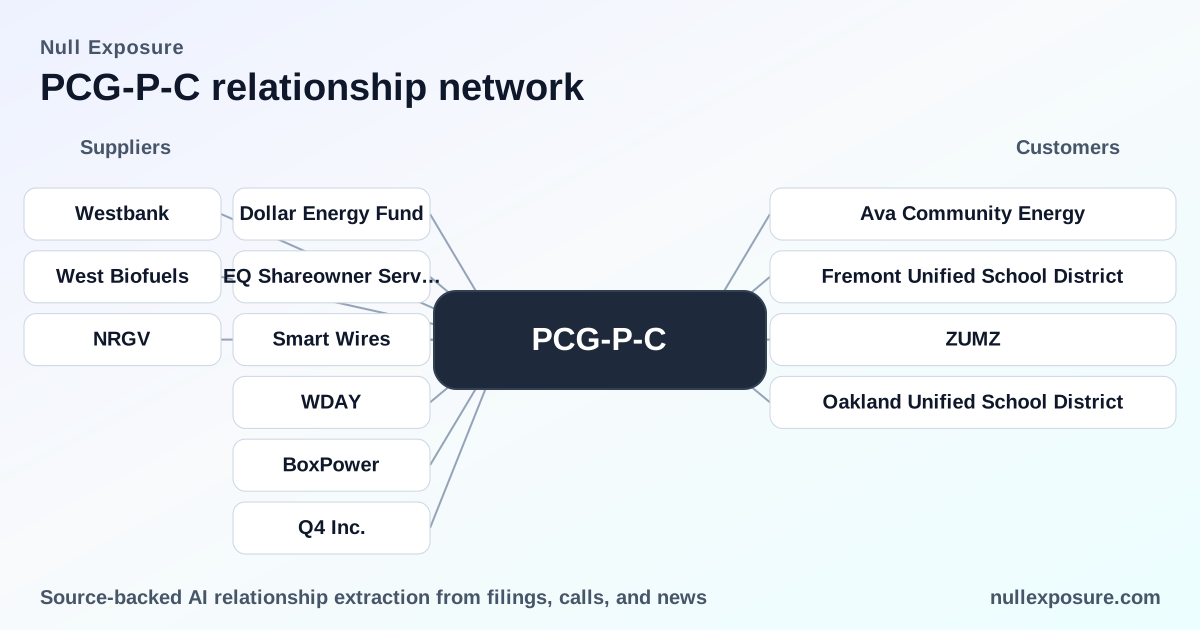
Dollar Energy Fund — PG&E contracts the nonprofit to process customer applications for bill-relief and assistance programs, indicating a third-party operational role in customer hardship programs. According to Contra Costa News reporting on PG&E’s July 2025 commitment to expand bill relief (FY2025), PG&E uses Dollar Energy Fund to process program applications; local coverage in early 2026 also describes the ongoing collaboration around customer assistance (KRCRTV, FY2026). (https://contracosta.news/2025/07/07/pge-commits-50-million-to-expand-bill-relief-for-customers-with-past-due-energy-bills/, https://krcrtv.com/news/local/pge-pledges-50-million-to-aid-customers-with-overdue-energy-bills-in-2026)
-
EQ Shareowner Services — EQ functions as a transfer agent and shareholder services provider for PG&E equity and preferred issues, supporting investor relations and shareowner administration. PG&E’s investor press materials list EQ Shareowner Services as the transfer agent (FY2025 press release). (https://investor.pgecorp.com/news-events/press-releases/press-release-details/2025/15-Year-PGE-Leader-Alejandro-Alex-Vallejo-Named-Chief-People-Officer-Will-Continue-to-Build-Culture-of-Safety-Joy-for-Coworkers-and-Customers/default.aspx; FY2025 investor release)
-
Smart Wires — PG&E has partnered with Smart Wires on transmission technology projects intended to enhance grid reliability and to support increased data center loads, reflecting active procurement of advanced power-flow control solutions. Datacenter-focused reporting describes Smart Wires’ role in San Jose and mentions the partnership as part of PG&E’s larger infrastructure upgrade plans (FY2025). (https://www.datacenterdynamics.com/en/news/san-jose-pge-sign-deal-to-guarantee-power-delivery-for-data-centers/, https://www.datacenterdynamics.com/en/news/pge-announces-73bn-grid-infrastructure-upgrade-plan-to-meet-surging-data-center-demand/)
-
Workday — PG&E acquired a Pleasanton office building from Workday, a transaction reflecting corporate real-estate activity and facilities consolidation rather than operational energy procurement. Local coverage of the sale notes the transaction and its timing (FY2025). (https://www.siliconvalley.com/2025/09/17/pacific-gas-and-electric-company-to-issue-58-electric-credit-in-october/; FY2025)
-
BoxPower — PG&E has trialed BoxPower’s modular microgrid technology to support reliable, safe power in remote areas—an example of the utility piloting distributed generation solutions for resiliency. CNBC’s 2021 reporting covered the early BoxPower collaboration in rural test settings (FY2021). (https://www.cnbc.com/video/2021/07/03/pge-has-a-massive-fire-problem-heres-how-it-is-trying-to-fix-it.html; FY2021)
-
Q4 Inc. — PG&E’s investor web properties and press materials are powered in part by Q4’s investor relations platform, reflecting a vendor relationship for communications and shareholder engagement technology. PG&E press releases in FY2025 reference content “Powered By Q4 Inc.” in investor-facing materials. (https://investor.pgecorp.com/news-events/press-releases/press-release-details/2025/PGE-Achieves-42-Reduction-in-Methane-Emissions-Surpassing-2025-Goal/default.aspx; FY2025)
-
Westbank — Real-estate developer Westbank is a development partner on projects that target distributed capacity and data center-serving infrastructure, with announced projects totaling roughly 200MW in the San Jose area. Datacenter-focused reporting lists Westbank as the real-estate partner on PG&E-affiliated projects (FY2025). (https://www.datacenterdynamics.com/en/news/pge-announces-73bn-grid-infrastructure-upgrade-plan-to-meet-surging-data-center-demand/, https://www.datacenterdynamics.com/en/news/san-jose-pge-sign-deal-to-guarantee-power-delivery-for-data-centers/; FY2025)
-
West Biofuels — PG&E ran a woody biomass-to-renewable natural gas pilot in Woodland, California, in collaboration with West Biofuels to test conversion of forest waste into pipeline-ready RNG, illustrating procurement exposure to renewable fuels and decarbonization pilots. PR Newswire coverage describes the Woodland pilot (FY2023). (https://www.prnewswire.com/news-releases/pge-takes-historic-steps-toward-decarbonization-as-company-announces-new-production-pilot-and-procurement-of-renewable-natural-gas-301967514.html; FY2023)
-
Energy Vault — PG&E contracted Energy Vault to own, operate and maintain a long-duration energy storage system that provides dispatchable power under a long-term tolling agreement, signaling a move toward third-party-owned, dispatchable capacity in support of grid reliability. Industry reporting on long-duration storage arrangements covered the tolling-style agreement (FY2023). (https://etn.news/buzz/energy-vault-battery-hydrogen-long-duration-energy-storage-us; FY2023)
(If you want an assembled view of these counterparty exposures and how they interact with PG&E’s balance-sheet and regulatory filings, see https://nullexposure.com/.)
What the relationships reveal about PG&E’s operating posture
These supplier ties produce a coherent operating picture:
-
Contracting posture: PG&E executes a mix of operational service contracts (transfer agent, customer-assistance program administrators), innovation pilots (microgrids, RNG, smart transmission), and longer-term capacity/tolling arrangements. This indicates a layered contracting approach—shorter operational vendors plus multi-year strategic partners.
-
Concentration and criticality: The vendor set is broad across technology, community programs, and real-estate partners, suggesting limited single-vendor concentration in these disclosed relationships; however, criticality is high for transmission, storage and resiliency vendors because failures in those domains materially affect service and regulatory outcomes.
-
Maturity: Relationships range from legacy investor-services suppliers (EQ, Q4) to nascent pilots (BoxPower, West Biofuels, Energy Vault). Maturity is mixed, which increases execution risk on newer technology pilots while keeping core administrative functions stable.
Investor implications and risk highlights
-
Operational risk to cashflows: Grid modernization and long-duration storage deals imply meaningful capex and third-party commitments that influence regulatory filings and future cash needs. Preferred holders should track how these projects are treated in rate cases and whether costs are recoverable through the rate base.
-
Reputational and social programs: Partnerships with Dollar Energy Fund show active management of customer-relief obligations—a social risk mitigation step that can reduce political pressure and potential regulatory penalties.
-
Vendor and technology risk: Pilots (microgrids, RNG conversion, smart transmission) are strategic but carry delivery and integration risk, which can affect outage rates and regulatory confidence.
If you want a consolidated, exportable counterparty risk brief or a timeline of these suppliers against PG&E regulatory filings, visit https://nullexposure.com/ for analytic products and supplier profiling.
Bottom line — what investors should do next
Preferred investors should treat PG&E’s supplier landscape as a leading indicator of where regulatory and operational risk will concentrate: transmission and storage partners are central to reliability outcomes, while community program vendors shape short-term political and social risk. Monitor project cost recovery in rate cases, the performance of long-duration storage contracts, and the outcome of distributed generation pilots.
For a tailored briefing on how these supplier relationships change the credit profile and to get a supplier-level monitoring feed, go to https://nullexposure.com/.