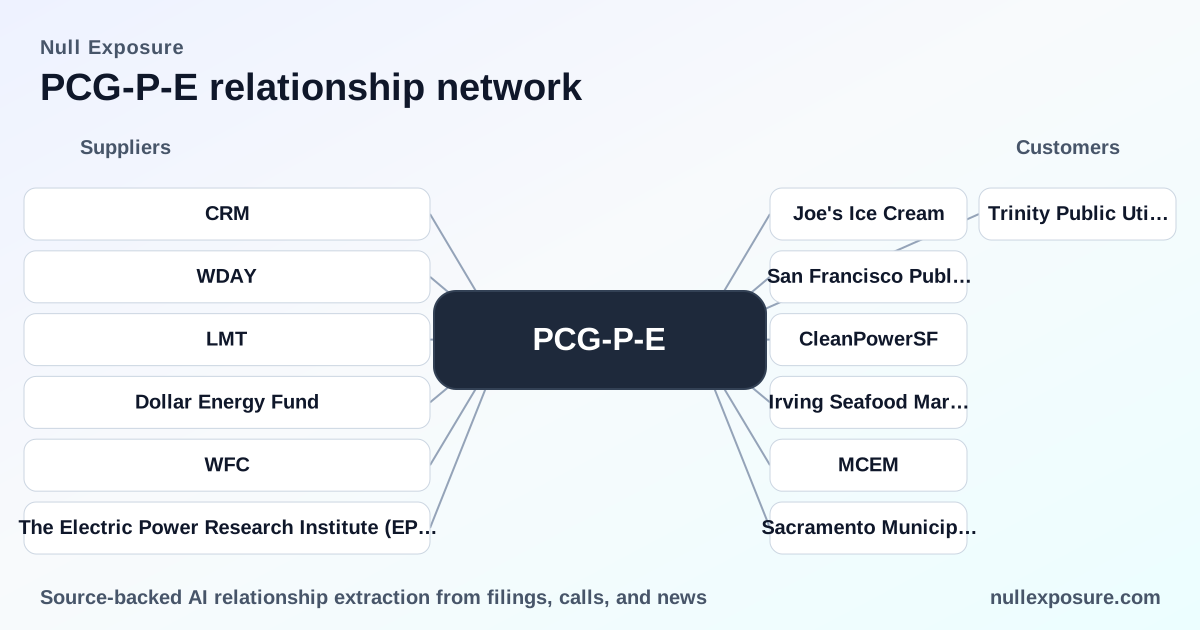
PCG-P-E: Supplier Map and What It Means for Investors
Pacific Gas & Electric Company monetizes through regulated electricity and gas delivery to customers in California and capital markets issuance, including the PCG‑P‑E 5% 1st A Preferred Stock traded on NYSE MKT. The preferred shares sit against an operating utility whose credit and operational stability are directly influenced by vendor selection for critical services — from wildfire prevention technology to customer-assistance program administration. Investors evaluating PCG‑P‑E should prioritize counterparty strength, capital relationships, and operational partners that reduce systemic risk.
Learn more about the underlying research at https://nullexposure.com/.
Why supplier relationships are a financial signal for a utility preferred security
Supplier relationships for a regulated utility are not just procurement line items; they are operational levers that drive safety, reliability, and regulatory outcomes, which in turn affect cash flow stability and capital access for securities like PCG‑P‑E. For investors and operators, several company-level signals stand out:
- Contracting posture: A utility typically runs long‑dated, performance-oriented contracts for critical systems and short-cycle contracts for services — a posture that favors vendor stability and continuity over rapid supplier turnover.
- Concentration and criticality: Key vendors that provide safety, grid sensing, and financing are highly critical because their failure or underperformance directly impacts outage risk, regulatory penalties, and reputational damage.
- Maturity of relationships: Large utilities maintain mature relationships with institutional partners and research organizations; these relationships reduce execution risk relative to one-off vendors.
These company-level signals indicate that for PCG‑P‑E holders, supplier creditworthiness and the strategic fit of partners are material to downside protection. Explore related supplier intelligence and news at https://nullexposure.com/.
Who PG&E is partnering with and what each relationship means
Below are the public partnerships and supplier roles surfaced in recent reporting. Each entry is a concise, investor‑oriented take with the sourcing noted.
Salesforce — building the digital foundation for Emberpoint
PG&E has enlisted Salesforce to help deliver the digital foundation for Emberpoint, integrating disparate data streams into a unified, real‑time response engine. According to Homeland Preparedness News (March 10, 2026), Salesforce will contribute core digital integration capabilities for the Emberpoint wildfire initiative, a direct operational investment into event response infrastructure.
Lockheed Martin — providing prediction, detection and autonomous response tools
Lockheed Martin will supply layered prediction and detection tools and autonomous response capability to allow earlier identification and intervention in wildfire ignitions. Homeland Preparedness News (March 10, 2026) reports Lockheed Martin’s military‑grade technologies will be applied to civilian wildfire suppression workflows.
Wells Fargo — capital partner for the wildfire technology venture
Wells Fargo is participating on the financing side by providing capital investment to support the Emberpoint venture, expanding PG&E’s access to external funding for technology deployment. Homeland Preparedness News (March 10, 2026) notes Wells Fargo’s role as a funding source for the initiative.
Workday — seller of Pleasanton office assets to PG&E
Workday sold a five‑story, 209,000 square‑foot Pleasanton property and adjacent parking garage to PG&E in an all‑cash transaction, enabling expanded East Bay presence. Reporting from Silicon Valley (January 29, 2026) and The Real Deal (February 3, 2026) documents the property sale and notes PG&E’s $22 million acquisition of the offices.
Dollar Energy Fund — administrator for customer assistance applications
PG&E contracts with the nonprofit Dollar Energy Fund to process customer applications for its REACH bill‑credit program, outsourcing application administration to a specialist nonprofit. Contra Costa News (February 12, 2026) details the engagement, which supports program delivery for customers behind on energy bills.
Electric Power Research Institute (EPRI) — technical advisor on asset‑health monitoring
EPRI serves as the technical advisor for PG&E’s demonstration of dynamic line rating and asset health monitoring technologies, lending research and validation expertise to the pilot. Daily Energy Insider (FY2025) reported EPRI’s advisory role in the demonstration project.
What these relationships collectively imply for investors
Taken together, these partnerships reflect a three‑pillar strategy: accelerate technology for wildfire prevention, shore up operational assets, and diversify capital and administrative partners to stabilize customer programs.
- Risk reduction through advanced technology: Partnerships with Salesforce and Lockheed Martin indicate PG&E is deploying both enterprise digital architectures and specialized detection/suppression capabilities — a direct operational hedge against wildfire‑driven downside.
- Capital and balance‑sheet implications: Wells Fargo’s capital investment signals external financing appetite for PG&E’s tech initiatives, which is positive for liquidity and reduces sole reliance on internal capital for project rollout.
- Operational and social stability: Outsourcing customer‑assistance processing to Dollar Energy Fund and working with EPRI for technical validation both improve program execution and external credibility, positively influencing regulatory optics.
Key takeaway: these supplier relationships materially strengthen PG&E’s operational resilience and program delivery, which supports the preferred security’s risk profile by reducing the incidence and severity of revenue‑disrupting events.
Visit https://nullexposure.com/ for deeper supplier profiles and source tracking.
Where investors should watch for change
Investors and operators should monitor four vectors that translate supplier activity into security outcomes:
- Vendor performance and integration timelines for Emberpoint (Salesforce + Lockheed Martin).
- Capital structure impacts if additional external investment (like Wells Fargo’s) scales beyond seed funding.
- Regulatory reaction to contractor‑led safety upgrades — positive EPRI validation accelerates regulatory acceptance.
- Program execution quality for customer assistance (Dollar Energy Fund) as it affects collections, arrears, and public relations.
Risks: If any of these partnerships underdeliver on integration, validation, or capital contribution, PG&E’s operational recovery timeline and regulatory standing will be impaired — a direct stress to cash flow that is relevant for preferred claimants.
Bottom line for operators and preferred‑stock investors
PG&E’s recent supplier relationships show a deliberate move to externalize expertise where scale and specialization matter: digital integration, defense‑grade detection, third‑party program administration, and external financing. For holders of PCG‑P‑E, that pattern reduces execution risk and strengthens the operational base, while retaining exposure to regulatory and implementation risk inherent to large system upgrades.
For an investor evaluating counterparty risk and operational durability, these public partnerships are materially positive signals — but execution and oversight remain the fulcrum for whether that upside is realized.
If you want a consolidated view of supplier links and their potential impact on securities like PCG‑P‑E, start here: https://nullexposure.com/.