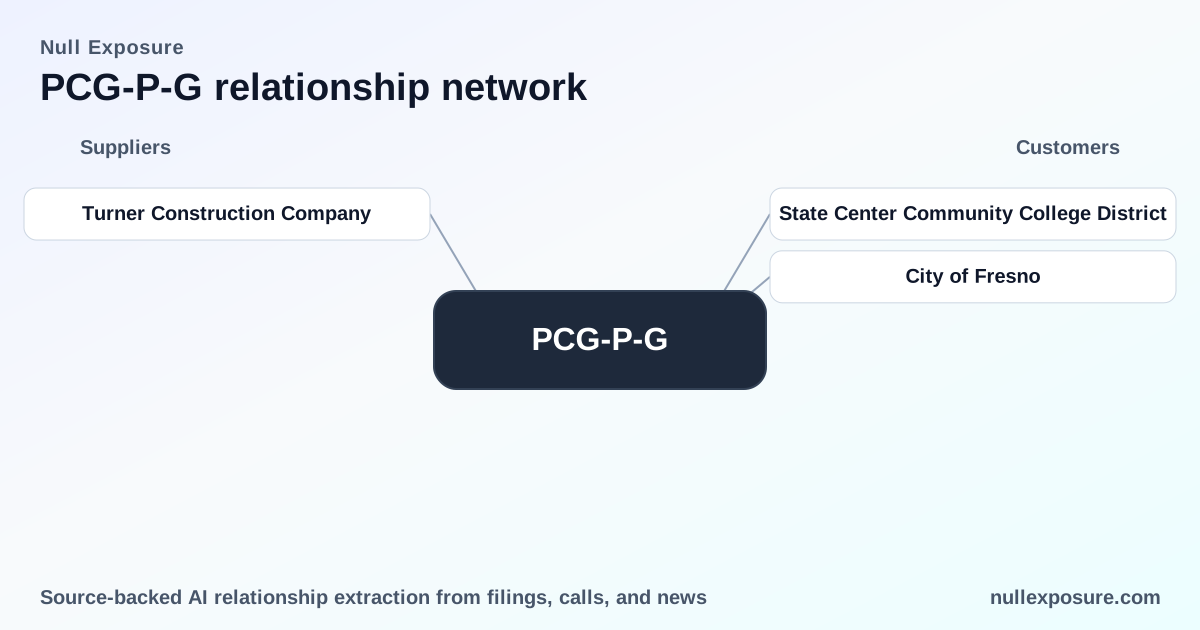
PCG-P-G: Preferred-income exposure to a utility rebuilding its capital base
Pacific Gas & Electric Company’s 4.80% 1st Preferred Stock (PCG-P-G) delivers fixed-income exposure to a large, regulated California utility whose cash flows are driven by rate-regulated distribution and transmission operations and ongoing infrastructure rebuild programs. Investors in PCG-P-G receive a contractual dividend stream tied to PG&E’s balance sheet strength and regulatory access to recover costs; supplier relationships tied to capital projects are a direct conduit between PG&E’s spending program and the risk-adjusted stability of preferred dividends. For investors and operators evaluating supplier counterparties, the single observable supplier link in public results points to active capital work and contractor selection that supports PG&E’s modernization agenda. Learn more at https://nullexposure.com/.
How PCG-P-G monetizes exposure and why supplier activity matters
PCG-P-G is a capital instrument: it pays a fixed 4.80% coupon and ranks ahead of common equity in claims on PG&E’s assets. The issuer’s revenue engine is regulated utility service across California; rates set by regulators determine the company’s ability to recover operating costs and capital investments. Supplier engagements that execute on infrastructure upgrades (grid hardening, service center improvements, office rebuilds) convert authorized capex into tangible progress that regulators and rating agencies evaluate when approving cost recovery and credit metrics. For preferred holders, the practical importance of supplier performance is twofold: timely, on-budget execution preserves cash-flow projections underpinning dividend coverage; high-quality contractors reduce operational and safety incidents that could trigger regulatory penalties.
If you are assessing counterparties or the health of PG&E’s capex pipeline, our supplier intelligence can accelerate diligence — explore supplier profiles at https://nullexposure.com/.
A single visible supplier relationship — what it tells investors
Turner Construction Company — Turner was appointed as the general contractor for improvements to two PG&E Central California Service Centers and a San Jose office building, a direct demonstration of PG&E’s continued capital program and facilities investment. According to a Turner Construction announcement first seen March 10, 2026, Turner will deliver construction services across these three projects as part of PG&E’s facility modernization efforts (Turner Construction Company, FY2024 / announcement posted March 2026). Source: https://www.turnerconstruction.com/insights/turner-awarded-three-california-pg-e-projects.
- Plain-English takeaway: Turner’s award signals PG&E is contracting tier-one general contractors for facility upgrades rather than using smaller local firms, reflecting a procurement posture that prioritizes scale and contractor capability.
- Source: Turner Construction Company announcement (first seen March 10, 2026).
What the supplier signal implies about contracting posture and program maturity
The presence of Turner Construction as a chosen contractor is meaningful beyond the single award: it indicates a contracting posture that favors established, national firms for complex facility projects, which reduces execution risk on high-visibility capex and supports regulatory narratives about prudent spending. From a company-level perspective, the relationship suggests:
- Concentration and counterparty selection: PG&E is engaging nationally recognized general contractors for significant facility work, implying a preference for experienced counterparties over highly fragmented suppliers.
- Criticality and maturity of projects: Service center and office improvements are integral to operational continuity and workforce enablement; awarding to a major contractor signals projects are beyond early design and into execution, reflecting a mature phase of the capital program.
- Contracting posture: The use of a large general contractor suggests PG&E negotiates fixed-price or guaranteed-schedule arrangements where feasible to transfer execution risk away from the utility balance sheet.
No explicit supplier constraints were disclosed in the available relationship data; this absence is itself a company-level signal that public relationship records do not document supplier-level contractual restrictions or concentration metrics for PCG-P-G in the reviewed universe.
Risk and return implications for preferred investors
- Operational execution risk is reduced when tier-one contractors are engaged. Using recognized builders like Turner lowers the probability of protracted delays or quality issues that would impair regulatory filings or lead to remediation costs. This is a positive for preferred dividend security.
- Counterparty credit risk is secondary but relevant. While preferred holders do not take direct contractor credit exposure, prolonged contractor disputes or insolvency that interrupt capital projects can indirectly pressure PG&E’s recovery timelines and liquidity.
- Regulatory and reputational risk remains primary. Even with strong contractors, safety incidents or insufficient project delivery could attract regulator scrutiny, which disproportionately affects PG&E given its history; supplier selection is one mitigant, not a cure-all.
Key investor takeaway: supplier awards to high-profile contractors reduce execution risk and support the stability of preferred coupon payments, but they do not eliminate regulatory, legal, or systemic operating risks that drive issuer credit quality.
Practical next steps for allocators and operators
- For portfolio teams: validate capex execution timelines against regulator filings and contractor announcements; where large contractors are engaged, adjust project-risk premiums downward for models that assume delivery delays.
- For operational counterparties: monitor procurement notices and general contractor disclosures as leading indicators of project schedules and subcontracting opportunities.
- For credit analysts: include supplier award timing (e.g., Turner’s March 2026 announcement) as a checkpoint against PG&E’s stated project milestones when assessing dividend coverage and potential call protections.
If you want granular supplier relationship mapping and continuous monitoring of PG&E’s contractor ecosystem, visit https://nullexposure.com/ for supplier insight tools.
Bottom line: a focused signal in a broad utility story
PCG-P-G offers a defined income stream backed by a regulated utility engaged in visible infrastructure work. The publicly visible supplier relationship — Turner Construction’s appointment for multiple facility projects — is a constructive signal that PG&E is executing capital projects with established contractors, which supports the preferred’s cash-flow durability. However, supplier awards alone do not neutralize regulatory or legacy operational risk; preferred investors should integrate supplier signals with rate-case outcomes, debt metrics, and regulatory developments when sizing positions.
For ongoing supplier intelligence and curated supplier profiles tied to issuer credit assessment, return to the NullExposure supplier hub at https://nullexposure.com/.