PCG-P-H (Pacific Gas & Electric Co. 4.50% 1st Preferred Stock) — supplier relationships and what they signal to investors
Pacific Gas and Electric Company is a regulated, capital-intensive utility serving roughly 16 million customers in Northern California; it monetizes through rate-regulated electricity and gas provision, recovering operating costs and infrastructure investments via tariffs set by state regulators. The 4.50% 1st Preferred Stock is an income-oriented claim that sits ahead of common equity but behind secured debt in the capital stack, and PG&E’s supplier and advisor roster reflects a company that funding markets and legal advisers rely on to execute large-scale financing and infrastructure programs. For a structured view of counterparties and supplier exposures, visit https://nullexposure.com/ to see the full supplier intelligence products.
The quick read: why supplier relationships matter for a utility preferred investor
Supplier and adviser relationships are a window into how PG&E executes capital plans, manages legal and regulatory complexity, and finances long-duration infrastructure. Active engagement with capital-markets advisers signals ongoing refinancing and liability-management activity, which is material for preferred holders because capital structure shifts affect credit risk and payment priority. Investors should watch the mix of legal, banking, and engineering suppliers to infer funding cadence, contract concentration, and operational criticality.
If you want a consolidated supplier map tied to financial instruments like PCG-P-H, start your review at https://nullexposure.com/.
What the relationship data shows today
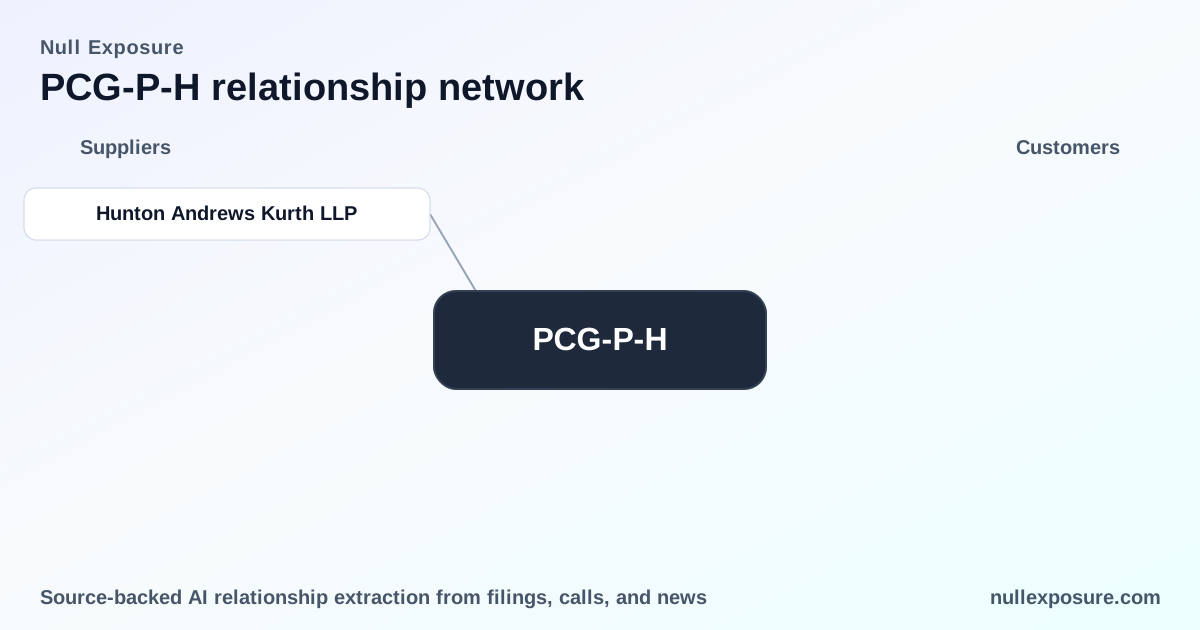
The harvested supplier record for PCG‑P‑H contains a single disclosed supplier engagement in the sample set: a law firm that advised on a material bond issuance. This is not a roster of every vendor PG&E uses; it is a timely signal about recent financing activity and the outside counsel the company selected for that work.
Hunton Andrews Kurth LLP — legal adviser on mortgage bond issuance
Hunton Andrews Kurth LLP advised PG&E on the issuance of two tranches of First Mortgage Bonds: $400 million of 5.000% notes due 2028 and $850 million of 6.000% notes due 2035. According to a Hunton news release dated March 10, 2026, the firm provided legal counsel in connection with that offering (https://www.hunton.com/news/hunton-advises-pacific-gas-and-electric-company-on-1-25-billion-first-mortgage-bonds-offering). That engagement underscores PG&E’s active access to secured debt markets and the use of established legal partners for sizable financings.
How to read these supplier signals into PG&E’s operating model
There are no explicit supplier constraints recorded in the available relationship data, which itself is a company-level signal: the current record does not surface contract disputes, supplier concentration limits, or embargoed counterparties. Translate that silence pragmatically:
- Contracting posture: PG&E operates with a long-term, regulated contracting posture—capital projects and financing are routine and structured to meet rate-recognition processes. Engagement with major law firms for bond issuance is consistent with a company that manages large, syndicated financings rather than ad-hoc capital raises.
- Concentration: Service concentration is geographic and customer-based (Northern California; ~16 million customers). Supplier concentration is not evident from this record, but reliance on a prominent national law firm for debt issuance is typical for regulated utilities that prioritize continuity and legal certainty in capital markets transactions.
- Criticality: PG&E provides essential infrastructure; supplier relationships that touch financing and legal work are high criticality because they influence solvency, regulatory compliance, and the cost of capital.
- Maturity: The company’s use of first mortgage bonds and established counsel reflects a mature financing program that leverages secured instruments to fund long-term investments.
If you want a deeper look into how those themes affect counterparty risk and portfolio allocation, review the supplier analytics hub at https://nullexposure.com/.
What the Hunton engagement reveals about capital strategy
The combined $1.25 billion offering of first mortgage bonds—split between a near-term 2028 maturity and a longer 2035 maturity—signals a balanced approach to liability management: a portion of short-to-intermediate debt is being rolled or refinanced while the longer-dated tranche extends duration and locks in funding for capital expenditures. The use of first mortgage bonds indicates a preference for secured funding to achieve attractive pricing and investor appetite. Hunton’s role as counsel on the transaction confirms reliance on top-tier legal advisers to execute complex financings (Hunton press release, March 10, 2026).
Risks and investor implications to weigh now
- Regulatory and policy risk: As a rate-regulated utility, earnings and recovery of capital spend depend on utility commissions. Regulatory outcomes directly affect cash flow available to service preferred dividends.
- Capital structure sensitivity: Preferred holders sit below secured creditors; issuance of secured debt (first mortgage bonds) can compress recovery prospects in stressed scenarios. Monitor secured debt levels and lien positions.
- Financing cadence: Active bond issuance denotes continued access to markets but also ongoing refinancing needs; a tightening of credit conditions would raise funding costs and could strain liquidity.
- Operational and concentration risk: PG&E’s geographic concentration and legacy exposure to wildfire and system risks remain structural considerations for counterparties and suppliers.
Final assessment and investor action points
- Key takeaway: The supplier snapshot highlights PG&E’s active use of secured debt and established legal advisers; that is consistent with a regulated utility prioritizing stable funding and legal certainty. Investors in PCG‑P‑H should treat legal and financing counterparties as indicators of capital strategy rather than operational vendors.
- For structured supplier intelligence tailored to fixed-income and preferred investors, visit https://nullexposure.com/ to align counterparty signals with your credit-monitoring framework.
- To track future supplier disclosures and financing events that impact preferred-credit risk, subscribe or request a supplier relationship briefing at https://nullexposure.com/.
relationship coverage
- Hunton Andrews Kurth LLP advised Pacific Gas and Electric Company on a $1.25 billion issuance of First Mortgage Bonds consisting of $400 million of 5.000% due 2028 and $850 million of 6.000% due 2035, per a Hunton news release dated March 10, 2026 (https://www.hunton.com/news/hunton-advises-pacific-gas-and-electric-company-on-1-25-billion-first-mortgage-bonds-offering).