PG&E (PCG-P-I) supplier relationships: what investors need to know
Pacific Gas & Electric Company funds operations and returns through regulated utility cash flows while issuing fixed-income-like instruments such as the 4.36% 1st Preferred (PCG-P-I) to deliver predictable distributions to investors. PG&E monetizes its role as a regional grid operator by contracting partners to decarbonize generation and customer assets, stabilize distribution, and process fuel inputs — a mix of long‑term infrastructure deals and scalable pilot programs that preserve grid reliability and regulatory goodwill. Investors should read supplier activity as direct indicators of PG&E’s strategic pivot to electrification, distributed energy resources, and renewable natural gas — all of which affect capital allocation, regulatory narratives, and balance‑sheet timing. Learn more at https://nullexposure.com/.
Big picture: supplier activity maps to strategy and regulatory execution
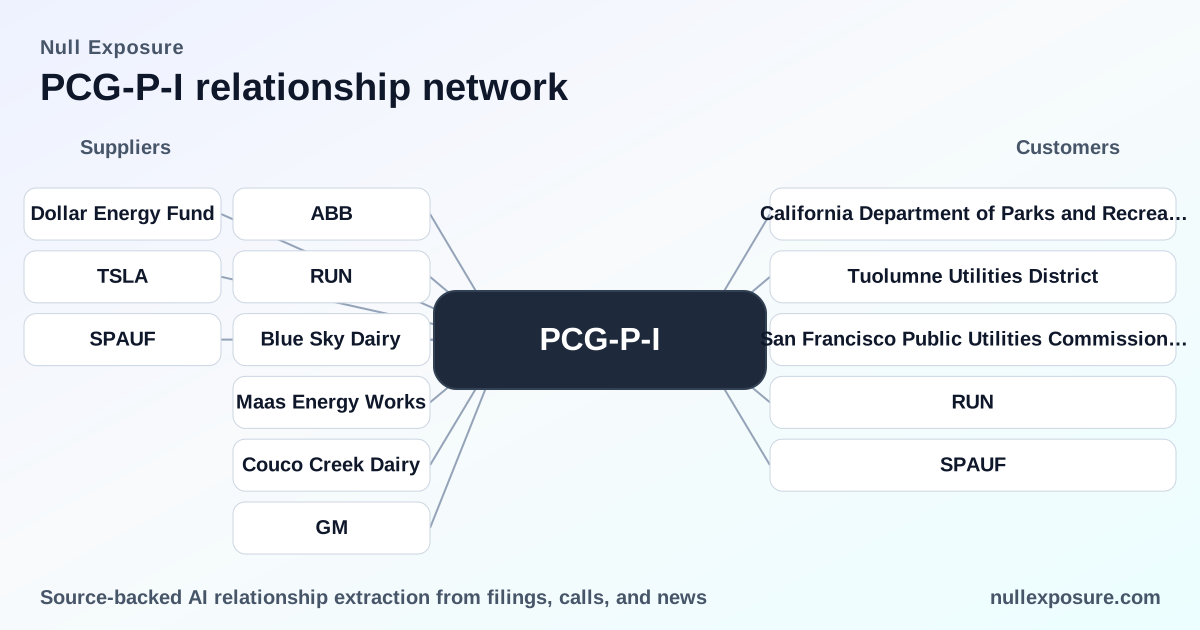
PG&E’s supplier set in recent signals shows a deliberate spread across three vectors: electrification (EV chargers and vehicle‑to‑home), distributed solar + storage aggregation, and renewable natural gas interconnections. This breadth reduces single‑vendor concentration but raises programmatic complexity, driving operational execution risk that is material to utility performance and preferred‑dividend security. The vendor list combines global OEMs, residential-scale aggregators, and local RNG project developers — an operating posture consistent with a utility executing regulated transformation programs.
For deeper vendor intelligence and relationship tracking, visit https://nullexposure.com/.
The supplier roster, one relationship at a time
-
ABB E‑mobility — fleet electrification hardware supplier. ABB E‑mobility provides EV charging solutions as PG&E plans to electrify a 9,500‑vehicle fleet spanning light vehicles to Class 8 trucks, indicating PG&E’s reliance on turnkey charging hardware for large‑scale fleet transition (evchargingstations.com, March 10, 2026).
-
Sunrun — distributed power plant and customer‑owned resource coordinator. Sunrun expanded a distributed power plant partnership with PG&E using more than 1,000 customer solar+storage systems to export energy and relieve grid constraints; enrolled customers received payments for exported energy while Sunrun was compensated for coordination services (SolarPowerWorldOnline, Feb 2026; IndexBox blog, March 10, 2026).
-
Maas Energy Works — RNG interconnection integrator. Maas Energy Works announced interconnection of a new renewable natural gas facility in Turlock with PG&E’s natural gas system, signaling PG&E’s operational role in commissioning biogas/RNG sources for pipeline injection (Morningstar / Business Wire, Feb 2026; press release referencing Dec 30, 2025 testing).
-
Blue Sky Dairy — RNG feedstock supplier. Blue Sky Dairy began delivering RNG for injection after PG&E completed injection‑facility readiness testing, demonstrating PG&E’s end‑to‑end role in accepting agricultural RNG into its distribution network (Morningstar / Business Wire, Feb 2026).
-
Couco Creek Dairy — site of an RNG project tied to PG&E. The Couco Creek Dairy facility was the location of a new RNG project that interconnected to PG&E’s system via Maas Energy Works, illustrating PG&E’s engagement with local agricultural methane capture projects (Morningstar / Business Wire, Feb 2026).
-
General Motors — EV home‑energy integration partner. General Motors joined PG&E’s residential Vehicle‑to‑Everything pilot, offering qualifying GM Energy home products under incentivized pricing to participating customers, which positions OEM appliances as distributed grid assets PG&E can leverage for demand flexibility (PG&E investor press release, FY2025).
-
Dollar Energy Fund — customer assistance administrator. PG&E contracts the nonprofit Dollar Energy Fund to process customer applications for bill assistance programs, showing PG&E’s use of third‑party administration to implement customer relief at scale (kymkemp.com reporting, Jan 31, 2026).
-
Tesla — virtual power plant software supplier. PG&E’s seasonal aggregation virtual power plant will employ newly developed software from Tesla to aggregate residential batteries and meet distribution peak needs, reflecting PG&E’s reliance on vendor software to orchestrate DER capacity (PR Newswire, FY2025).
-
SPAN — residential power hardware/software integrator. SPAN will provide software components alongside Tesla in the VPP program, indicating PG&E’s strategy to combine multiple vendor technologies to deliver residential aggregation services (PR Newswire, FY2025).
What the supplier mix implies about PG&E’s operating model
The relationship set indicates a multi‑channel contracting posture: a combination of pilot‑scale vendors (Tesla, GM, Sunrun) and project integrators (ABB, Maas Energy Works) under a regulated execution plan. That posture produces these company‑level characteristics:
- Contracting posture: PG&E uses both programmatic pilot agreements and larger integration contracts; it orchestrates third‑party vendors to deliver grid services rather than verticalizing all capabilities in‑house.
- Concentration: No single supplier dominates the observed signal set; the supplier footprint is diversified across hardware, software, and local project developers, which reduces counterparty concentration risk.
- Criticality: Several suppliers (charging infrastructure, VPP orchestration, RNG interconnection) are operationally critical to PG&E’s decarbonization and grid‑stability objectives, so vendor performance has direct implications for service reliability and regulatory outcomes.
- Maturity: The mix includes mature corporates (GM, ABB, Tesla) and smaller niche players (Maas Energy Works, Couco Creek developers), indicating a hybrid program maturity profile that balances proven solutions with emerging project economics.
No supplier‑specific contractual constraints were identified in the available public signals; that absence is itself informative for investors because it suggests PG&E is publicly emphasizing partnership execution over restrictive vendor disclosures.
For continued tracking of how these supplier relationships affect credit and regulatory positioning, check https://nullexposure.com/.
Risks, opportunities, and investor takeaways
- Opportunity: PG&E’s active aggregation of customer‑sited resources and RNG interconnections accelerates non‑ratepayer value creation and creates new avenues to monetize grid flexibility — a positive for long‑term regulated cash flow resilience.
- Risk: Execution complexity across disparate vendors creates operational coordination risk that can influence reliability metrics and regulatory scrutiny; outages or integration failures have outsized regulatory and reputational consequences.
- Key signal: The presence of global OEMs and established technology providers alongside local RNG developers indicates a deliberate balancing of scale and local project economics to meet California policy mandates.
Closing recommendation
For investors assessing PCG‑P‑I, focus on how vendor execution influences PG&E’s regulatory standing and cash‑flow timing rather than headline technology choices alone. Supplier performance is a leading indicator for PG&E’s ability to sustain preferred distributions through transitions to electrification and RNG. To get granular vendor‑level intelligence and refreshed relationship tracking, visit https://nullexposure.com/.