Perceptive Capital Solutions (PCSC): who they hire, what that tells investors
Perceptive Capital Solutions Corp (PCSC) is a SPAC-style blank‑check vehicle that monetizes through sponsor support and a traditional public listing: it sells Class A ordinary shares to raise cash into a trust, pays a sponsor fee for administrative and office services, and then seeks an initial business combination in life sciences or medical technology where management can extract value. PCSC’s economics today are dominated by sponsor economics (monthly service fees and indemnities) and capital markets fees tied to the IPO and planned M&A execution. For a quick vendor-risk read on this capital‑markets playbook, visit the NullExposure homepage: https://nullexposure.com/.
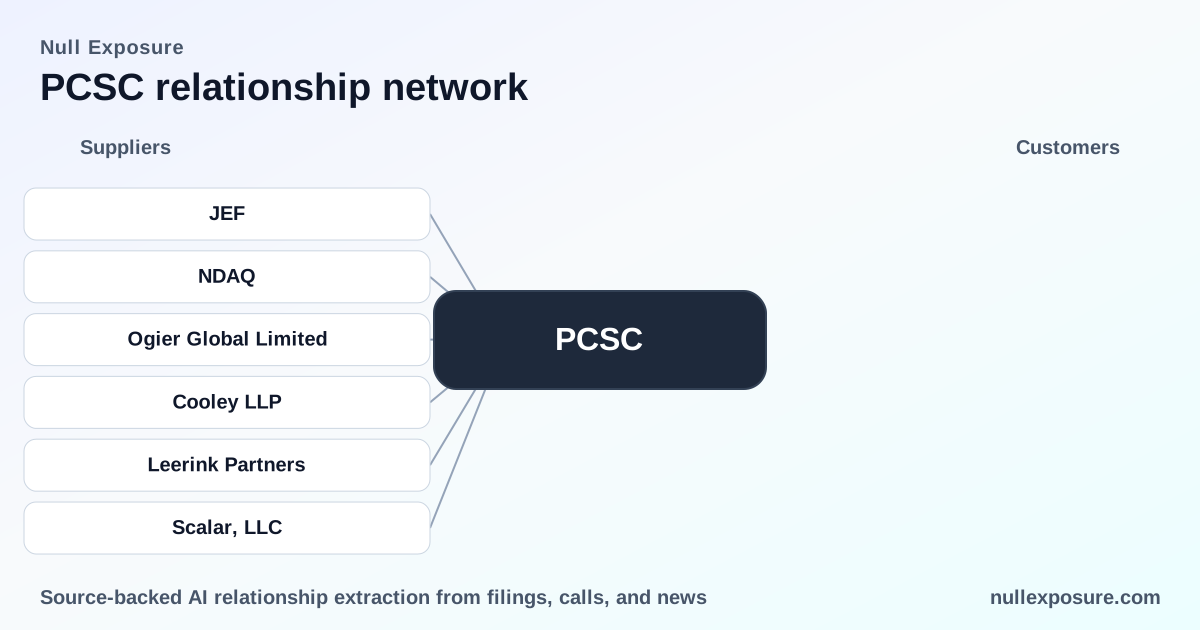
Below I map the supplier and advisor relationships disclosed in public reporting and explain how each partner contributes to PCSC’s operating and capital structure.
Why the advisor and legal roster matters for a SPAC operator
SPACs are predominantly execution businesses: success depends on access to capital markets, credibility with target companies, and robust legal and fairness opinions to complete a combination. PCSC is structured to outsource those capabilities—investment banking for distribution and pricing, legal counsel for deal documentation and jurisdictional advice, and independent fairness providers to defend transaction fairness for public shareholders. That outsourcing reduces internal headcount and cash burn but concentrates operational criticality in a small set of external suppliers.
If you want an interactive view of these relationships, NullExposure aggregates filings and news around PCSC; see the home page: https://nullexposure.com/.
The advisor and supplier roster — plain-English summaries
Jefferies LLC / Jefferies (JEF)
Jefferies acted as PCSC’s financial advisor and lead capital markets advisor and served as the sole bookrunner on the IPO, underwriting and distributing the offering that brought PCSC public. According to Renaissance Capital and MarketScreener coverage of the offering and subsequent filings, Jefferies led the transaction execution (FY2024–FY2025 reporting). (Source: Renaissance Capital / MarketScreener, IPO coverage and deal notices.)
Nasdaq / The Nasdaq Global Market (NDAQ)
PCSC’s Class A ordinary shares were listed and began trading on The Nasdaq Global Market under ticker PCSC, with Renaissance Capital and CityBiz reporting the June 12, 2024 listing and pricing details. The listing provides the exchange venue and liquidity mechanism for PCSC’s public investors. (Source: Renaissance Capital and CityBiz IPO reports, FY2024.)
Ogier Global Limited
Ogier Global Limited acted as legal advisor to PCSC on cross‑border and corporate governance matters surrounding the SPAC structure, per press reporting tied to the company’s business combination activity. That counsel supports the offshore corporate form and regulatory posture common to Cayman‑incorporated blank‑check companies. (Source: MarketScreener coverage tied to 2025 filings.)
Cooley LLP
Cooley LLP provided legal advice to PCSC on transactional and securities matters, with named partners Kevin Cooper and Eric Blanchard cited in coverage of PCSC’s deal activity; their role covers documentation for the IPO and subsequent merger agreements. (Source: MarketScreener transaction coverage, FY2025.)
Leerink Partners
Leerink Partners served as a joint capital markets advisor, supporting sector messaging and placement within life‑sciences investor channels—an important complement to Jefferies’ distribution muscle given PCSC’s stated healthcare focus. (Source: MarketScreener deal notices, FY2025.)
Scalar, LLC
Scalar, LLC produced a fairness opinion for PCSC in connection with its business combination process, providing an independent valuation comfort layer that is often necessary to defend the transaction to public shareholders and appraisal counsel. (Source: MarketScreener coverage tied to the transaction announcements, FY2025.)
Each of these entries is drawn from public deal and news coverage; together they form the external operating backbone for PCSC’s path to a combination.
What the filing constraints reveal about PCSC’s operating model
Public filings and the company’s quarterly report disclose a set of contractual and operational constraints that define how PCSC buys services and where vendor risk concentrates:
-
Contracting posture: subscription and long‑term administrative arrangement. PCSC is obligated to pay its sponsor $15,000 per month for office, administrative and support services under an Administrative Services Agreement that runs from the IPO effectiveness date until the earlier of the business combination or liquidation. This is a recurring, predictable cost and demonstrates a subscription‑style relationship with the sponsor. (Evidence: PCSC quarterly filings, June 13, 2024 administrative agreement.)
-
Spend profile and concentration. Fee disclosures indicate the company incurred roughly $99,500 for these sponsor services from inception through year‑end 2024, placing vendor spend firmly in the $100k–$1m band—meaning the sponsor and a handful of capital‑markets providers account for the majority of cash outflow before a business combination.
-
Role orientation: service provider and buyer. PCSC buys core services (administration, corporate support) while simultaneously acting as a buyer of an eventual target; the firm’s vendor set is therefore service‑heavy and transaction‑focused rather than product oriented.
-
Geographic focus and deal thesis. Management targets North America and Europe and explicitly focuses on life‑sciences and medical‑technology businesses, concentrating sector exposure and implying a need for specialized advisors (hence the choice of Leerink and Cooley).
-
Maturity and stage. The company is in an active operational stage—paying recurring fees and progressing a business combination search—yet financially immature from an operating‑revenue perspective, consistent with blank‑check mechanics where the monetization event is the transaction itself.
These constraints collectively signal a low-headcount, high‑dependency operating model where partner quality (investment bank, legal counsel, fairness provider) materially affects outcome probability.
Investment implications and tactical takeaways
-
Execution risk is concentrated in a few suppliers. Jefferies’ role as sole bookrunner and lead capital markets advisor, combined with a small roster of legal and valuation advisors, creates a focal point for execution—both a strength (clear accountability) and a single‑point failure if capital markets conditions sour or advisor incentives diverge.
-
Cash burn is modest but persistent. The sponsor fee structure caps near‑term operating spend but will continue until a deal closes or the SPAC liquidates; investors should model these recurring administrative fees into pro‑forma cash runway calculations.
-
Sector specialization is explicit. PCSC’s supplier choices match a healthcare focus, which supports targeted deal sourcing but raises industry concentration risk.
For a deeper supplier-risk analysis and to monitor updates on advisor activity around PCSC, visit NullExposure: https://nullexposure.com/.
Final read
PCSC is a classic sponsor‑driven SPAC: outsourced execution, concentrated counterparty exposure, predictable administrative spend, and a clear sector focus. For investors and operators evaluating relationships, the near‑term questions are whether the Jefferies‑led syndicate and legal advisors can close a healthcare deal on acceptable economics and whether the sponsor alignment (including indemnities) preserves public shareholder value through that process. To track these relationships and new disclosures as they occur, check the NullExposure portal: https://nullexposure.com/.