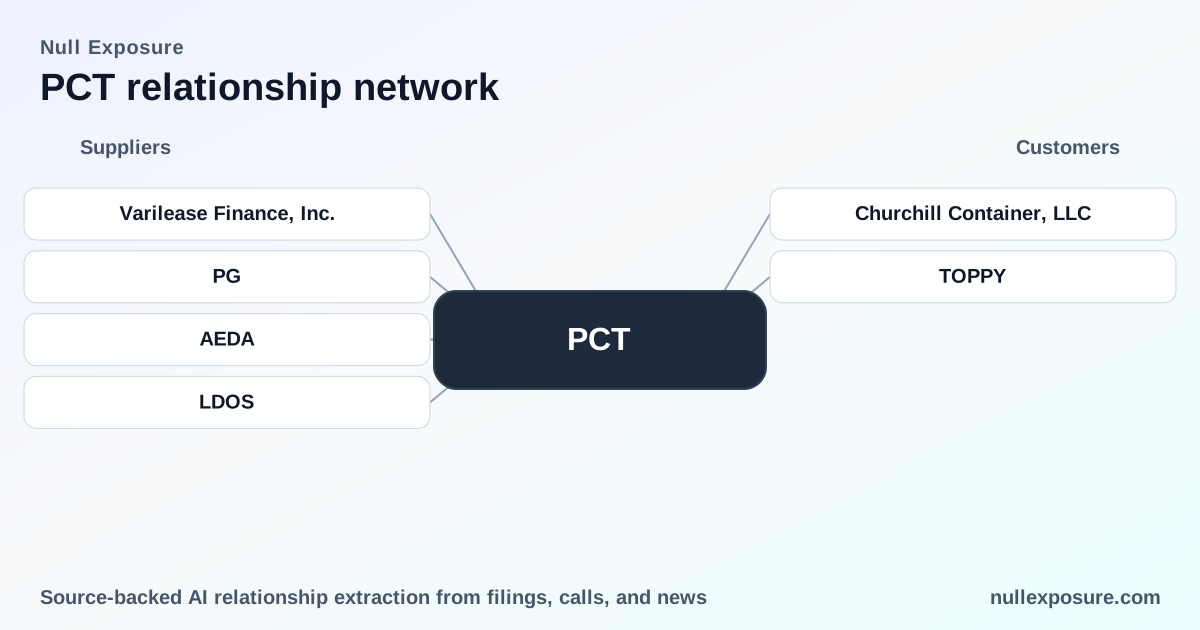
PureCycle Technologies (PCT): Supplier relationships, contracts and operational constraints investors must price in
PureCycle Technologies operates and monetizes by converting polypropylene waste into a saleable, “virgin-like” recycled resin using a patented dissolution recycling process licensed from Procter & Gamble. The company generates revenue by selling its PureFive resin and related recycled polypropylene products while funding capital-intensive buildouts through a mix of equipment financing and lease structures. Revenue is nascent and capital commitments are material; the business model depends on licensed IP, facility certification, and ongoing equipment funding. For a deeper supplier-risk profile, see https://nullexposure.com/.
How to read PureCycle’s supplier posture — contracts, capital and cadence
PureCycle is a capital-intensive operator with a mixed contracting posture: evidence shows both long-duration real estate commitments and short-duration equipment leases. Company-level signals in filings and public notices show long-term real estate lease terms (e.g., Antwerp and Denver) and specific 36-month equipment leases — an operational footprint that combines multi-decade location exposure with near-term equipment rollovers. These characteristics point to high fixed-cost leverage, a dependency on successful ramp-to-scale, and an operating cadence that requires repeated capital deployment to reach steady-state margins.
- Long-term commitments: filings disclose real estate leases with initial terms up to 30 years, indicating geographic and asset concentration risk.
- Short-term equipment leases: the company also uses 36‑month equipment leases, signaling recurring financing needs for production assets.
- Active supplier relationships and mid-sized spend: constraints extracted from public materials indicate active supplier engagement and spend bands in the $10–100 million range, consistent with ongoing plant construction and commissioning.
If you are evaluating counterparty risk or planning procurement diligence, prioritize IP stability, certification timelines for facilities, and scheduled equipment repayments. For enterprise-level supplier analytics, review our coverage at https://nullexposure.com/.
Key relationships that drive the business
Varilease Finance, Inc.
On July 12, 2024 PureCycle entered an equipment financing arrangement with Varilease Finance and received $7.6 million of progress funding during 2024 under that master lease, reflecting the company’s reliance on external lease financing for equipment procurement. This detail is documented in PureCycle’s FY2024 Form 10‑K.
Source: PureCycle FY2024 Form 10‑K (equipment financing disclosure, filed in connection with FY2024).
The Procter & Gamble Company (P&G)
PureCycle Technologies LLC holds a global license to P&G’s patented dissolution recycling technology that restores #5 polypropylene to a reusable state; this license is the company’s core technological moat and underpins product commercialization and sales of PureFive resin. Multiple press reports and filings reiterate the license terms and promotional uses of the resin in 2025–2026 communications.
Source: Company statements and press coverage (GlobeNewswire, Bitget and other news releases referencing the P&G license, FY2025–FY2026).
Trading commentary and filings also emphasize contractual performance deadlines built into the P&G License Agreement — construction and sales milestones that, if unmet, can trigger termination or conversion of the license and therefore have direct commercial consequences.
Source: TradingView summarizing license risk language (reported with reference to PCT’s public disclosures, FY2026).
AEDA
Recent reporting shows PureCycle agreed to pay $500,000 to AEDA in two installments, a transaction tied to construction or contractual amendments. The amount is small relative to plant CAPEX but reflects ongoing counterparties and vendor settlements required during project execution.
Source: TradingView news item (reported March 2026).
Leidos
Leidos is cited as the testing and certification counterparty for commercial operations at PureCycle’s first large‑scale facility in Ironton, Ohio; successful certification by Leidos after performance tests is a prerequisite for full-scale commercial operations. Certification timelines and results are therefore a gating factor for the company’s revenue ramp.
Source: ADVFN reporting on facility certification language (referencing PCT disclosures, FY2026).
What those relationships imply for investors and operators
- IP-critical dependency: The P&G license is the company’s single most critical supplier-style relationship because it defines the core process and the rights to commercialize it. Missed license milestones are an existential contract risk. Investors must treat the license as a de facto strategic supplier relationship with enforcement rights and milestone economics.
- Capital and financing cadence: Equipment leases like the Varilease financing and shorter 36‑month schedules create recurring financing needs; active accumulating rent and progress drawdowns indicate cash flow timing pressure during ramp. Financial stress is linked to the rhythm of equipment financing and lease repayments.
- Operational gating: Third‑party certification (Leidos) is a non-financial supplier relationship that directly controls the timing of revenue recognition from the Ironton facility. Certification outcomes translate to revenue inflection points.
- Project execution tail risk: Small settlement items and construction contract amendments (e.g., payments to AEDA) signal active project-level negotiations — typical of large builds but a source of execution variance.
Midway recommendation: if you are modeling downside scenarios for PCT, stress license milestone slippage and equipment refinancing risk first; for operational diligence, confirm Leidos certification milestones and the schedule for accumulating rent crediting. For a focused supplier-risk audit, visit https://nullexposure.com/ for structured coverage.
Bottom line and actionable due diligence
PureCycle’s commercial value proposition is clear: licensed process + scale facility = saleable recycled polypropylene — but realization of that value is conditional on contract performance, certification, and continued financing. Key investor actions:
- Verify the P&G License milestones and current cure/waiver status in the latest filings; treat the license as mission-critical.
- Audit equipment lease schedules and accumulating rent mechanics (progress funding and crediting) to model near-term liquidity needs.
- Confirm Leidos certification timelines and contingency plans for delayed facility commissioning.
- Monitor small counterparty settlements and construction amendments as real-time indicators of project health.
For ongoing supplier intelligence and a structured supplier‑risk view across PureCycle’s partner network, explore our coverage at https://nullexposure.com/ — use this to prioritize disclosures and contract clauses during your next investment review.
Major takeaway: PureCycle is a high‑leverage, capital‑intensive recycler whose commercial trajectory hinges on a single licensed technology, successful third‑party facility certification, and continuous equipment financing — all of which should be the focus of any valuation or operational diligence.