Pure Cycle Corporation (PCYO): Supplier relationships and what they signal for investors
Pure Cycle Corporation designs, builds, operates and maintains water and wastewater systems along the Colorado Front Range and monetizes through a mix of regulated and project-based water services, asset sales and development fees tied to new community buildouts. The company’s economics are driven by recurring utility revenue from customers and incremental cash flow from land and development activities; investors should read supplier interactions as an extension of execution on construction, land conversion and site marketing rather than a pure commodity procurement story. For a consolidated view of supplier and partner exposure, visit https://nullexposure.com/.
How Pure Cycle makes money and why suppliers matter
Pure Cycle is a utilities company with a development tilt: steady, regulated water revenue plus episodic gains from development and infrastructure projects. On a trailing basis the company reports roughly $29.5 million in revenue, $12.67 million EBITDA, and strong operating margins near 48%, which positions it as a cash-generating regional utility with development upside. Supplier relationships are consequential because Pure Cycle outsources construction and site-preparation work and also engages brokers and land counterparties to convert raw assets into revenue-generating customers or leased sites.
- Construction and development are execution points: the choice of contractors determines schedule, cost and regulatory compliance for projects that unlock future rate base or fee income.
- Commercial partnerships shape monetization of land holdings: broker and site-selection relationships influence the timing and size of non-regulated revenue.
If you are evaluating Pure Cycle as a supplier partner or counterparty, this interplay between regulated utility fundamentals and episodic development earnings defines the commercial risk profile. Learn more about supplier intelligence at https://nullexposure.com/.
Supplier relationships identified in the public record
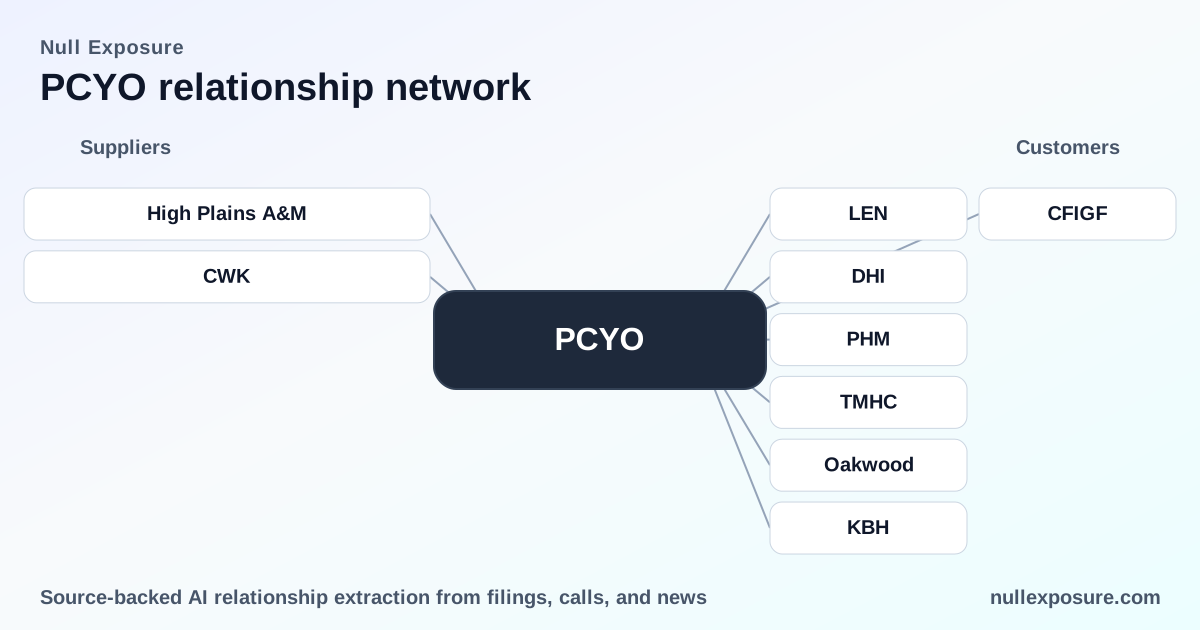
High Plains A&M — a historical asset acquisition that shaped local holdings
Pure Cycle purchased assets from High Plains A&M on the Fort Lyon property in 2006, a transaction that transferred local water-related assets into Pure Cycle’s portfolio and contributed to its land and water asset base. A regional news profile noted Pure Cycle’s prior acquisition of High Plains A&M assets, underscoring the company’s history of growing by asset consolidation in Colorado (Chieftain.com, 2011).
Cushman (CWK) — broker engagement for data-center and site marketing
Pure Cycle disclosed engagement with Cushman as part of site marketing and brokerage efforts; management stated Cushman is one of the largest brokers managing sites for data centers, indicating Pure Cycle is leveraging institutional real-estate distribution channels to attract high-value, non-residential users. This engagement was described during the company’s Q1 FY2026 earnings call transcript coverage (InsiderMonkey, FY2026).
What the public constraints and excerpts tell investors about operating posture
Publicly excerpted constraints include the management admission: “We use third-party contractors to construct our facilities as needed.” Presenting this as a company-level signal yields several operational implications for investor diligence:
- Contracting posture: Pure Cycle is construction-outsourced. The company relies on third-party contractors for facility construction rather than maintaining a large internal construction workforce, which accelerates scalability but introduces vendor execution risk and margin variability.
- Concentration and counterparty exposure: High institutional ownership (about 71.9%) and a relatively small insider stake (about 4.8%) imply professional-market scrutiny and potential sensitivity to service-delivery metrics; supplier failures could be rapidly reflected in equity performance given concentrated institutional monitoring.
- Criticality: Water and wastewater service is mission-critical infrastructure; supplier failures affect regulatory compliance and customer service continuity, making contractor quality and regulatory track record a high-priority diligence item.
- Maturity and business model balance: Pure Cycle operates in a regulated utility industry with development activity layered on top — this is a mature regulatory backbone that cushions volatility from development timing, while the outsourced construction model allows the company to pursue episodic projects without large fixed labor overhead.
These signals together form a picture of a company that must manage contractor quality tightly and cultivate broker and land-counterparty relationships to realize development revenue without jeopardizing regulated operations.
Investment implications: where supplier relationships create value or risk
Suppliers and partners are not marginal to Pure Cycle — they are mechanistic levers that control how fast land converts to revenue and how reliably utility service is expanded. Key takeaways for investors and operators:
- Execution risk is concentrated around third-party construction: delays, cost overruns or compliance lapses by contractors can defer fee-based development revenue while creating regulatory exposures to the utility business.
- Broker relationships can accelerate monetization: active engagement with national brokers like Cushman positions Pure Cycle to attract large, creditworthy non-residential occupiers (for example, data centers), which can materially raise the value-per-acre of holdings.
- Historical asset acquisitions shape future optionality: legacy purchases such as the High Plains A&M assets expanded Pure Cycle’s land and water footprint, increasing optionality for development revenue without incremental capital outlay today.
For investors focused on execution, interrogate supplier contracts, performance KPIs, warranty and indemnity terms, and broker fee structures; for operators, prioritize supplier SLAs and construction oversight that align with regulatory reporting timelines. If you need a deeper supplier risk profile or a tailored vendor due-diligence package, see https://nullexposure.com/.
Practical checklist before committing capital
- Validate the company’s contractor selection criteria and performance track record across recent projects.
- Review broker engagement terms with firms such as Cushman for exclusivity, success fees and marketing commitments.
- Confirm insurance, indemnity and warranty coverage for construction projects to limit downside from contractor performance shortfalls.
- Monitor regulatory filings for any construction-related notices, stop-work orders or compliance actions.
Final read: what to watch next
Pure Cycle combines regulated utility stability with the upside of development; supplier and broker relationships are the operational levers that determine how much of that upside is realized and how much execution risk is introduced. Focus diligence on contractor governance and broker commercialization terms—these are the places where supplier relationships translate directly into shareholder value or erosion.
For ongoing supplier-level monitoring and bespoke relationship analysis, visit https://nullexposure.com/ for research tools and onboarding options.