Pebblebrook Hotel Trust (PEB‑P‑F): supplier relationships that drive hotel performance and investor returns
Pebblebrook Hotel Trust is a focused hospitality REIT that monetizes high-quality, full‑service urban and resort hotels primarily through ownership and selective asset plays while outsourcing day‑to‑day operations to specialized managers. The company funds its growth and income profile with capital markets instruments including its 6.30% perpetual preferred series (PEB‑P‑F) and enhances asset value through targeted renovations, repositionings, and operator partnerships that drive RevPAR and margin expansion. For primary sourcing and monitoring of supplier‑level signals, visit https://nullexposure.com/ for deeper supplier mapping and original source links.
Why supplier relationships matter for preferred‑holder and operator investors
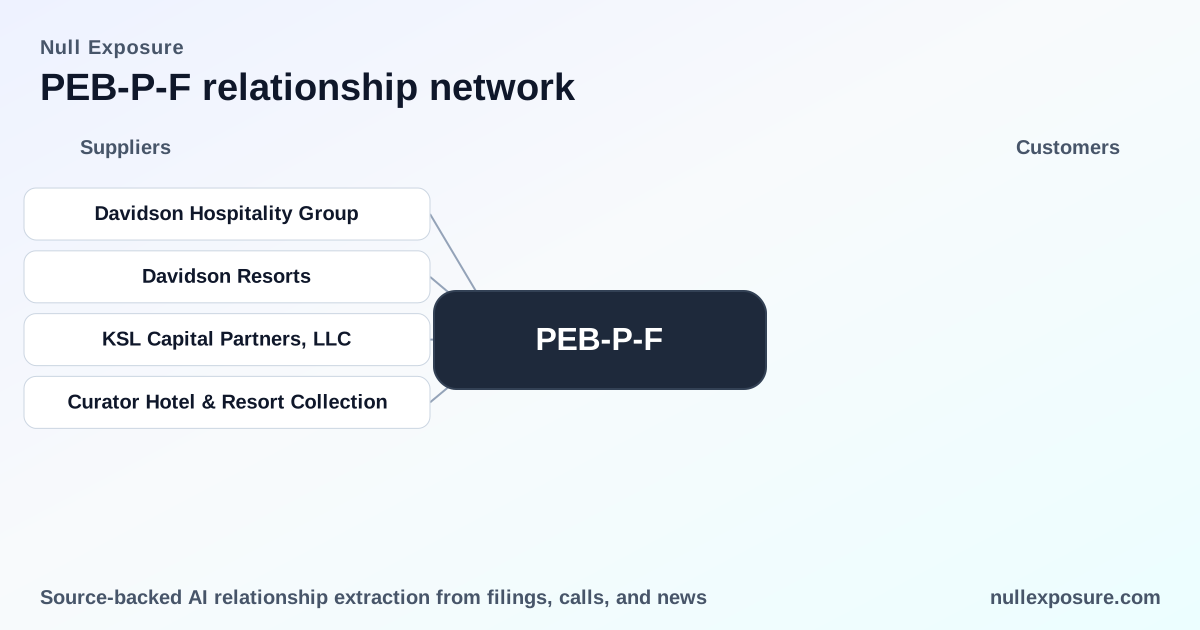
Pebblebrook’s economic performance is operator‑dependent: management contracts and brand affiliations materially influence occupancy, ADR, and operating margins at each asset. The observed supplier map shows Pebblebrook’s explicit strategy to delegate operations to boutique and lifestyle managers while retaining ownership control — a contracting posture that prioritizes asset specialization over in‑house hotel management.
- Contracting posture: Pebblebrook outsources to specialized operators rather than running a large internal platform.
- Concentration: The recent evidence points to a meaningful relationship with the Davidson group across at least one high‑profile resort.
- Criticality: Management partners are critical to realizing repositioning plans and expense efficiencies at individual assets.
- Maturity: Relationships appear transaction‑driven and recent, reflecting Pebblebrook’s acquisition and repositioning playbook.
If you are modeling operator risk into preferred cash‑flow scenarios, include counterparty continuity and contract renewal timing. For supplier intelligence and continuous monitoring, start here: https://nullexposure.com/.
The supplier relationships you need to know now
Below are the relationships identified in the reporting set. Each entry is a concise, plain‑English take with the reporting source.
Davidson Hospitality Group
Pebblebrook selected Davidson Hospitality Group to manage the Newport Harbor Island Resort (formerly Gurney’s Newport) as part of the property’s repositioning and reopening program. According to HotelManagement.net (article first seen March 10, 2026), Davidson was appointed to operate the Newport property under its Davidson Resorts operating vertical. (Source: HotelManagement.net, March 2026)
Davidson Resorts
The Newport Harbor Island Resort is being operated under Davidson Resorts, Davidson Hospitality Group’s specialized resort vertical, signaling Pebblebrook’s preference for a boutique, experience‑focused manager for that asset. Multiple local and industry outlets noted the reopening and Davidson Resorts’ operational role in the property transformation. (Sources: Newport This Week; Newportri.com; HospitalityNet; reporting tied to FY2022–FY2024 coverage)
KSL Capital Partners, LLC
Pebblebrook acquired the Margaritaville Hollywood Beach Resort from an affiliate of KSL Capital Partners in a cash deal, reflecting Pebblebrook’s acquisition channel for scaled beachfront assets. HotelNewsResource reported the $270 million purchase (reported in connection with FY2021 coverage), underscoring Pebblebrook’s willingness to buy from sponsor sellers to execute its ownership‑plus‑reposition strategy. (Source: HotelNewsResource, FY2021)
Curator Hotel & Resort Collection
Following the acquisition and reposition, the Newport resort was also slated to join the Curator Hotel & Resort Collection, a move Pebblebrook expects will drive expense reductions and enhanced operational technology through collection‑level initiatives. HotelNewsResource and HospitalityNet coverage described the planned integration of the resort into Curator’s platform as part of the operating strategy. (Sources: HotelNewsResource; HospitalityNet, FY2021–FY2024)
What these relationships say about operational risk and upside
These supplier connections reveal a clear operating philosophy: Pebblebrook purchases and repositions higher‑profile assets, then partners with specialized, external operators to extract value. That model concentrates counterparty risk at the operator level but also preserves capital efficiency for Pebblebrook shareholders and preferred‑holders by avoiding a large in‑house management cost base.
Key investment implications:
- Upside: Well‑executed repositionings with boutique operators can drive outsized RevPAR recovery and asset value appreciation, supporting preferred dividends and capital returns.
- Risk: Operator concentration at a small number of boutique managers increases dependency on those partners for execution and brand positioning.
- Visibility gap: Public reporting in this set emphasizes transactions and management appointments rather than long‑term contract economics; investors should request contract term, termination rights, and performance fee mechanics in diligence.
Notably, the supplier constraints inventory returned no discrete contractual constraints for Pebblebrook (no supplier‑level constraints were captured), which is itself a company‑level signal: public reporting in the captured sources did not surface enforceable supplier restrictions or notable third‑party limitations on Pebblebrook’s operating posture.
Mid‑analysis resource: for a systematic supplier‑level view that ties operator appointments to asset performance, see https://nullexposure.com/.
Practical red flags and monitoring checklist for investors
- Track management contract terms and renewal windows for Davidson and Curator affiliations; these drive operator continuity risk.
- Monitor asset‑level KPIs (occupancy, ADR, RevPAR, EBITDA margins) for properties absorbed from sponsor sellers like KSL to assess integration success.
- Watch for capital expenditure cadence and branding investments tied to repositioning — these determine cash conversion and preferred cushion.
- Evaluate preferred dividend coverage dynamics relative to net operating income; the preferred coupon is fixed and requires stable cash generation.
What to watch next and recommended investor actions
Focus on contract disclosures and property‑level results at upcoming quarterly filings and company presentations. Confirm the following with management or in diligence:
- Contract length and termination provisions with Davidson Hospitality Group/Davidson Resorts and Curator.
- Performance‑based fee structures and their impact on NOI volatility.
- Capital expenditure schedules and projected return on repositioning spend for assets acquired from sponsors like KSL.
For direct supplier relationship intelligence and ongoing alerts that are tailored to capital markets investors, visit https://nullexposure.com/.
In conclusion, Pebblebrook’s supplier strategy is deliberate: buy, reposition, and outsource operations to specialty managers to capture premium market positioning while maintaining a capital‑efficient ownership model. That approach creates attractive upside when partnerships succeed and concentrated counterparty risk when they do not — a tradeoff that should be explicitly modeled by preferred‑stock investors and operating partners alike. For continued tracking and supplier detail feeds, go to https://nullexposure.com/.