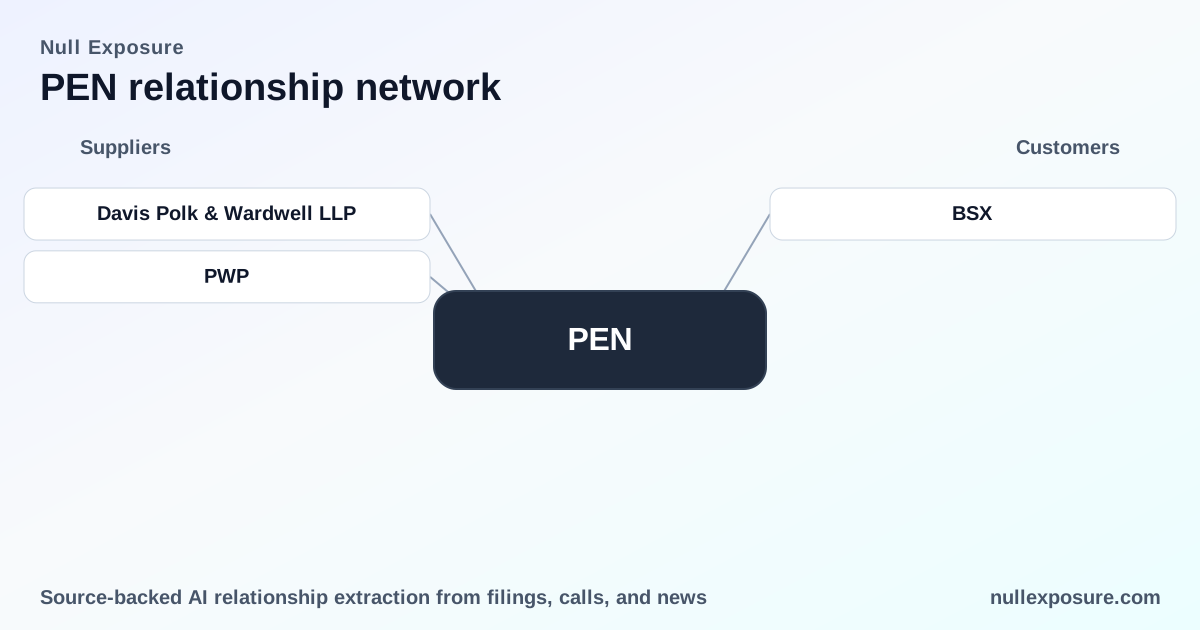
Penumbra Inc (PEN): Supplier relationships, contractual posture, and what the advisor appointments signal for investors
Penumbra designs and manufactures medical devices and monetizes through the sale of specialty interventional products across the U.S., Europe, Canada and Australia, supported by captive manufacturing and third‑party logistics networks. The company combines an asset‑heavy manufacturing campus with long‑dated leases and a mix of long‑ and short‑term supplier commitments, producing a predictable but capital‑intensive cost base and supply chain exposure that investors must underwrite alongside growth in procedure volumes. For deeper supplier intelligence and partner scoring, visit https://nullexposure.com/.
Quick investor thesis: how Penumbra operates and makes money
Penumbra sells high‑margin medical devices (neurovascular and peripheral tools) to hospitals and health systems; revenue comes from device sales, aftercare consumables, and geographic expansion, while R&D and manufacturing capacity underpin long‑term product adoption. The company’s financial profile shows $1.40B revenue (TTM) and a 12.7% net margin, with substantial institutional ownership and a market capitalization around $13.2B, indicating valuation reflects secular growth expectations in interventional devices.
What the recent advisor appointments tell the market
Boston Scientific’s announced agreement to acquire Penumbra pushed advisory relationships into the spotlight. Appointments of high‑profile advisors typically signal transaction sophistication, potential integration complexity, and an expectation of material value transfer to counterparties and shareholders.
- Perella Weinberg Partners was retained as Penumbra’s exclusive financial advisor in the transaction announcement, a role that signals the company sought boutique investment banking expertise to optimize deal structure and negotiate value. According to a market report dated March 10, 2026, Perella Weinberg Partners is serving as exclusive financial advisor to Penumbra (Quantisnow, March 10, 2026).
- Davis Polk & Wardwell LLP is serving as Penumbra’s legal advisor for the same transaction, indicating high legal complexity and the need for top‑tier corporate and regulatory counsel. The Quantisnow insight from March 10, 2026 identifies Davis Polk & Wardwell LLP as Penumbra’s legal advisor.
For supplier risk and post‑deal continuity planning, these advisor appointments are important signals: they reflect the acquiror/target expectations for integration, regulatory review, and contractual novation that will affect supplier relationships and procurement continuity.
Relationship-by-relationship breakdown (concise, for sourcing and diligence)
Perella Weinberg Partners
Perella Weinberg Partners is acting as Penumbra’s exclusive financial advisor in the transaction announced in March 2026; this implies Perella Weinberg led valuation, negotiation strategy, and transaction execution on Penumbra’s behalf. A Quantisnow report dated March 10, 2026 documents this appointment (Quantisnow insight, March 10, 2026).
Davis Polk & Wardwell LLP
Davis Polk & Wardwell LLP is serving as legal advisor to Penumbra in the acquisition process, handling corporate, regulatory and transactional documentation for the company in FY2026. The same Quantisnow insight (March 10, 2026) lists Davis Polk & Wardwell LLP in this role.
How supplier contracting posture and constraints shape operational risk
Penumbra’s public filings and disclosures provide actionable signals about supplier exposure and contract maturity:
- The company reports approximately 610,000 square feet of facilities on a campus in Alameda with nine leases that expire at various times in 2036, and renewal options extending five to fifteen years; this is a clear indicator of an asset‑heavy, long‑dated real estate posture that locks in fixed costs and concentrates manufacturing risk geographically (company filing as of Dec 31, 2024).
- Penumbra uses long‑term supply contracts to stabilize continuity of supply and manage price risk, signaling procurement strategies that prefer committed relationships for critical raw materials and components.
- At the same time, Penumbra disclosed $18.3M of non‑cancelable purchase obligations as of Dec 31, 2024, with $13.8M due within one year, consistent with a mix of short‑term operational commitments and medium‑band spend levels.
- The company utilizes third‑party logistics providers in the Netherlands and Australia for warehousing and distribution, which brings service provider dependencies into the supply chain.
Collectively, these points indicate a contracting posture that blends long‑term, strategic supplier commitments for core inputs and facilities with near‑term purchase obligations for inventory and operational flexibility. This hybrid posture reduces spot risk but creates lock‑in on cost base and vendor criticality.
Practical implications for investors and operators
- Concentration and criticality: The concentrated Alameda campus and reliance on long‑term leases increase operational concentration risk; loss of that facility or major supply interruptions would be disruptive. The company’s use of long‑term supplier contracts for key inputs increases criticality of those vendor relationships.
- Spend profile: Non‑cancelable obligations in the $10M–$100M band indicate meaningful annual supplier commitments but not single‑vendor domination; investors should interrogate supplier concentration within that spend band.
- Maturity and renegotiation windows: Leases extending toward 2036 and supplier contracts that are long‑term reduce renegotiation frequency but increase exposure to structural cost inflation or adverse contractual terms if product demand shifts.
- Service provider exposure: Third‑party logistics partners in Europe and Australia introduce cross‑border distribution risk and dependence on local regulatory and customs performance.
For a structured supplier risk review and partner benchmarking, see our platform: https://nullexposure.com/.
Actionable monitoring checklist for the next 12 months
- Verify whether the acquisition transaction triggers supplier novation clauses or change‑of‑control remedies that require renegotiation or termination payments.
- Request supplier concentration schedules and identify any single‑source suppliers contributing material cost or lead‑time risk.
- Confirm continuity plans for the Alameda campus and contingency distribution routes for Europe and Australia.
- Review long‑term supplier contract terms for price escalators, termination triggers, and exclusivity that could affect margins post‑close.
Bottom line: how these relationships affect value and execution risk
Advisor appointments to Perella Weinberg and Davis Polk are transactional signals that the company is managing a high‑stakes sale process with senior advisors—this is bullish for execution quality but raises scrutiny on post‑deal supplier continuity, contract novation, and integration costs. Penumbra’s blend of long‑term leases, committed supplier contracts and material near‑term purchase obligations creates a supply‑chain posture that underwrites production reliability while concentrating operational risk geographically and contractually.
To convert this analysis into actionable diligence, start with tailored supplier questionnaires, contract summaries, and change‑of‑control mappings available through our platform at https://nullexposure.com/. Explore our supplier intelligence tools for deal execution and post‑merger integration support on the homepage.