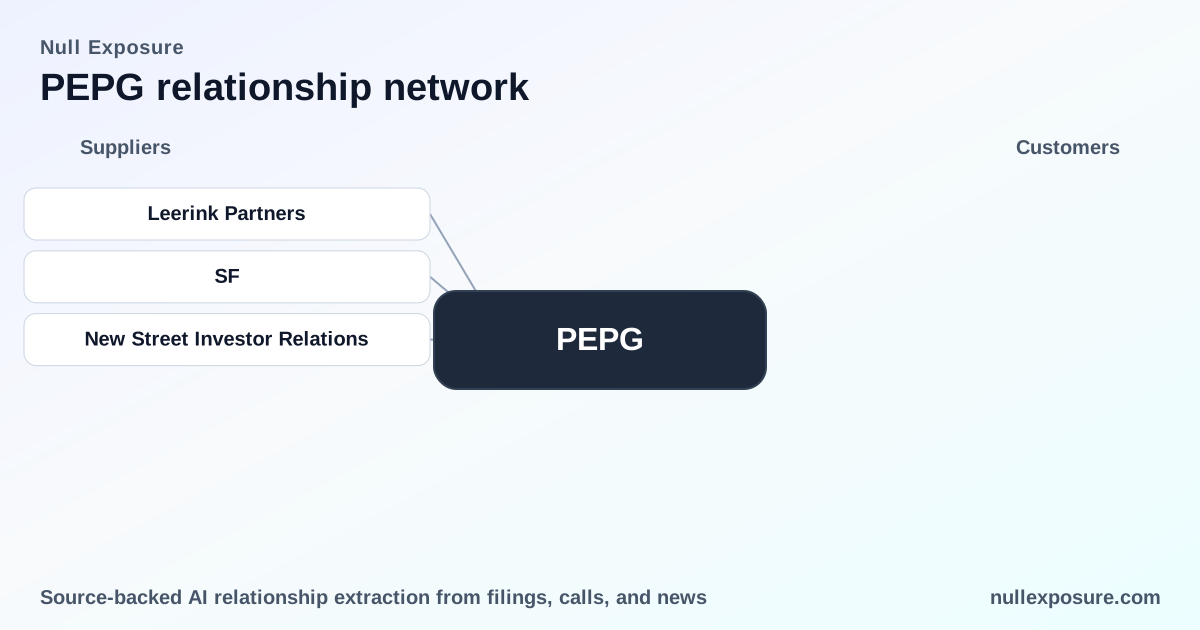
PepGen (PEPG): Supplier map and what it means for investors
PepGen is a clinical-stage biotechnology company that develops oligonucleotide therapeutics and monetizes through licensed intellectual property, R&D partnerships, milestone payments and capital markets activity (equity offerings and investor relations). The company currently records no product revenue and funds operations through public markets and licensing progress; supplier relationships therefore directly affect clinical timelines and the company’s ability to convert research into value.
If you are evaluating counterparty or supplier exposure for PepGen, start here and then run a targeted diligence workflow on the parties below. For quick access to continuous coverage and supplier intelligence, visit https://nullexposure.com/.
What the disclosed supplier relationships reveal about PepGen’s market posture
PepGen’s publicly visible supplier footprint in the most recent disclosure cycle centers on capital markets and investor communications—investment banks acting as underwriters and an investor relations firm—rather than manufacturing partners named in press material. That pattern is consistent with a company that is capital‑market dependent today, and supplier‑dependent for future clinical and commercial execution. The market-facing relationships (banks and IR) are transactional but high-impact in terms of liquidity and financing; the unlisted but documented dependencies on CDMOs and licensors are operationally critical.
For actionable, consolidated supplier and constraint intelligence on PepGen, see https://nullexposure.com/.
Broker and investor-relations partners disclosed in the press release
Leerink Partners
Leerink Partners is acting as a joint book-running manager on PepGen’s proposed public offering, which positions the bank as a primary distribution and capital-raising partner in the current financing effort. According to a Biospace press release dated March 10, 2026, Leerink and Stifel were named joint book-runners for the offering. (Biospace, March 2026)
Stifel (Stifel, Nicolaus & Company, Incorporated)
Stifel is co-leading the offering as a joint book-running manager alongside Leerink, giving it the same underwriting and syndication responsibilities that will shape deal execution and pricing. The same Biospace release on March 10, 2026, lists Stifel as a joint book-running manager for the proposed public offering. (Biospace, March 2026)
New Street Investor Relations
New Street Investor Relations is listed as PepGen’s investor contact, providing investor communications and IR services to amplify the company narrative during the financing and clinical milestone cycle. The March 10, 2026 Biospace announcement identifies Laurence Watts at New Street Investor Relations as the investor contact. (Biospace, March 2026)
Operational constraints and what they imply for supplier risk
PepGen’s public disclosures and licensing language create a clear profile of contracting posture, concentration, criticality and maturity in its supplier relationships:
-
Licensing is foundational and exclusive. PepGen holds an exclusive worldwide license from the University of Oxford (OUI) and the Medical Research Council (MRC) to key patents and know‑how for its peptide delivery technology; the license carries diligence, milestone, royalty and sublicensing provisions. This is an explicit license relationship reflected in company filings that underpins PepGen’s core intellectual property and future commercialization rights. (Company disclosures, 2024)
-
Reliance on third‑party manufacturing is material and mature. PepGen does not own manufacturing facilities and relies on CDMOs for critical components (CPPs, linkers, oligonucleotides), conjugation and finished sterile injectable production. The company explicitly states that loss of suppliers or supply disruption would harm the business—this is a material operational dependency. (Company disclosures, 2024)
-
Service relationships cover the full R&D stack. PepGen outsources preclinical and clinical testing, quality testing and other R&D functions to CROs, CDMOs, consultants and advisors, creating multiple external touchpoints for regulatory compliance and data integrity. These service providers are a continuing operating expense and execution vector for PepGen’s clinical agenda. (Company disclosures, 2024)
-
Contract terms skew long‑dated for facilities but variable for suppliers. The company’s Boston office/lab lease is long‑term (110 months, with a one five‑year option), indicating fixed facility obligations through 2032; third‑party manufacturing and research contracts are operationally critical but follow customary CRO/CDMO term structures. The long lease increases fixed-cost leverage as PepGen advances clinical programs. (Company disclosures, lease dated December 1, 2021)
-
Geographic footprint is North America focused with EMEA regulatory reach. Operations are centered in Boston, MA, but the company has regulatory clearances to initiate studies in Canada and the U.K., signaling cross‑border supplier and regulatory coordination across NA and EMEA. (Company disclosures, 2024)
-
Relationship roles are multi‑modal. Public text classifies external parties as licensors (OUI/MRC), manufacturers (CDMOs), service providers (CROs and consultants) and the company as licensee and sponsor—an operating model where intellectual property licensing and outsourced manufacturing/services are co‑equal levers of value creation. (Company disclosures, 2024)
-
Materiality and stage: active and consequential. The licensing agreements are active and require milestone and royalty payments; manufacturing and service relationships are ongoing and described as material to program continuity. These are not theoretical dependencies—contractual milestones and operational outsourcing are embedded in current operations. (Company disclosures, 2024)
What investors should watch next
-
Financing execution and underwriting performance. The choice of Leerink and Stifel as joint book‑runners makes underwriting execution a near‑term determinant of PepGen’s runway; monitor deal pricing, allocation and syndicate composition when the offering launches. (Biospace, March 2026)
-
CDMO and supply continuity disclosures. Given the company’s explicit reliance on third parties for manufacture and quality testing, investors should prioritize counterparty diligence, capacity commitments and contingency plans in future filings. (Company disclosures, 2024)
-
Licensing milestones and patent prosecution payments. The OUI/MRC license carries diligence and milestone obligations that can trigger payments or licensor rights if unmet; track milestone schedules and associated cash flows in subsequent filings. (Company disclosures, 2024)
For a centralized view of PepGen’s supplier relationships and constraint signals, visit https://nullexposure.com/.
Final assessment and action points
PepGen’s immediate supplier visibility is dominated by capital markets partners—Leerink, Stifel and New Street IR—which reflects a company in financing mode that simultaneously depends on external manufacturing and licensor relationships to progress clinical assets. The operational model combines exclusive academic licensing plus outsourced manufacturing and services, creating concentrated counterparty risk that is both legally embedded (licensing) and operationally central (CDMOs/CROs). Investors should treat underwriting execution, supply‑chain continuity and license milestone schedules as the three levers most likely to move valuation in the next 12 months.
If you are building a supplier risk score or evaluating counterparty exposure for portfolio risk management, our platform consolidates the precise relationship and constraint signals that matter—review PepGen’s full supplier map at https://nullexposure.com/.