TDH Holdings (PETZ): Supply-side consolidation and what it means for investors
TDH Holdings, trading as PETZ, manufactures and sells pet food across China and international markets and monetizes through branded product sales and manufacturing operations for retail and wholesale channels. The company's economics combine narrow public-market scale with concentrated ownership and an operating profile that shows positive net margins but negative operating profitability, signaling a business that generates revenue but is investing or restructuring at the operating level. For active investors assessing supplier risk and partner strategy, the supplier history — including a material acquisition that changed a supplier relationship — is essential context. Learn more about supplier intelligence and relationship monitoring at https://nullexposure.com/.
How TDH makes money and the core operating model
TDH is a pet food manufacturer and seller headquartered in Qingdao, China. Revenue is generated from the sale of finished pet food products across the People's Republic of China and export markets in Asia, Europe, and North America. RevenueTTM is reported at 1,046,000 with Gross ProfitTTM of 358,490, producing a positive profit margin on the bottom line while operating margins are negative, a structural signal that product gross economics are sound but operating costs, SG&A, or non-recurring items are suppressing operating profitability.
Key balance and ownership signals that matter to counterparties and investors:
- High insider ownership (33.8%) and very low institutional ownership (0.8%) indicate a company controlled by insiders with limited institutional monitoring or block-holder pressure.
- Small market capitalization (reported ~12.49 million USD) and limited public float create liquidity constraints and increase counterparty negotiation power in commercial contracting.
- Mixed profitability profile: Diluted EPS is positive (0.17) and Profit Margin TTM is 2.624%, while EBITDA is negative (-1,203,563) and Operating Margin TTM is -0.976, showing operating losses at a reported period despite net profit metrics.
These items combine into a supplier-relationship posture where TDH operates as a mid-to-small manufacturer that has both commercial leverage to vertically integrate and operational pressures that can tighten supplier bargaining dynamics.
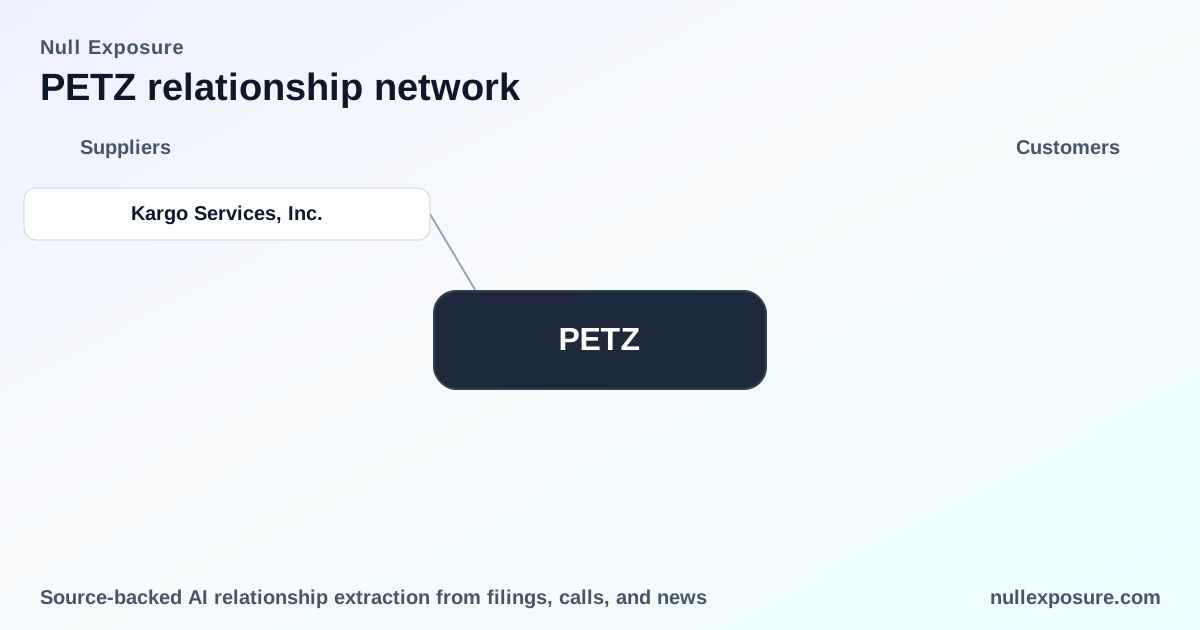
Supplier history you need to know: Kargo Services, Inc.
TDH's supplier records in public coverage include a single notable relationship turned transaction. According to SimplyWallSt reporting first surfaced on March 10, 2026, TDH acquired Beijing Wenxin Company, Ltd. from Kargo Services, Inc., an item listed with an 'Aug 19' note and fiscal period FY2017. This entry documents a transfer of ownership that materially altered the supplier landscape between TDH and Kargo Services, Inc. (source: SimplyWallSt news sentiment, first seen 2026-03-10).
- Kargo Services, Inc.: TDH acquired Beijing Wenxin Company, Ltd. from Kargo Services, removing that business from an external-supplier role and bringing it under TDH control, according to the SimplyWallSt report first seen on March 10, 2026.
What that acquisition implies for supplier risk and strategy
The acquisition of Beijing Wenxin from Kargo Services is a discrete, observable shift from third-party supply reliance toward vertical integration. When a manufacturer acquires a previously external supplier, it reduces external concentration risk and increases control over input quality and cost, while simultaneously increasing capital intensity and operational integration risk.
Investor-relevant implications:
- Concentration and criticality shift: The transaction reduces exposure to a named external supplier but increases operational complexity and fixed-cost absorption inside TDH.
- Contracting posture becomes internalized: TDH moves from contract negotiation with external vendors toward managing owned production assets, changing its counterparty risk profile and the financial cadence of capital and working capital needs.
- Maturity signal: Executing M&A to internalize supply suggests a strategic step beyond basic supplier contracting; for a small-cap issuer, that can accelerate both upside (better margins, cost capture) and downside (integration failure, higher cash burn).
Constraints and company-level signals that shape supplier relationships
No explicit constraint items are registered in the supplier-scope constraints feed for PETZ. Treat this absence as an informative signal rather than silence: lack of disclosed constraints means investors must rely on company-level indicators.
Company-level signals:
- Concentration of control: 33.8% insider ownership implies strategic decisions — including supplier M&A — are driven by insiders, not diversified institutional governance.
- Liquidity and scale constraints: Reported market capitalization and small float limit TDH’s access to large equity raises, increasing reliance on operating cash flow or private financing to fund acquisitions and supplier investments.
- Profitability divergence: Positive profit margin to the bottom line coexisting with negative EBITDA and operating margin signals either one-off non-cash items, timing differences, or significant restructuring/investment spending; these items directly affect supplier payments and contract terms.
These company-level characteristics shape contracting posture as opportunistic but resource-constrained: TDH can and will internalize critical suppliers where strategic benefit is clear, but its small capital base and operating losses present financing constraints for sustained integration.
What investors and operators should watch next
- Monitor cash flow statements and operating cash conversion to determine whether supplier payments and capital integration for acquired units are being absorbed without increasing liquidity stress.
- Track any further mentions of supplier transfers or acquisitions; repeated vertical integration is a strategic signal toward consolidation, with attendant cost and execution risk.
- Watch governance shifts that could reduce insider concentration or increase institutional participation; improved governance would change counterparty confidence in long-term supplier commitments.
For deeper supplier surveillance and relationship impact analysis, visit https://nullexposure.com/ and subscribe to monitoring tailored to supplier-event risk and M&A impact.
Bottom line and actions
TDH’s supplier footprint has been materially altered by the acquisition of Beijing Wenxin from Kargo Services, a step that reduces external supplier concentration but raises integration risk. Given the company’s small market cap, mixed profitability, and concentrated insider control, supplier-related M&A is a lever that can improve gross economics but also stress liquidity and managerial bandwidth.
If you are evaluating PETZ for supplier risk or partnership, prioritize cash-flow analysis, integration milestones from prior transactions, and governance developments. For ongoing monitoring and supplier relationship intelligence, start here: https://nullexposure.com/.