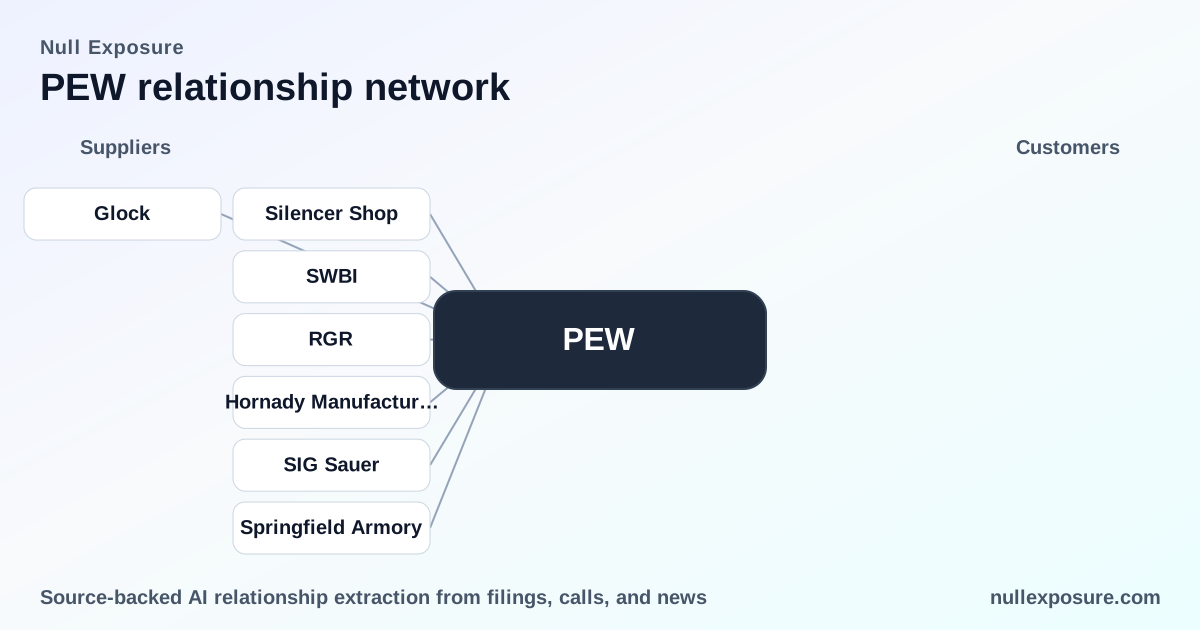
GrabAGun (PEW): Supplier relationships that shape inventory, margins and risk
GrabAGun Digital Holdings Inc. operates a digital-first firearms and accessories retail platform, monetizing through product sales, distribution partnerships and ancillary services (including newly activated crypto payment rails and NFA-related offerings). The company sources inventory from major OEMs and specialty suppliers, leverages partnerships for customer-facing services (e.g., suppressor purchases and compliance handling), and captures margin on retail sales while carrying inventory and regulatory complexity. For readers evaluating PEW supplier exposure, the supplier roster is both a distribution advantage and a concentration point for brand access and regulatory sensitivity. Learn more at https://nullexposure.com/.
Why the supplier list matters for investors: an operating-model read
GrabAGun’s supplier footprint is a direct expression of its commercial positioning. The company sells nationally recognized firearm brands alongside specialized NFA and ammunition suppliers, which makes supplier relationships both revenue drivers and operational constraints. Financially, GrabAGun reports roughly $96.4 million in trailing revenue with $11.3 million gross profit and a negative operating profile, meaning supplier terms, product mix and promotional dynamics materially affect near-term cash flow and margin recovery.
From an operating-model standpoint:
- Contracting posture: GrabAGun behaves as a retail distributor with supplier partnerships rather than equity joint ventures; the company relies on purchase and distribution agreements and curated brand assortments to win customers.
- Concentration: The supplier list includes several large OEMs; reliance on marquee brands creates buying leverage but also vendor dependency for key SKUs.
- Criticality: Relationships that link GrabAGun to NFA product flows and large-volume OEMs are critical to sales velocity and customer acquisition.
- Maturity: The partners listed are established industry names, indicating the company is integrated into incumbent supply channels rather than niche new entrants.
For a concise supplier-risk dashboard and monitoring setup, visit https://nullexposure.com/.
Supplier map: the relationships disclosed in FY2026 reporting and press
Below are every supplier/partner name disclosed in the available FY2026 press items and the plain-English implication for GrabAGun’s business. Each entry includes the source cited in the press coverage.
-
Silencer Shop — GrabAGun entered a strategic partnership to provide customers access to Silencer Shop’s suppressor catalog and NFA solutions, integrating suppressor selection and compliance workflows into GrabAGun’s checkout experience. Source: Finviz news coverage of the partnership announcement in March 2026 (https://finviz.com/news/266579/grabagun-pew-now-accepts-crypto-payments-partners-with-silencer-shop).
-
Smith & Wesson Brands (SWBI) — Smith & Wesson is listed among the industry-leading firearm brands that GrabAGun distributes, anchoring the retailer’s mainstream handgun and long-gun assortment. Source: press release via The Outdoor Wire, January 2026 (https://www.theoutdoorwire.com/releases/2026/01/grabagun-becomes-first-major-firearms-retailer-to-accept-bitcoin-payments).
-
Sturm, Ruger & Co. (RGR) — Ruger appears on GrabAGun’s supplier roster as a core OEM partner supplying popular consumer models that drive traffic and repeat purchases. Source: The Outdoor Wire press release, January 2026 (https://www.theoutdoorwire.com/releases/2026/01/grabagun-becomes-first-major-firearms-retailer-to-accept-bitcoin-payments).
-
Hornady Manufacturing — Hornady’s inclusion signals GrabAGun’s ammunition and reloading accessories sourcing, which supports ancillary sales that bolster basket size on firearms purchases. Source: The Outdoor Wire press release, January 2026 (https://www.theoutdoorwire.com/releases/2026/01/grabagun-becomes-first-major-firearms-retailer-to-accept-bitcoin-payments).
-
SIG Sauer — SIG Sauer is named among the OEM brands available through GrabAGun, supplying high-demand pistol and accessory SKUs that are important for customer acquisition and conversion. Source: The Outdoor Wire press release, January 2026 (https://www.theoutdoorwire.com/releases/2026/01/grabagun-becomes-first-major-firearms-retailer-to-accept-bitcoin-payments).
-
Springfield Armory — Springfield Armory products form part of the company’s core brand lineup, supporting mid- to premium-market firearm sales and aftermarket accessory demand. Source: The Outdoor Wire press release, January 2026 (https://www.theoutdoorwire.com/releases/2026/01/grabagun-becomes-first-major-firearms-retailer-to-accept-bitcoin-payments).
-
Glock — Glock’s presence on the platform secures access to one of the highest-demand pistol families, sustaining baseline volume and recurring accessory sales. Source: The Outdoor Wire press release, January 2026 (https://www.theoutdoorwire.com/releases/2026/01/grabagun-becomes-first-major-firearms-retailer-to-accept-bitcoin-payments).
(Several outlets repeated the reporting; an additional coverage item summarizing the Silencer Shop tie and crypto payments ran on InsiderMonkey in March 2026: https://www.insidermonkey.com/blog/grabagun-pew-now-accepts-crypto-payments-partners-with-silencer-shop-1669735/?amp=1.)
What these relationships mean for revenue, margin and risk
- Revenue mix and upsell: Working with large OEMs and an NFA specialist creates cross-sell opportunities—firearm sales, ammunition, accessories and suppressor/NFA services produce higher lifetime value per customer than single-item transactions. That is a structural revenue positive given GrabAGun’s modest absolute revenue base (~$96M TTM).
- Margin pressure and inventory exposure: Retail margins on core OEM firearms compress quickly under price competition; margins are partly recovered through accessories and specialized NFA services, but operating margins remain negative, so supplier terms and inventory turns are critical to return to profitability.
- Regulatory and operational concentration risk: NFA-related products (suppressors) introduce compliance complexity and regulatory exposure that magnify operational risk; the Silencer Shop partnership is strategically important but also elevates regulatory sensitivity given federal and state-level NFA rules.
- Brand access as competitive moat: Retail access to Glock, Sig, Smith & Wesson, Ruger and Springfield equips GrabAGun to transact at scale with consumers who demand name brands—this is a distribution moat in a retail landscape where brand availability drives conversion.
For more context on how supplier ties shape valuation and operational KPIs, see our toolkit at https://nullexposure.com/.
Practical investor takeaways
- Supplier relationships are a core revenue lever and a key risk vector. Investors should track inventory turns, promotional funding from OEMs, and the economics of the Silencer Shop integration (fees, referral economics, compliance costs).
- Monitor margin recovery vs. top-line growth. With negative operating margins and concentrated brand dependence, commercial terms and inventory efficiency will determine whether revenue growth translates to sustainable earnings.
- Regulatory watch is mandatory. NFA services and suppressor distribution introduce outsized legal and processing risk relative to standard firearm retail; the Silencer Shop partnership increases exposure to those variables.
If you are evaluating PEW from a supplier-risk lens or building an active monitoring strategy, visit https://nullexposure.com/ for ongoing signal coverage and supplier dashboards.
GrabAGun sits at the intersection of mainstream OEM distribution and specialized NFA service integration; that combination creates both clear growth levers and distinct operational constraints investors must price into valuation and risk frameworks.