Profusa (PFSA): Supplier relationships that matter for commercialization and capital strategy
Profusa develops implantable biosensors that provide continuous, clinical‑grade biochemical monitoring. The company monetizes through device sales (notably the Lumee tissue oxygen monitor), commercialization in regulated markets following CE/other approvals, and by licensing or know‑how collaborations with clinical institutions—while relying on structured financing arrangements to fund the commercialization ramp. Investors should evaluate both the commercial gateway relationships that enable product shipments and the financing counterparties that determine runway and dilution. For ongoing monitoring of these partner dynamics, visit https://nullexposure.com/.
How Profusa brings a medical device to market and where suppliers fit in
Profusa’s business model is built around implantable sensors that become physiologically integrated and transmit continuous biochemical signals. Revenue generation depends on regulatory pathways (CE marking in Europe, subsequent market authorizations), downstream commercial distribution, and clinical partnerships that validate and broaden clinical use cases. Supplier and partner relationships are therefore twofold: clinical/technical collaborations that drive product adoption and financing partners that supply capital to scale commercial operations.
Profusa is transitioning from R&D into commercial execution; that transition concentrates strategic importance on a small number of contractual relationships that can unlock shipments or provide near‑term liquidity. Track partnerships that enable CE marking and first shipments as high‑impact; track financing amendments as immediate determinants of runway and funding flexibility.
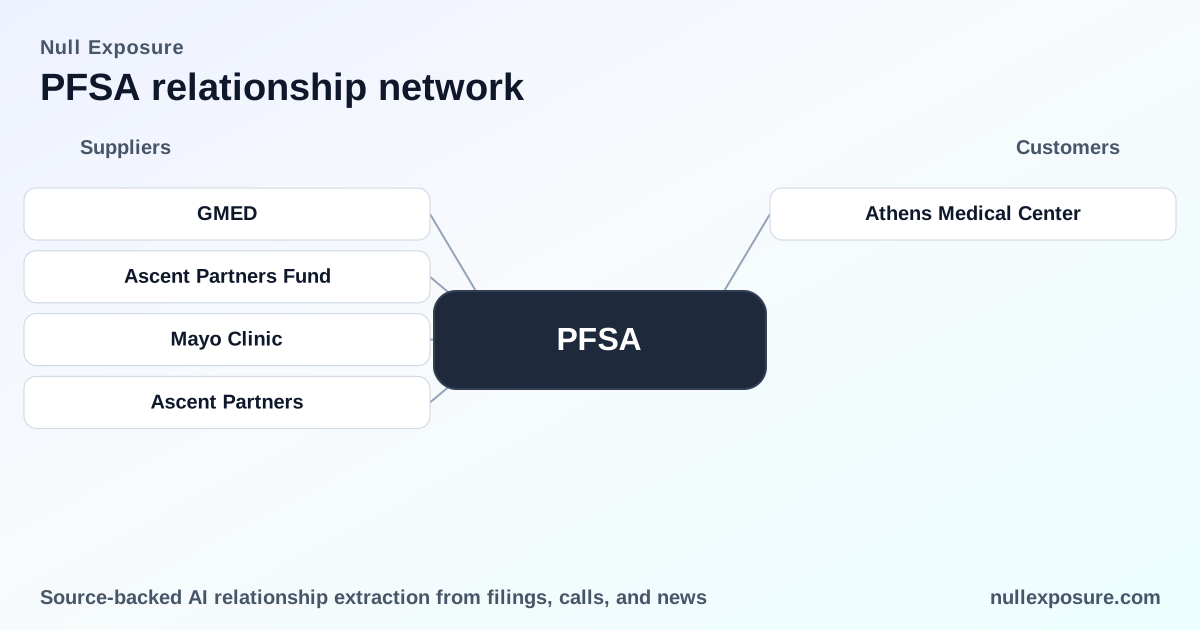
The partner roster that investors need to know
GMED — regulatory pathway and European commercial gatekeeper
Profusa announced that it intends to provide an update on its CE Mark approval via GMED under the EU Medical Device Regulation (MDR) in 1Q2026, with product shipments expected to begin in 2Q2026, making GMED a critical regulatory conduit for initial European commercialization. According to a company press release circulated on GlobeNewswire on 19 February 2026, this approval is positioned to catalyze shipments beginning in the second quarter of 2026. (GlobeNewswire, 2026‑02‑19)
Ascent Partners Fund / Ascent Partners — financing backbone and convertible note counterparty
Profusa has amended multiple financing agreements with Ascent Partners Fund to increase flexibility for near‑term capital raising and executed amendments to its securities purchase agreement to access additional convertible note financing. TradingView reported on the amendment activity in FY2025 and noted Amendment No. 3 to the Securities Purchase Agreement to update note terms, while a Digital Journal piece referenced a $100 million equity line of credit with Ascent Partners that underpins Profusa’s capital strategy. These financing arrangements function as the company’s contingency for funding commercialization and R&D spend. (TradingView, FY2025; Digital Journal, FY2025)
Mayo Clinic — clinical know‑how and validation partner
Profusa entered into a know‑how agreement with Mayo Clinic, signaling institutional collaboration for clinical validation and translational know‑how that is central to clinician adoption and reimbursement conversations. A news bulletin summarizing the agreement was published in March 2026 and highlights the clinical partnership as a capability‑building step for Profusa’s sensor platform. (Bitget news summary, March 2026)
What these relationships collectively imply for investors
- Regulatory and clinical partners are front‑loaded risk mitigants. GMED’s role in CE marking is the immediate commercial trigger; Mayo Clinic supplies clinic‑level credibility that accelerates adoption and payer conversations. Both relationships reduce go‑to‑market execution risk if the regulatory and clinical milestones remain on schedule.
- Financing counterparties dictate runway and dilution. The Ascent Partners arrangements provide immediate financing flexibility but also represent a lever for dilution or convertible obligations; these are as strategically important as commercial partners when assessing short‑term viability.
- Concentration is material. Profusa’s commercialization trajectory is dependent on a relatively small number of high‑impact partners for regulatory approval, clinical validation, and financing, which concentrates execution risk.
Constraints and operating model signals investors should incorporate
The publicly visible constraint excerpts paint a company‑level profile for Profusa’s operating and contracting posture:
- Contract tenure leans short‑term. Evidence includes payable marketing fees and short dated obligations tied to closing events, indicating transactional, event‑driven contracts rather than long‑dated supplier commitments.
- Geographic go‑to‑market is tri‑regional. Management has signaled targeting of North America, Europe (EMEA) and APAC markets; this supports why CE Mark activity via GMED and clinical partnerships like Mayo Clinic matter for simultaneous regional expansion.
- Role mix skews toward service providers and transactional buyers. The company frequently engages vendors for marketing, administrative services and investment banking support, reflecting a supplier profile of professional service providers rather than commodity manufacturers.
- Spend profile is bifurcated. Documented balances indicate both mid‑single‑digit million principal exposures (suggesting financing lines or convertible notes in the $1–10M band) and small administrative payables (sub‑$100k), which signals that Profusa operates with discrete, material financing transactions plus routine small service fees.
Together these constraints describe a company in commercial transition: event‑driven short contracts, targeted tri‑regional expansion, service‑provider centric supplier relationships, and financing‑sized spend bands that are critical for runway.
Risk and opportunity checklist for operators and investors
- Catalysts to watch: GMED CE‑mark confirmation in 1Q2026 and the start of shipments in 2Q2026; publication of clinical results or protocols with Mayo Clinic; conversion or drawdowns under Ascent/Equity facilities.
- Key risks: Missed regulatory timeline, financing shortfalls or unfavorable conversion terms, and concentration of execution among a small set of partners.
- Operational levers: Lock multi‑year commercial distribution agreements post‑CE, widen clinical collaborations beyond flagship sites, and negotiate financing terms that preserve upside for equity holders.
For an ongoing, relationship‑focused feed on PFSA counterparties and supplier posture, explore our portal at https://nullexposure.com/.
Actionable next steps
- Review the GMED CE Mark update and the first shipment announcements to model near‑term revenue inflection.
- Evaluate the terms and potential dilution from Ascent Partners financing amendments in any valuation or runway model.
- Monitor Mayo Clinic outputs for evidence of clinical adoption that supports reimbursement discussions.
To inspect the relationship signals and get alerts on future amendments, visit https://nullexposure.com/ and track Profusa supplier dynamics in real time.
Bottom line: Profusa’s path to commercial revenue is dependent on a narrow set of regulatory, clinical, and financing relationships. GMED unlocks European shipments, Mayo Clinic supplies clinical credibility, and Ascent Partners underwrites the near‑term financing landscape—together these relationships define both the company’s immediate upside and its execution risk.