Procter & Gamble’s supplier posture: predictable volumes, strategic energy partnerships, and financed working capital
Procter & Gamble monetizes by manufacturing and marketing branded consumer goods across Beauty, Grooming, Health Care, Fabric & Home Care, and Baby, Feminine & Family Care. It earns steady cash through global scale and brand pricing power, while contracting raw materials and energy under a mix of long‑dated take‑or‑pay commitments and shorter‑term hedges; P&G then extracts margin through scale manufacturing, distribution, and brand premium. For investors, the supplier story is about operational predictability, selective supplier concentration (some single‑source inputs), and active financial management of payables — all of which support resilient margins and predictable free cash flow. Learn more about supplier analytics and risk profiles at https://nullexposure.com/.
One supplier relationship that matters in plain English
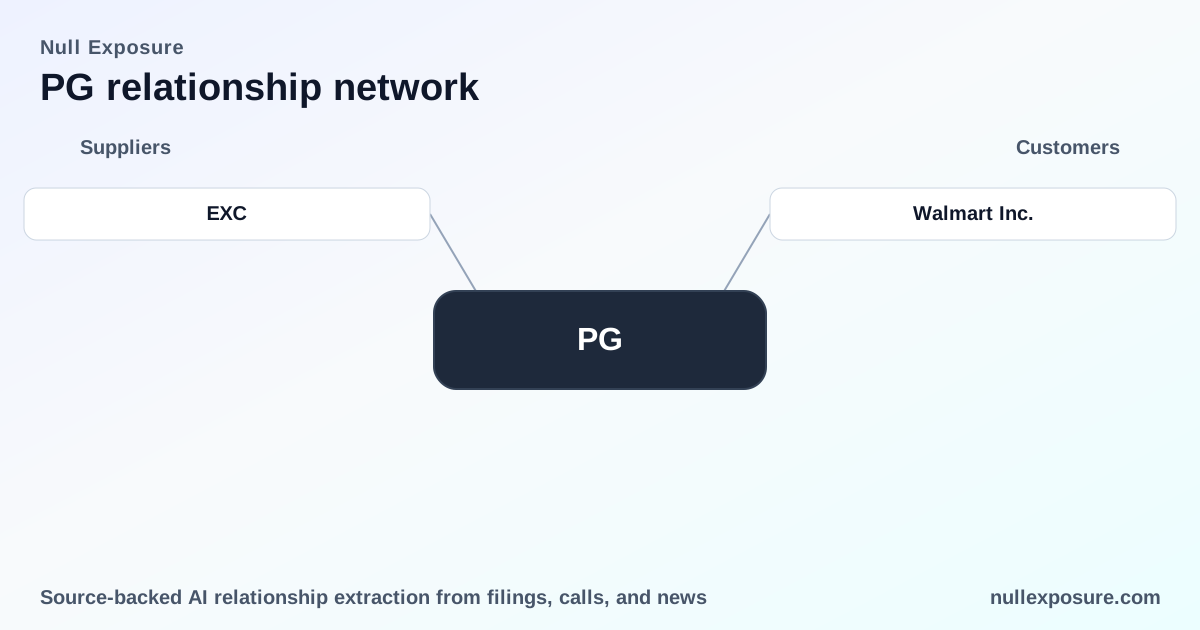
- Constellation: Constellation owns and operates a 50‑megawatt renewable energy plant that supplies steam to P&G’s paper manufacturing site in Albany, Georgia, while exporting electricity to the local utility (Georgia Power). This is a capacity/energy supply arrangement that ties P&G to an owner‑operator energy provider for a critical utility input at that site. According to a Constellation press release describing the project, the plant both serves P&G’s steam demand and generates grid electricity for Georgia Power (Constellation press release, plant announcement).
How P&G structures supplier commitments and what that signals for investors
P&G’s public filings and disclosures describe a mixed contracting posture that combines long‑term minimum commitments with short‑term financial hedges and active payables management. These are company‑level signals drawn from P&G’s reporting and are not assigned to any single supplier unless the filing names that counterparty.
- Long‑term commitments exist through take‑or‑pay style arrangements that set minimum purchase obligations with suppliers, which supports capacity planning and stable supply but creates fixed cost exposure if volumes shift. P&G’s filings describe these arrangements as normal course commitments used to secure supply.
- Short‑term financial contracts (forwards and swaps) are used to manage currency and transaction risk; hedges typically have maturities under 18 months, so FX and financing risk is actively managed with relatively short tenors.
- Supplier spend is large but dispersed: P&G reports a broad set of raw and packaging material purchases and characterizes these as collectively immaterial to the business taken as a whole, which implies no single raw input drives corporate survival even if certain SKUs are single‑sourced.
- Active supplier finance and payment negotiations — the company runs a Supply Chain Finance (SCF) program with multiple global banks and engages in extended payment term negotiations consistent with market practice; this is an operating lever to optimize working capital.
- Material spend scale is significant: the company’s confirmed obligations line referenced in filings shows “CONFIRMED OBLIGATIONS OUTSTANDING AT JUNE 30, 2025 $5,790,” highlighting large contracted commitments that investors should monitor in aggregate.
These controls produce a supplier profile where supply reliability and working capital optimization are the dominant themes, and energy and packaging are clear operational focal points.
What each constraint says about P&G’s operating model
- Contract mix (long‑term & short‑term): The coexistence of take‑or‑pay minimums and short‑dated hedges indicates P&G pursues supply certainty for physical inputs while keeping financial exposures (FX, rates) in a shorter, actively managed bucket. That combination reduces volatility in raw‑material availability while preserving financial flexibility.
- Materiality: The statement that many raw and packaging inputs are not material to the business as a whole signals a diversified supplier base at the company level; single‑source risks exist for specific items, but corporate revenue is not dependent on any one raw material.
- Relationship roles (buyer and manufacturer): P&G buys most raw inputs but also manufactures certain chemicals internally, reflecting vertical integration where it gives up some supplier exposure by producing critical intermediates.
- Relationship stage (active): The presence of a Supply Chain Finance program and ongoing payment term negotiations is corporate evidence that procurement and treasury are coordinated to squeeze working capital efficiency.
- Spend band: The indicated confirmed obligations number underscores large scale contractual exposure; investors should treat P&G as a high‑commitment buyer where negotiated terms and dispute resolution mechanisms matter.
Why the Constellation tie matters operationally and financially
The Constellation arrangement is an example of P&G contracting for site‑specific energy services rather than relying entirely on the spot market. That has three investor implications:
- Operational continuity: Long‑term, dedicated steam and energy supply reduces operational disruption risk at the Albany paper plant, protecting production of paper‑based packaging and finished goods.
- Fixed cost profile: Committing to a plant or capacity creates a baseline cost even during demand downturns; the arrangement improves supply security but contributes to the confirmed obligations figure investors should monitor.
- ESG and cost predictability: The project is renewable and supports P&G’s sustainability narrative while providing predictable energy pricing exposure relative to merchant markets.
According to Constellation’s public project announcement, the plant is a 50‑megawatt renewable facility supplying steam to P&G’s Albany paper plant and exporting power to Georgia Power (Constellation press release, project announcement).
Key takeaways for investors and operators
- P&G manages supplier risk by combining long‑dated physical commitments with short‑dated financial hedges. That approach protects manufacturing continuity while allowing treasury to control financial volatility.
- Supplier concentration is low at the corporate level but high for specific items. Investors should evaluate site‑level single‑source dependencies (e.g., specialty chemicals or energy at specific plants) rather than treating supplier risk as homogeneous.
- Working capital is an active lever. The SCF program and payment terms negotiations are deliberate tools to extract liquidity and optimize cash conversion.
- Large contracted obligations exist. The June 30, 2025 confirmed obligations line (“$5,790” as reported in filings) is a reminder that P&G runs significant committed spend that will influence cash flow under stress.
For a deeper look at supplier counterparties, risk exposure, and contract profiles across major manufacturers, visit https://nullexposure.com/.
Relationship list (complete)
- Constellation — Constellation owns and operates the 50 MW renewable facility that supplies steam to P&G’s Albany, Georgia paper manufacturing facility and exports electricity to Georgia Power; this is documented in Constellation’s public project release. (Constellation press release, plant announcement.)
Investment implications and recommended actions
Investors should treat P&G’s supplier model as a strength for predictability and margin protection, while watching three inputs closely: (1) the scale of long‑term physical commitments vs. demand, (2) single‑source items at plant level, and (3) the maturation profile of hedges and confirmed obligations. Operators and procurement teams should continue to use SCF and term negotiations to preserve liquidity and diversify site‑level supplier options where feasible.
If you evaluate supplier risk across major public companies or need a tailored exposure review, start here: https://nullexposure.com/. For procurement teams and analysts seeking granular counterparty intelligence and scenario stress testing, contact us via https://nullexposure.com/ to arrange a briefing.