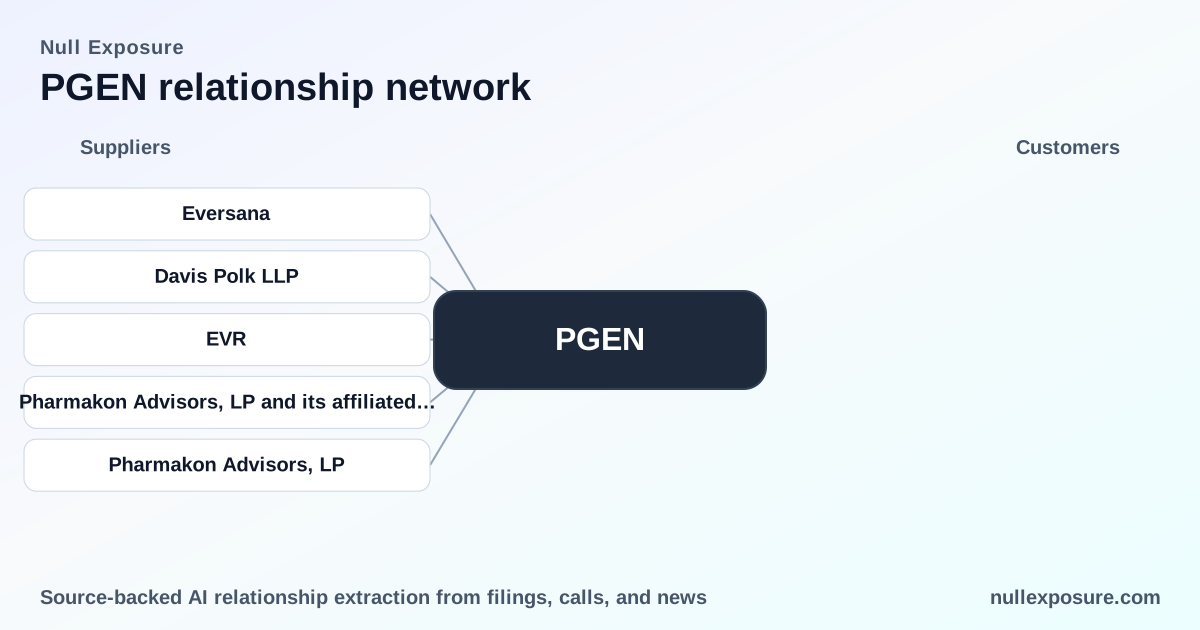
Precigen (PGEN) — Supplier Relationships That Define Commercialization and Financing Execution
Precigen develops next‑generation cell and gene therapies and monetizes through eventual product commercialization, strategic commercialization partnerships, and non‑dilutive financing arrangements that extend runway while preserving equity. The company runs an in‑house cGMP facility for its lead program (PRGN‑2012) while selectively outsourcing other manufacturing and commercialization functions, and it has recently secured committed credit capacity tied to partner funds and advisors. Learn more on the firm’s supplier mapping and risk posture at https://nullexposure.com/.
Why suppliers matter for a biotech that still must prove commercial traction
Precigen’s value hinges on two operational axes: the ability to move IND‑stage assets through clinical milestones and the ability to commercialize at scale with regulatory‑compliant manufacturing. That drives supplier choice: regulatory‑critical vendors (manufacturing, quality, commercialization services) and capital partners who provide non‑dilutive liquidity. These relationships determine timelines, compliance risk, and balance‑sheet flexibility.
- Contracting posture: hybrid — internal cGMP for lead product plus third‑party manufacturing for other candidates, implying active vendor qualification and oversight.
- Concentration and criticality: manufacturing partners and commercialization operators are high‑criticality; loss or failure creates immediate clinical/commercial execution risk.
- Maturity and governance: the company’s disclosure that it conducts extensive vendor audits and cGMP oversight signals a mature compliance posture and demands experienced suppliers.
Explore supplier intelligence and relationship analytics at https://nullexposure.com/ for deeper diligence.
The supplier and advisor roster investors need to know
Eversana — commercialization operations partner
Precigen identifies Eversana as its commercialization operations partner and the company hosted a fireside chat with Precigen’s leadership at the Biotech Showcase in January 2026, highlighting a working commercial relationship around launch planning and market access activities. According to an InvestingNews release and a Markets Financial Times announcement (FY2026), Eversana is actively positioned as an operations collaborator for commercialization discussions and outreach.
Evercore — financial advisor on non‑dilutive financing
Evercore served as financial advisor to Precigen for its announced up to $125 million committed non‑dilutive financing, positioning the bank as the lead investment house orchestrating the transaction structure and capital markets strategy. This advisory role is disclosed in a company announcement covered by InvestingNews (FY2025).
Davis Polk LLP — legal advisor on financing
Davis Polk LLP acted as legal advisor to Precigen in connection with the same financing arrangement, providing the transactional legal framework around the credit facility and documentation, according to the InvestingNews announcement (FY2025).
Pharmakon Advisors, LP and its affiliated funds — committed lender
Investment funds managed by Pharmakon Advisors entered into a committed credit facility with Precigen for up to $125 million in non‑dilutive financing across two tranches, giving Precigen immediate balance‑sheet flexibility without issuing equity. This financing commitment is described in the company’s FY2025 announcement and related press coverage (InvestingNews, FY2025).
Pharmakon Advisors, LP (as noted in Akin press release) — advisor representation
Akin Gump notified the market that it advised Pharmakon Advisors and its affiliated funds in providing the up to $125 million committed facility to Precigen, confirming the counterparty advisory and legal representation on the lender side (Akin Gump press release, FY2025).
What these relationships imply about execution risk and optionality
Precigen’s supplier and advisor set delivers a clear functional split: capital partners (Pharmakon) and advisors/intermediaries (Evercore, Davis Polk, Akin) solved near‑term funding and documentation needs, while commercialization expertise (Eversana) handles go‑to‑market planning.
- Balance‑sheet breathing room: the Pharmakon facility reduces near‑term dilution risk and extends runway, but it introduces covenant and repayment considerations that investors should track in filings.
- Regulatory dependency: the firm’s reliance on cGMP evidence and vendor audits signals that manufacturing partners are strategic and high‑impact — any third‑party manufacturing failure would affect timelines and valuation.
- Execution layering: engagement with Eversana indicates readiness to scale commercialization if clinical/regulatory success occurs, reducing go‑to‑market execution risk compared with a pure internal commercialization plan.
Constraints and company‑level signals that shape supplier strategy
Precigen discloses it currently expects to use its internal Germantown cGMP manufacturing for PRGN‑2012 while also acknowledging that it will rely on third parties to manufacture other candidates. The company states it must ensure all processes meet cGMP and perform extensive vendor audits. From an investor perspective, that translates into concrete operating signals:
- Hybrid manufacturing model: owning a lead cGMP footprint reduces some scale‑up risk for the lead asset but creates complexity when coordinating in‑house and outsourced production runs.
- High regulatory burden on suppliers: vendor audits and cGMP compliance elevate supplier selection to a strategic capability; suppliers must have proven regulatory track records.
- Moderate supplier concentration risk: the company’s statements imply limited outsourcing today but increasing reliance as the pipeline advances, so supplier concentration will rise as programs enter late‑stage development.
These are company‑level signals that shape procurement, contractual terms, and contingency planning across the supplier base.
Investment implications and red flags to monitor
Precigen’s supplier and financing posture offers both operational leverage and execution risk. Key items for investors to watch:
- Monitor covenant language and tranche draws on the Pharmakon facility disclosed in SEC filings; these terms drive liquidity runway.
- Track commercialization milestones and scope of Eversana’s engagement—service breadth (market access, distribution, field ops) materially affects launch economics.
- Review third‑party manufacturing agreements and QA audit outcomes in periodic filings; manufacturing setbacks are the primary path to valuation stress.
For direct supplier mapping and ongoing alerts on counterparties, visit https://nullexposure.com/ to subscribe.
Bottom line
Precigen’s supplier relationships reflect a pragmatic hybrid model: internal manufacturing for the lead asset, outsourced manufacturing for the remainder, commercialization partnership with Eversana, and non‑dilutive capital from Pharmakon supported by Evercore and Davis Polk. That combination delivers runway and commercialization capability while concentrating risk in a handful of regulatory‑critical partners. Investors should prioritize covenant transparency, supplier audit outcomes, and the detailed scope of commercialization services as the company advances clinical and regulatory milestones.
For primary‑source monitoring and supplier‑centric intelligence tailored for investors and operators, go to https://nullexposure.com/.